
In high-spec industries such as aerospace and medical device manufacturing, tolerance is not simply a number on a drawing—it is a direct measure of process capability, risk control, and engineering discipline. Achieving ±0.005 mm on complex geometries, especially in materials like aluminum alloys and titanium, requires far more than advanced machinery. It demands an integrated strategy that combines intelligent toolpath planning, material stress management, and rigorous quality assurance. For buyers evaluating 5-axis CNC machining services, the ability to consistently hold such tight tolerances is a clear indicator of a supplier’s technical maturity.
The challenge begins with the inherent properties of the materials. Aluminum, while relatively easy to machine, is highly sensitive to thermal expansion and can deform under cutting forces if not properly supported. Titanium, by contrast, presents low thermal conductivity, high strength, and a tendency for work hardening—all of which contribute to tool wear, heat concentration, and potential dimensional instability. When these materials are shaped into complex aerospace components or medical parts with multi-axis contours, maintaining micron-level precision becomes a sophisticated engineering task.
5-axis CNC machining provides the necessary kinematic flexibility to address these challenges, but machine capability alone is insufficient. The real advantage lies in advanced toolpath strategies. By optimizing tool orientation continuously during machining, 5-axis systems minimize tool deflection and maintain consistent engagement with the workpiece. This reduces localized stress and prevents dimensional drift. Adaptive toolpaths, which dynamically adjust cutting parameters based on geometry and load conditions, further enhance stability by maintaining constant chip thickness and avoiding sudden force variations.
Equally critical is the sequencing of operations. Roughing, semi-finishing, and finishing passes must be carefully planned to control residual stress within the material. In high tolerance aluminum parts, improper material removal can release internal stresses unevenly, causing the part to warp after machining. To mitigate this, intermediate stress relief processes—such as thermal aging or natural stabilization—are often incorporated between machining stages. For titanium aerospace components, managing heat buildup is essential. High-performance cutting tools, optimized coatings, and controlled cutting environments are used to dissipate heat and maintain dimensional integrity.
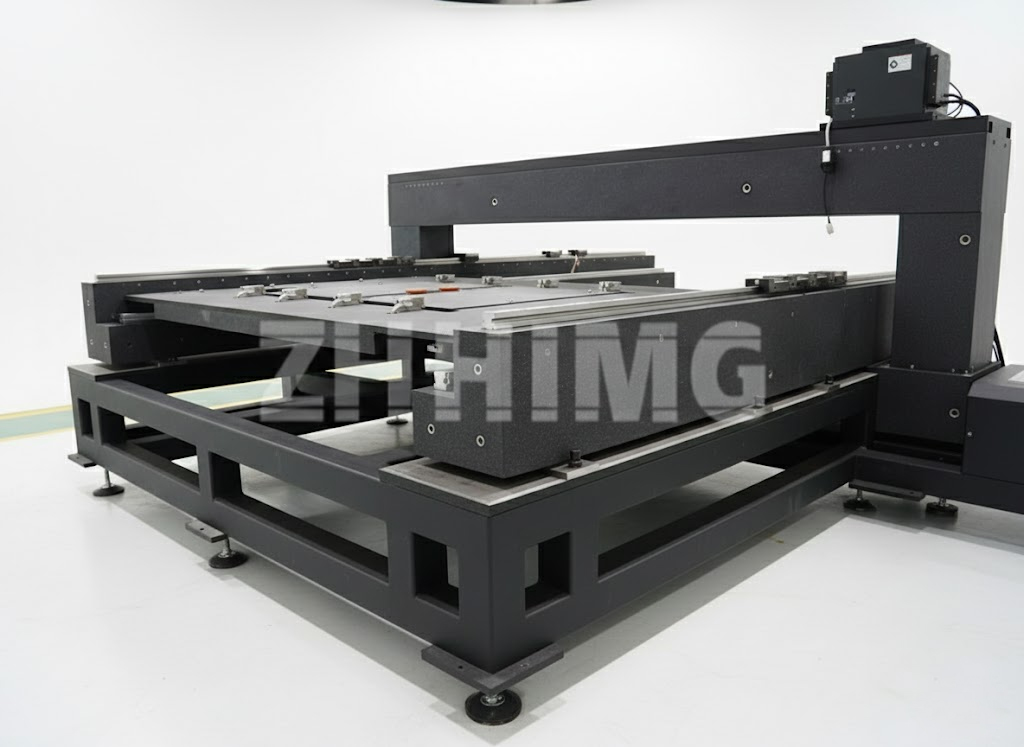
Fixture design also plays a decisive role. In 5-axis machining, parts are often accessed from multiple orientations, which introduces variability in clamping forces. Custom fixtures must provide uniform support while minimizing distortion. Vacuum fixtures, modular clamping systems, and precision locating features are commonly employed to ensure repeatability across setups. Any inconsistency at this stage can easily exceed the ±0.005 mm tolerance window.
However, achieving precision during machining is only part of the equation; verifying it is equally demanding. High-accuracy coordinate measuring machines (CMMs) are essential for validating complex geometries and tight tolerances. Advanced CMM inspection routines, often integrated with CAD models, allow for full 3D comparison and real-time feedback. This data-driven approach enables continuous process refinement, ensuring that deviations are identified and corrected before they propagate into production batches.
Environmental control is another often-overlooked factor. Temperature fluctuations in the machining or inspection environment can introduce measurement errors that rival the tolerance itself. Maintaining a stable, climate-controlled environment ensures that both machining and inspection processes operate within predictable parameters, preserving the integrity of the final measurements.
For aerospace and medical buyers, the ability to deliver components within ±0.005 mm tolerance is not just about precision—it is about consistency, traceability, and confidence. It reflects a manufacturing system where every variable, from tool wear to thermal behavior, is understood and controlled. This level of capability is particularly critical in applications where component performance directly impacts safety, reliability, and regulatory compliance.
As product designs continue to evolve toward greater complexity and tighter tolerances, the role of advanced 5-axis CNC machining becomes increasingly central. By combining sophisticated toolpath strategies, disciplined material handling, and comprehensive quality control, manufacturers can meet the stringent demands of modern engineering applications. In this context, ±0.005 mm is not merely a specification—it is a benchmark that defines excellence in precision manufacturing.
Post time: Apr-02-2026