
In precision metrology, the reliability of measurement results depends heavily on the stability of the reference surface. Granite surface plates serve as the foundation for inspection, calibration, and alignment tasks across industries ranging from aerospace to semiconductor manufacturing. While granite surface plates may appear similar at first glance, the choice of granite material and accuracy grade has a direct impact on performance.
Among the most common questions in metrology laboratories is the comparison between black granite and pink granite surface plates, as well as the appropriate applications for Grade 00 granite. Understanding these distinctions is essential for selecting the right surface plate for demanding measurement environments.
Why Granite Material Matters for Surface Plates
A granite surface plate is more than a flat slab of stone. It is a precision reference tool designed to provide a stable, wear-resistant, and dimensionally reliable plane. The material properties of granite—such as density, grain structure, hardness, and thermal behavior—directly influence flatness retention and calibration stability.
Unlike metal reference surfaces, granite does not rust, is non-magnetic, and exhibits excellent resistance to temperature-induced deformation. However, different granite types vary significantly in their internal structure and long-term performance, making material selection a critical consideration rather than an aesthetic choice.
Black Granite vs. Pink Granite for Surface Plates
The comparison between black granite and pink granite surface plates often begins with color, but the true differences lie in material composition and performance characteristics.
Black Granite Surface Plates
Black granite is widely regarded as the preferred material for high-precision surface plates. Its fine-grained, dense structure provides superior wear resistance and vibration damping. These characteristics allow black granite surface plates to maintain flatness over extended periods, even in high-use environments.
High-quality black granite, such as Jinan black granite, is known for its uniform mineral composition and low porosity. This consistency reduces localized wear and ensures predictable calibration behavior. As a result, black granite is commonly used for high-accuracy grades, including Grade 00 granite surface plates.
Pink Granite Surface Plates
Pink granite is also widely used in metrology, particularly for general inspection and workshop applications. It typically has a coarser grain structure compared to black granite, which can result in slightly lower wear resistance over time.
While pink granite surface plates still offer excellent stability and corrosion resistance, they are more commonly specified for lower accuracy grades or environments where extreme precision is not required. In many industrial settings, pink granite provides a cost-effective and reliable solution for routine measurement tasks.
Performance Comparison in Practical Use
When evaluating black granite vs pink granite for surface plates, the key factors are long-term flatness retention, wear resistance, and suitability for high-accuracy calibration. Black granite consistently outperforms pink granite in environments requiring minimal recalibration intervals and tight flatness tolerances.
Pink granite remains a practical option for less demanding applications, but for laboratories and inspection rooms focused on precision metrology, black granite is generally the preferred choice.
Understanding Granite Surface Plate Accuracy Grades
Granite surface plates are classified according to internationally recognized accuracy grades, which define permissible flatness deviations. These grades ensure consistency and traceability across metrology applications.
Grade 00 granite represents the highest accuracy level for surface plates. It is designed for calibration laboratories and reference environments where measurement uncertainty must be minimized. Grade 0, Grade 1, and Grade 2 surface plates follow, each suited to progressively less demanding applications.
The ability of a granite surface plate to achieve and maintain Grade 00 accuracy depends heavily on material quality, manufacturing precision, and environmental control. Black granite, due to its superior structural properties, is most commonly used for Grade 00 granite surface plates.
Uses for Grade 00 Granite in Precision Metrology
Grade 00 granite surface plates are not intended for general workshop use. Their applications are highly specialized and focused on maintaining measurement traceability and confidence.
Calibration Laboratories
One of the primary uses for Grade 00 granite is in calibration laboratories, where surface plates serve as reference standards for verifying gauges, indicators, and measurement instruments. The exceptional flatness and stability of Grade 00 granite ensure reliable calibration results.
High-Precision Inspection Rooms
In inspection environments dealing with tight tolerances, Grade 00 granite provides a stable platform for precision measurement tasks. This includes dimensional inspection of high-value components and verification of critical features.
Metrology Reference Standards
Grade 00 granite surface plates are often used as internal reference standards within manufacturing facilities. They provide a baseline against which other surface plates and measurement equipment can be checked.
Environmental Stability Requirements
Because Grade 00 granite is highly sensitive to environmental conditions, its use is typically limited to temperature-controlled rooms with strict handling procedures. This controlled usage helps preserve flatness and extend recalibration intervals.
Maintenance, Calibration, and Long-Term Performance
Even the highest-quality granite surface plate requires proper maintenance. Regular cleaning, correct support placement, and scheduled calibration are essential to maintaining accuracy.
Calibration of Grade 00 granite surface plates is typically performed using laser interferometry or electronic levels, with results documented to ensure traceability. Black granite’s wear resistance allows it to withstand repeated calibration cycles with minimal degradation.
The combination of appropriate material selection, correct usage, and professional calibration ensures that granite surface plates continue to deliver reliable performance throughout their service life.
ZHHIMG Precision Granite Surface Plates
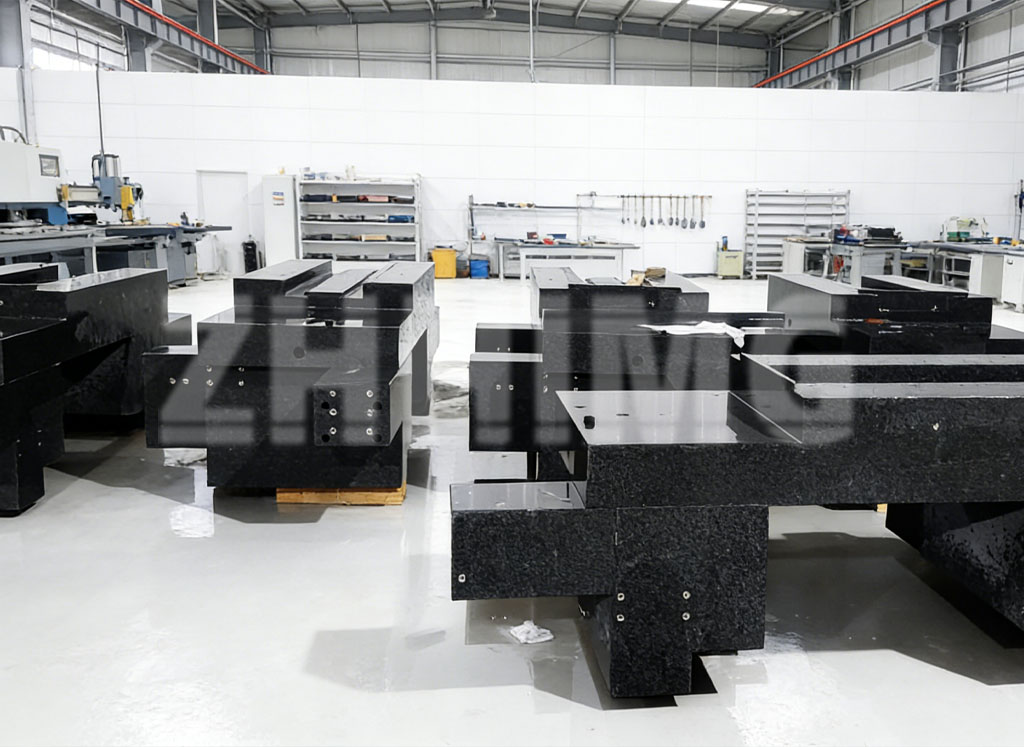
ZHHIMG specializes in precision granite surface plates manufactured from carefully selected black granite materials, including premium Jinan black granite. Each surface plate is processed in temperature-controlled environments to achieve precise flatness and geometric accuracy.
ZHHIMG offers surface plates across multiple accuracy grades, including Grade 00 granite for high-end metrology and calibration applications. By combining material expertise with strict quality control, ZHHIMG delivers granite surface plates that meet the demanding requirements of modern precision measurement.
Conclusion: Matching Material and Grade to Measurement Needs
In precision metrology, surface plate selection is a strategic decision. The comparison between black granite and pink granite surface plates highlights the importance of material properties in achieving long-term accuracy. Similarly, understanding the uses for Grade 00 granite ensures that the highest accuracy tools are applied where they deliver real value.
Black granite surface plates, particularly those manufactured to Grade 00 standards, provide the stability, wear resistance, and reliability required for calibration and high-precision inspection. By aligning material choice, accuracy grade, and application requirements, measurement confidence can be built on a solid foundation.
ZHHIMG continues to support global metrology industries by delivering precision granite surface plates engineered for accuracy, durability, and long-term performance.
Post time: Jan-30-2026