
In the world of precision manufacturing, accuracy has always been the silent backbone of innovation. From semiconductor fabrication to aerospace engineering, the ability to measure with consistency and reliability often determines whether a product succeeds or fails. As industries continue to demand tighter tolerances and higher efficiency, traditional measuring tools are beginning to show their limits. Against this backdrop, ceramic measuring tools are quietly reshaping the standards of modern metrology.
Over the past decade, more manufacturers have started to rethink what “precision” really means. It is no longer just about achieving a measurement once, but about maintaining that accuracy over time, across environments, and under continuous use. This shift has driven growing interest in what is now often referred to as zero-wear metrology equipment—tools designed to deliver stable performance without the gradual degradation that affects conventional materials.
Ceramic measuring tools sit at the center of this transition.
Unlike traditional steel or even granite-based instruments, advanced ceramics offer a fundamentally different material profile. Their hardness, resistance to wear, and thermal stability allow them to maintain surface integrity over extended periods. In practical terms, this means that a measurement reference today remains virtually unchanged months or even years later. For manufacturers operating in high-volume or high-precision environments, this consistency translates directly into reduced recalibration frequency and improved process reliability.
What makes ceramic materials particularly compelling is not just their durability, but how that durability interacts with real-world industrial conditions. In many production settings, measuring tools are exposed to temperature fluctuations, humidity, oils, and chemical agents. Over time, these factors can subtly alter the geometry of metal tools or degrade the surface of granite plates. Ceramics, however, are largely immune to such influences. Their resistance to corrosion and chemical exposure ensures that performance remains stable even in demanding environments.
This aspect of ceramic material durability has become increasingly important as industries move toward automation and continuous production. In automated systems, measurement tools are no longer used intermittently—they are part of a constant feedback loop. Any deviation, however small, can propagate through the system and affect final product quality. By minimizing wear and environmental sensitivity, ceramic tools help stabilize this loop, making them a natural fit for next-generation manufacturing systems.
Another factor driving adoption is thermal behavior. Temperature variation is one of the most persistent challenges in precision measurement. Even minimal expansion or contraction can introduce measurable errors. Ceramic materials typically exhibit low thermal expansion coefficients, allowing them to maintain dimensional stability across a wide temperature range. This makes them particularly suitable for applications where environmental control is difficult or where measurements must remain consistent throughout long production cycles.
In industries such as semiconductor manufacturing, where nanometer-level precision is often required, these characteristics are not just advantageous—they are essential. Measurement platforms, alignment systems, and inspection tools must operate without introducing contamination, distortion, or interference. Ceramics, being non-magnetic and electrically insulating, provide a clean and stable foundation for such applications.
The same trend can be observed in aerospace and high-end equipment manufacturing. As components become more complex and tolerances tighter, the limitations of traditional measuring instruments become more apparent. Engineers and quality control specialists are increasingly turning to ceramic-based solutions not simply as an upgrade, but as a necessity for meeting evolving industrial metrology standards.
At the same time, the conversation around precision measuring instruments is also shifting toward lifecycle cost rather than initial investment. While ceramic tools may carry a higher upfront cost compared to steel or granite alternatives, their long-term value often proves more compelling. Reduced maintenance, longer calibration intervals, and extended service life contribute to a lower total cost of ownership. For many organizations, this economic perspective is as influential as the technical advantages.
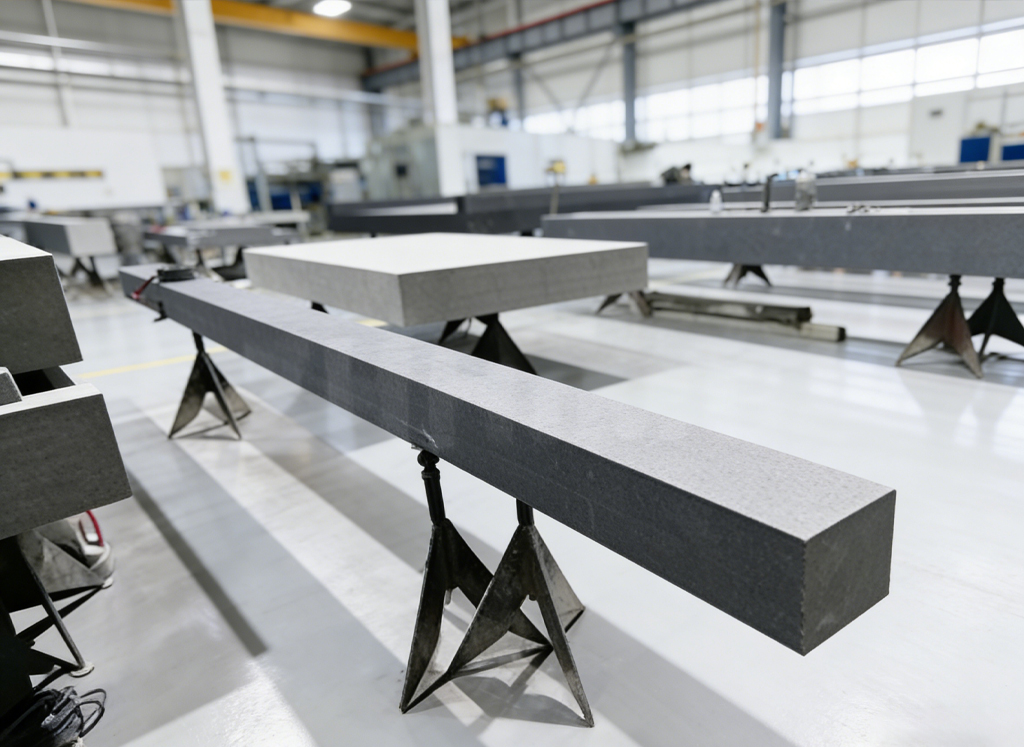
It is also worth noting that ceramic measuring tools are not limited to a single form or application. They are now widely used in surface plates, guide components, measuring rulers, and customized metrology structures. This versatility allows manufacturers to integrate ceramic solutions across different stages of the production and inspection process, creating a more cohesive and stable measurement environment.
Looking ahead, the role of ceramics in metrology is expected to expand further. As smart manufacturing and Industry 4.0 continue to evolve, measurement systems are becoming more interconnected and data-driven. The reliability of the data generated by these systems depends heavily on the stability of the underlying measurement tools. In this context, zero-wear characteristics are not just a material advantage—they are a prerequisite for trustworthy data.
There is also growing interest in combining ceramic materials with advanced design and manufacturing techniques. Hybrid structures, ultra-precision machining, and integration with sensor technologies are opening new possibilities for high-performance metrology equipment. These developments suggest that ceramic tools will not only replace traditional materials in existing applications but also enable entirely new approaches to measurement.
Ultimately, the rise of ceramic measuring tools reflects a broader shift in manufacturing philosophy. Precision is no longer viewed as a static target, but as a dynamic capability that must be maintained continuously. Materials that can support this continuity—by resisting wear, minimizing environmental impact, and preserving dimensional integrity—are becoming indispensable.
For companies seeking to stay competitive in an increasingly demanding market, the question is no longer whether to adopt ceramic measuring tools, but how quickly they can integrate them into their operations. As the definition of accuracy continues to evolve, so too must the tools that make it possible.
In that sense, ceramic measuring tools are not just an incremental improvement. They represent a fundamental step toward a more stable, efficient, and future-ready metrology ecosystem.
Post time: Apr-10-2026