
Precision measurement tools are vital for ensuring the accuracy and quality of industrial products. Among these tools, the straight edge plays a crucial role in checking the flatness and alignment of surfaces. Whether you’re working in the semiconductor, aerospace, automotive, or general manufacturing industries, choosing the right straight edge can make all the difference. In this article, we will compare four materials commonly used in straight edges—ceramic, steel, granite, and cast iron—focusing on their suitability for high-precision applications and the unique benefits each material offers.
Understanding Straight Edges in Precision Measurement
Straight edges are among the most fundamental tools used in the field of precision measurement. Their primary function is to verify the flatness of a surface or component by checking for deviations or distortions. Precision straight edges are essential in various industries, including the calibration of machine tools, the assembly of components, and even in the construction of complex structures where flatness and alignment are crucial.
Ceramic Straight Edge: High Precision with Superior Stability
Ceramic straight edges are renowned for their exceptional precision, making them a top choice for industries that demand the highest standards of accuracy. Materials like silicon nitride offer excellent rigidity, resistance to wear, and high dimensional stability, even under varying temperature conditions. These properties make ceramic straight edges ideal for environments such as semiconductor manufacturing, optics, and aerospace, where extreme precision is required.
Ceramic straight edges maintain their form and flatness over time, even in high-temperature environments, and are less prone to expansion or contraction compared to metals. This stability ensures that measurements remain consistent, making ceramics a preferred choice for long-term, high-precision applications.
Steel Straight Edge: Classic Reliability for Industrial Use
Steel straight edges are widely used in industrial settings due to their strength, versatility, and cost-effectiveness. They are an excellent option for general manufacturing and industries that don’t require the extreme precision provided by ceramics or granite. Steel is a durable material that can withstand heavy-duty use, including impacts and abrasion, making it ideal for applications such as machine tool calibration and assembly line measurements.
While steel offers reliable performance, it does have some limitations. For example, it is more susceptible to temperature-induced expansion and wear over time, which can impact its accuracy in highly sensitive applications. However, steel remains a popular choice for applications where high levels of precision are not as critical, and its affordability makes it accessible for a wide range of industries.
Granite Straight Edge: Stability and Precision for Heavy-duty Applications
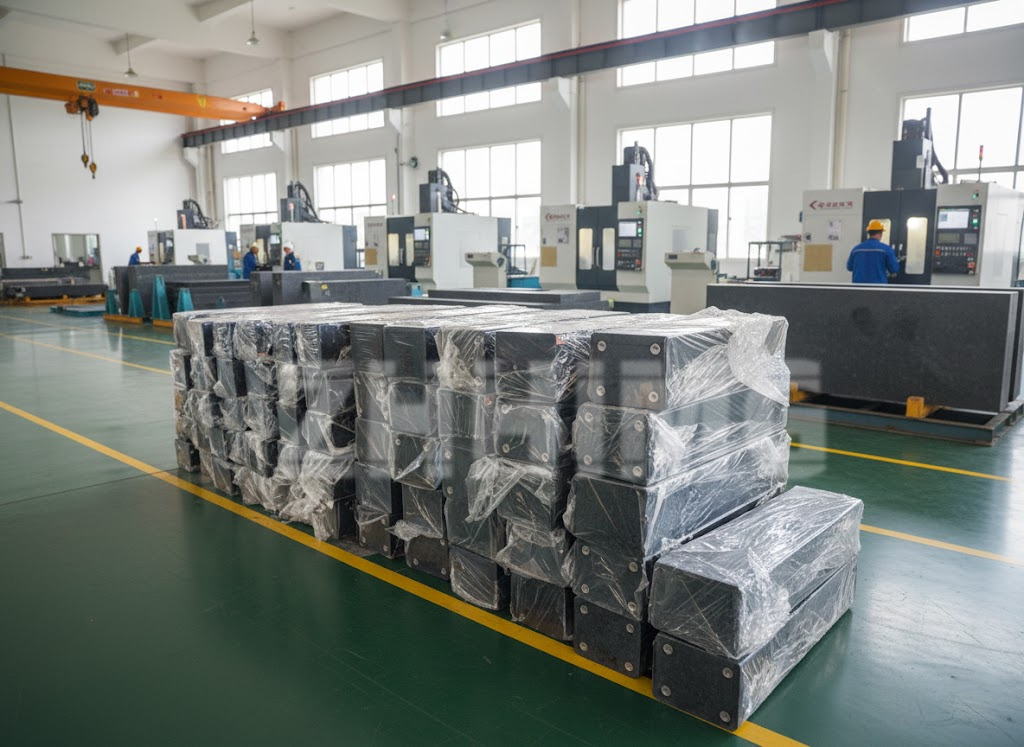
Granite straight edges are highly valued for their exceptional rigidity and low thermal expansion, making them ideal for use in environments where stability is paramount. Granite’s ability to resist thermal changes means that it is less likely to deform under fluctuating temperatures, ensuring that measurements remain accurate. This makes granite straight edges perfect for high-precision metrology applications, including machine tool calibration and coordinate measuring machines (CMM).
However, granite does have some disadvantages. It is heavy, which can make handling more cumbersome compared to other materials, and it can be prone to chipping if not handled carefully. Despite these drawbacks, granite remains a top choice for applications that require long-lasting durability and high accuracy in heavy-duty environments.
Cast Iron Straight Edge: Durability and Affordable Performance
Cast iron straight edges are often used in general manufacturing applications where durability and affordability are more important than extreme precision. Cast iron is known for its ability to absorb vibration, making it an excellent material for applications where stability is required but extreme accuracy is not necessary. It is commonly used in machine tool bases, industrial machinery, and structural components.
While cast iron straight edges are less accurate than their granite or ceramic counterparts, they offer a good balance between performance and cost. Cast iron straight edges are highly durable and resistant to wear, making them suitable for industrial environments that require rugged and affordable measuring tools.
Comparing Ceramic, Steel, Granite, and Cast Iron Straight Edges
When choosing the right straight edge for your application, it is essential to consider factors such as precision, durability, and cost. Ceramic straight edges offer unparalleled precision and stability, making them ideal for industries requiring ultra-high accuracy. Steel straight edges are a reliable and affordable option for general industrial applications, while granite straight edges provide stability and long-term durability for high-precision tasks. Cast iron straight edges offer durability and vibration absorption, making them suitable for heavy-duty use.
Conclusion
In conclusion, selecting the right straight edge depends on the specific needs of your industry. Ceramic straight edges are perfect for precision environments that require high accuracy and stability, while steel straight edges offer versatility and reliability for general use. Granite straight edges excel in heavy-duty industrial applications that demand rigidity and low thermal expansion, and cast iron straight edges provide a cost-effective option for applications where vibration absorption is important.
At ZHHIMG, we offer a variety of precision straight edges made from the highest-quality materials to meet the unique demands of your industry. Whether you need the precision of ceramics or the durability of granite, our straight edges are designed to deliver the accuracy and performance you need for your manufacturing processes.
Post time: Feb-13-2026