
In today’s global manufacturing landscape, precision is no longer defined solely by engineering capability. It is increasingly measured by consistency, traceability, and compliance with international standards. Nowhere is this more evident than in the aerospace and automotive sectors, where supply chains span continents and quality expectations leave no room for ambiguity.
Within this context, granite precision components—long valued for their stability and reliability—are taking on a renewed role. Not only must they perform with high accuracy, but they must also meet the strict documentation, certification, and traceability requirements demanded by international buyers. The shift from “qualified product” to “export-quality component” reflects a broader transformation in how precision is evaluated and delivered.
From Material Advantage to System-Level Requirement
Granite has always held a unique position in metrology. Its natural structure provides excellent dimensional stability, resistance to wear, and minimal thermal expansion. These properties make it an ideal material for base structures, surface plates, and precision assemblies.
However, in global supply chains—particularly those tied to aerospace and automotive manufacturing—material performance alone is no longer sufficient. Buyers are not just sourcing components; they are sourcing reliability within a system.
This is where the concept of export quality granite components becomes significant. It implies not only that the product meets technical specifications, but also that it aligns with international standards, passes rigorous inspections, and is supported by complete documentation throughout its lifecycle.
The Expanding Role of ISO Standards
For overseas buyers, ISO standards serve as a common language. They provide a framework for evaluating quality, consistency, and process control across different regions and suppliers.
In the context of ISO standards aerospace and automotive manufacturing, compliance extends beyond basic certification. It involves:
- Controlled production environments
- Documented inspection procedures
- Calibration traceable to recognized standards
- Continuous quality improvement systems
Granite component manufacturers aiming to serve these industries must integrate ISO requirements into every stage of production—from raw material selection to final inspection.
This integration is not just about passing audits. It is about building trust with customers who rely on consistent performance across multiple production sites and over long periods.
Traceability: The Backbone of Modern Supply Chains
One of the most critical expectations in today’s manufacturing environment is traceability. For aerospace and automotive applications, every component must be linked to its origin, processing history, and inspection results.
The concept of precision traceability goes beyond simple record-keeping. It requires a structured system where each stage of production is documented and verifiable. This includes:
- Material sourcing records
- Processing and machining parameters
- Inspection data and calibration reports
- Final certification documents
For granite components, this level of traceability ensures that any deviation can be identified and addressed quickly. It also allows manufacturers to demonstrate compliance with customer requirements and regulatory standards.
In practice, traceability has become a key differentiator between standard suppliers and those capable of supporting global supply chains.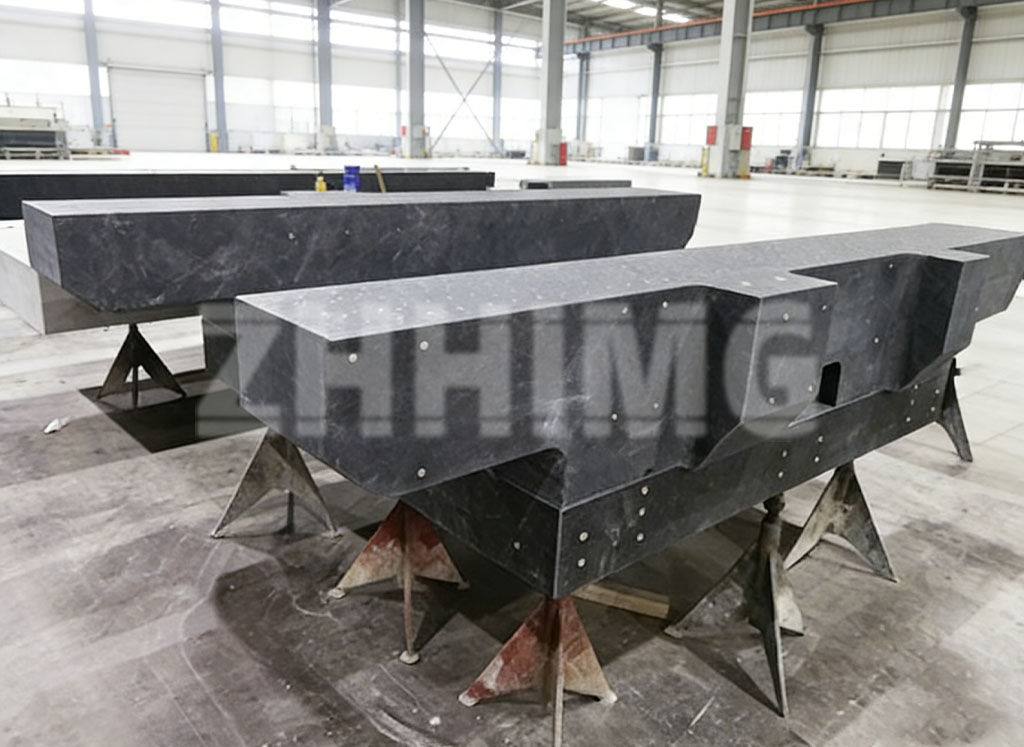
Meeting the Demands of Aerospace Applications
Aerospace manufacturing represents one of the most demanding environments for precision components. Tolerances are extremely tight, and the cost of error is exceptionally high.
Granite components used in this sector often serve as reference bases for measurement systems, assembly platforms, or inspection equipment. Their stability directly influences the accuracy of critical processes.
To meet aerospace requirements, manufacturers must ensure:
- Ultra-high flatness and dimensional accuracy
- Stable performance under controlled environmental conditions
- Full compliance with international standards
- Comprehensive documentation for every component
In this context, the role of granite extends beyond material performance. It becomes part of a larger system designed to ensure safety, reliability, and repeatability.
Supporting Automotive Supply Chain Efficiency
While automotive manufacturing operates at a different scale than aerospace, its demands are no less stringent. High-volume production requires consistent quality across thousands—or even millions—of components.
The integration of granite components into automotive supply chain metrology reflects the industry’s focus on efficiency and precision. Measurement systems must operate continuously, delivering reliable data without interruption.
Granite bases and structures provide a stable foundation for these systems, helping to reduce measurement variation and improve process control. At the same time, suppliers must be able to deliver components that meet strict timelines and documentation requirements.
This combination of performance and reliability is essential for maintaining the flow of modern automotive production lines.
Certification Documentation: More Than a Formality
For many overseas buyers, certification documentation granite is as important as the product itself. Without proper documentation, even a high-quality component may not be accepted into the supply chain.
Typical documentation requirements include:
- Material certificates
- Inspection reports
- Calibration records
- Compliance statements
These documents provide assurance that the component meets specified standards and can be integrated into regulated environments. They also support audits and quality reviews conducted by end customers.
In recent years, digitalization has further enhanced documentation practices. Electronic records, traceable databases, and integrated quality systems are becoming standard, allowing for faster verification and improved transparency.
The Importance of Manufacturing Expertise
Achieving export-quality standards is not simply a matter of following procedures. It requires deep expertise in material processing, precision machining, and quality control.
Granite, while stable, is not easy to process. Achieving high levels of flatness and accuracy requires specialized equipment and skilled technicians. Grinding, lapping, and inspection must be performed with precision, often under controlled environmental conditions.
Manufacturers with experience in international markets understand these challenges and have developed processes to address them. They invest in advanced equipment, maintain strict quality systems, and continuously refine their techniques to meet evolving requirements.
A Shift Toward Global Integration
As supply chains become more interconnected, the expectations placed on component suppliers continue to grow. Buyers are no longer evaluating products in isolation—they are assessing how well those products integrate into a global system.
For granite precision components, this means aligning with international standards, providing full traceability, and delivering consistent quality across different markets.
The ability to meet these expectations is what defines export readiness. It is not just about shipping products overseas; it is about meeting the technical, regulatory, and operational requirements of global industries.
Looking Ahead: The Future of Precision Components
The demand for high-precision, export-ready components is expected to increase as industries continue to evolve. Advanced manufacturing technologies, stricter regulations, and higher customer expectations are driving this trend.
Granite components, with their proven stability and reliability, are well positioned to remain a key part of this landscape. However, their role will continue to expand beyond traditional applications.
Future developments may include:
- Integration with smart measurement systems
- Enhanced digital traceability and data management
- Improved processing techniques for higher accuracy
These trends suggest that the value of granite components will increasingly be defined not just by their material properties, but by their role within a broader ecosystem of precision engineering.
Conclusion
Export-quality granite precision components represent a convergence of material science, manufacturing expertise, and global standards. In aerospace and automotive supply chains, where precision and reliability are critical, these components play a foundational role.
By meeting ISO standards, ensuring full traceability, and providing comprehensive certification documentation, manufacturers can deliver products that meet the highest international expectations.
For buyers, understanding these factors is essential for making informed decisions and building reliable partnerships. In a world where precision is both a technical requirement and a strategic advantage, the importance of export-quality components continues to grow.
Post time: Apr-10-2026