
As ultra-precision manufacturing, semiconductor fabrication, and advanced metrology continue to push toward tighter tolerances and higher throughput, the mechanical foundation of motion and measurement systems has become a decisive performance factor. In this context, granite-based structures—ranging from granite XY tables and precision linear stages to granite surface plates and CMM granite bases—play a critical role in ensuring stability, accuracy, and long-term reliability.
For OEMs, system integrators, and end users in Europe and North America, selecting the appropriate motion platform or metrology base is no longer a purely mechanical decision. It requires a holistic evaluation of dynamic behavior, thermal performance, vibration isolation, maintenance requirements, and total cost of ownership. This article provides a structured comparison between granite XY tables and air-bearing stages, while also examining the broader role of granite surface plates and CMM granite bases in precision systems. Drawing on industry practices and ZHHIMG’s manufacturing expertise, the discussion aims to support informed engineering and procurement decisions.
Granite as a Foundation Material in Precision Engineering
Before comparing specific system architectures, it is essential to understand why granite has become a preferred material for precision motion and measurement platforms.
Natural black granite, when properly selected and processed, offers a unique combination of physical properties that are difficult to replicate with metals or composite materials. Its high mass density contributes to excellent vibration damping, while its low coefficient of thermal expansion ensures dimensional stability across typical factory temperature variations. Unlike steel or cast iron, granite does not rust, does not require protective coatings, and maintains its geometric integrity over decades of service.
For precision linear stages, granite XY tables, and CMM bases, these properties translate into predictable performance, reduced environmental sensitivity, and lower long-term maintenance costs. As a result, granite has become a standard material choice in semiconductor inspection tools, optical alignment systems, coordinate measuring machines, and high-end automation equipment.
Granite XY Table: Structure, Capabilities, and Applications
A granite XY table is a motion platform in which two orthogonal linear axes are mounted on a precision-machined granite base. The granite body provides a rigid, thermally stable reference plane, while the motion axes are typically driven by ball screws, linear motors, or belt-driven mechanisms, depending on accuracy and speed requirements.
Structural Characteristics
Granite XY tables are characterized by their monolithic base design. The working surface and mounting interfaces are lapped to high flatness and parallelism, ensuring consistent alignment between axes. The mass of the granite base effectively suppresses external vibration, which is particularly valuable in environments where active isolation is limited or cost-prohibitive.
The linear guides and drive systems are mechanically fixed to the granite using precision inserts or bonded interfaces. This approach minimizes deformation under load and ensures repeatable motion behavior over long duty cycles.
Performance Profile
In terms of positioning accuracy and repeatability, granite XY tables are well suited for micron-level applications. With appropriate linear encoders and servo control, sub-micron repeatability is achievable in many industrial and laboratory systems. While their dynamic response is generally lower than that of air-bearing stages, granite XY tables offer a favorable balance between precision, load capacity, and cost.
Typical Use Cases
Granite XY tables are widely used in:
- Semiconductor back-end inspection and probing equipment
- Optical component alignment and assembly systems
- Precision dispensing and laser processing platforms
- Calibration fixtures and reference positioning systems
For applications where moderate to high loads must be moved with stable, repeatable accuracy, granite XY tables remain a practical and proven solution.
Air-Bearing Stage: Design Philosophy and Performance Advantages
An air-bearing stage represents a different design philosophy. Instead of relying on mechanical contact between guideways, air-bearing stages use a thin film of pressurized air to create near-frictionless motion. When combined with a granite base, this architecture delivers exceptional smoothness and ultra-high positioning resolution.
Core Design Elements
In an air-bearing stage, the granite base serves as the precision reference surface over which the moving carriage floats. Air bearings distribute load evenly across the granite surface, eliminating mechanical wear and stick-slip effects. Motion is typically driven by linear motors, and position feedback is provided by high-resolution optical or interferometric encoders.
The flatness and surface quality of the granite are critical, as they directly influence bearing performance. This places stringent requirements on granite material selection, machining, and lapping processes.
Precision and Dynamic Behavior
Air-bearing stages excel in applications requiring nanometer-level positioning resolution, high straightness, and exceptional velocity smoothness. The absence of mechanical contact enables highly repeatable motion profiles and minimizes hysteresis.
However, these benefits come with trade-offs. Air-bearing stages require a clean, stable air supply and careful environmental control. They are also more sensitive to contamination and typically support lower load capacities compared to mechanically guided granite XY tables.
Application Scenarios
Air-bearing stages are commonly deployed in:
- Wafer inspection and metrology systems
- Lithography and mask alignment equipment
- High-end optical measurement platforms
- Research and development environments requiring extreme precision
In such scenarios, the performance advantages justify the higher initial investment and operational complexity.
Granite XY Table vs. Air-Bearing Stage: Comparative Analysis
When comparing a granite XY table with an air-bearing stage, the decision should be driven by application-specific priorities rather than nominal accuracy figures alone.
From a mechanical standpoint, granite XY tables offer higher structural robustness and load capacity. They are more tolerant of industrial environments and require less auxiliary infrastructure. Air-bearing stages, in contrast, prioritize motion purity and resolution, often at the expense of environmental robustness and system simplicity.
In terms of lifecycle cost, granite XY tables generally provide a lower total cost of ownership. Their maintenance requirements are minimal, and their performance remains stable over long service periods. Air-bearing stages may incur additional costs related to air supply systems, filtration, and environmental control.
For many industrial users, the choice is not binary. Hybrid system architectures are increasingly common, where granite bases support a combination of mechanically guided axes and air-bearing stages, optimizing performance where it matters most.
Granite Surface Plates: The Reference Standard
Granite surface plates remain the foundation of dimensional inspection and calibration in precision manufacturing. While they do not incorporate active motion, their role as reference planes is critical for ensuring measurement traceability and system accuracy.
Functional Role
A granite surface plate provides a stable, flat datum against which parts, fixtures, and instruments can be measured or assembled. Its inherent stability makes it suitable for use in temperature-variable environments without significant distortion.
Integration with Precision Systems
In modern production environments, granite surface plates are often integrated with height gauges, linear stages, and optical measurement systems. They also serve as calibration references for precision linear stages and motion platforms, reinforcing their relevance beyond traditional inspection rooms.
CMM Granite Base: Backbone of Coordinate Metrology
In coordinate measuring machines, the granite base is more than a passive structure—it is the backbone of the entire measurement system.
Structural and Metrological Requirements
A CMM granite base must provide exceptional flatness, stiffness, and long-term dimensional stability. Any deformation or thermal drift directly affects measurement uncertainty. For this reason, granite selection, stress relief, and precision machining are critical steps in CMM base manufacturing.
Impact on Measurement Accuracy
The performance of a CMM is intrinsically linked to the quality of its granite base. A well-engineered base ensures consistent axis geometry, reduces error sources, and supports reliable calibration over the machine’s service life.
ZHHIMG works closely with metrology system manufacturers to deliver granite bases that meet stringent international standards, supporting high-accuracy inspection in aerospace, automotive, and precision manufacturing sectors.
Manufacturing Considerations and Quality Control
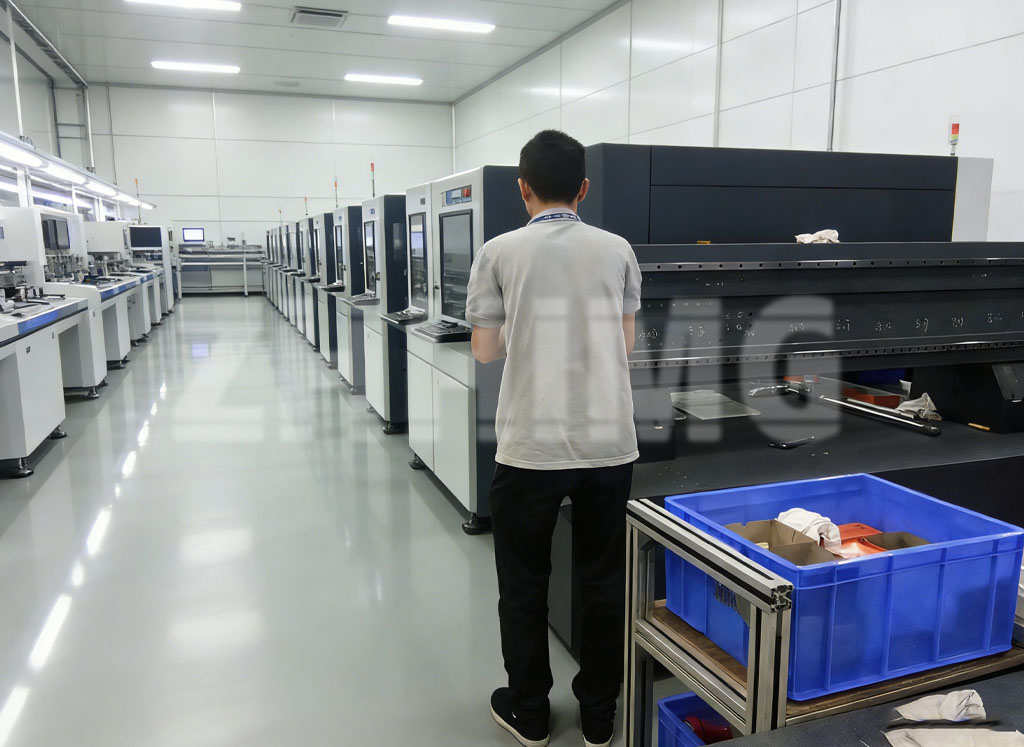
Producing granite motion platforms and metrology bases requires a combination of material science expertise and advanced manufacturing capability. Raw granite must be carefully inspected for internal defects, homogeneity, and grain structure. Precision machining, lapping, and inspection are performed in controlled environments to ensure compliance with flatness, parallelism, and perpendicularity requirements.
For complex assemblies such as granite XY tables and air-bearing stages, interface accuracy and assembly alignment are equally critical. ZHHIMG’s manufacturing processes emphasize traceable measurement, repeatable workmanship, and close collaboration with customers during the design and validation phases.
Conclusion
Granite XY tables, air-bearing stages, granite surface plates, and CMM granite bases each serve distinct but complementary roles in modern precision engineering. Understanding their structural characteristics, performance profiles, and application contexts is essential for selecting the optimal solution.
For industrial users seeking robust, cost-effective precision, granite XY tables remain a reliable choice. For ultra-high-resolution motion and metrology, air-bearing stages supported by precision granite bases offer unmatched performance. Granite surface plates and CMM granite bases continue to underpin accuracy and stability across the entire precision manufacturing ecosystem.
By leveraging deep experience in granite processing and precision manufacturing, ZHHIMG supports global customers with engineered solutions that align with evolving accuracy requirements and long-term operational goals.
Post time: Jan-23-2026