
In precision manufacturing and dimensional inspection, accuracy is never assumed—it is preserved. Across metrology laboratories, quality control departments, and high-end production environments, granite surface plates remain a foundational element of reliable measurement systems. Their inherent stability, flatness, and vibration-damping characteristics make them indispensable metrology equipment. However, even the highest-quality granite surface plate can only deliver long-term accuracy when proper care and maintenance practices are consistently applied.
As measurement tolerances continue to tighten across industries such as semiconductor manufacturing, precision machining, optical engineering, and advanced automation, the importance of granite surface plate maintenance is increasingly recognized not as a routine task, but as a critical component of quality assurance strategy.
This article explores the principles, practices, and professional considerations behind granite surface plate care, offering a metrology-focused perspective for engineers, inspectors, and laboratory managers who demand sustained measurement confidence.
The Role of Granite Surface Plates in Precision Metrology
Granite surface plates serve as the physical reference plane for countless dimensional inspections. From height gauge measurements and dial indicator setups to complex optical and laser measurement systems, the flatness and stability of the surface plate directly influence measurement results.
Unlike cast iron alternatives, precision granite surface plates offer superior thermal stability, corrosion resistance, and long-term geometric consistency. High-density black granite, when properly selected and processed, provides exceptional wear resistance and minimal deformation under load. These properties explain why granite inspection plates are widely adopted in metrology laboratories and climate-controlled inspection rooms worldwide.
However, granite’s performance advantages do not eliminate the need for disciplined maintenance. On the contrary, the higher the required accuracy, the greater the impact of seemingly minor environmental or handling issues.
Why Granite Surface Plate Maintenance Matters
A common misconception in industrial environments is that granite surface plates are maintenance-free. While granite does not rust and is less sensitive to temperature fluctuations than metal, it is not immune to contamination, mechanical damage, or gradual accuracy degradation.
Dust particles, abrasive debris, improper cleaning agents, and uneven loading can all introduce localized wear or micro-damage to the working surface. Over time, these factors can compromise flatness accuracy, leading to measurement deviations that may go unnoticed until downstream quality issues emerge.
In metrology, errors often propagate silently. A surface plate that is only marginally out of tolerance can affect hundreds or thousands of measurements before the deviation is detected. For organizations operating under ISO quality systems, aerospace standards, or semiconductor process control requirements, such risks are unacceptable.
Effective granite surface plate care is therefore not about aesthetics or cleanliness alone—it is about safeguarding measurement integrity.
Environmental Control: The First Line of Protection
One of the most overlooked aspects of granite surface plate maintenance is environmental management. Even the most stable metrology equipment performs optimally only when installed in a suitable environment.
Temperature stability is essential. Although granite exhibits low thermal expansion, sudden or uneven temperature changes can still create transient measurement errors. Surface plates should be located away from direct sunlight, HVAC vents, machinery generating heat, or exterior walls prone to temperature variation.
Humidity control is equally important. Excessive humidity can encourage dust adhesion and promote contamination from airborne particles. In controlled metrology laboratories, maintaining stable temperature and humidity not only protects the granite surface plate but also ensures consistency across all precision measurement equipment.
Vibration is another critical factor. Granite’s natural damping properties reduce the transmission of vibration, but they cannot fully compensate for unstable floors, nearby heavy machinery, or frequent impacts. Proper support stands, leveling systems, and vibration isolation measures should be considered part of the overall maintenance strategy.
Daily and Routine Cleaning Practices
Regular cleaning is fundamental to granite surface plate care, yet it must be performed correctly to avoid unintended damage. The objective is to remove contaminants without altering the surface texture or introducing abrasive action.
Loose debris such as dust, metal particles, or abrasive residues should be removed using a soft brush or lint-free cloth before any liquid cleaning is applied. Wiping particles across the surface without removal can cause micro-scratching, particularly in high-use areas.
Approved granite surface plate cleaners or mild, non-abrasive solutions should be used sparingly. Aggressive chemicals, solvents, or household cleaning products can damage the surface finish or leave residues that affect measurement repeatability. After cleaning, the surface should be wiped dry with a clean, lint-free cloth to prevent streaking or residue buildup.
In high-use metrology environments, light cleaning may be required daily, while more thorough cleaning can be scheduled weekly or according to usage intensity. Consistency is more important than frequency; a disciplined routine yields better long-term results than occasional intensive cleaning.
Handling and Loading Considerations
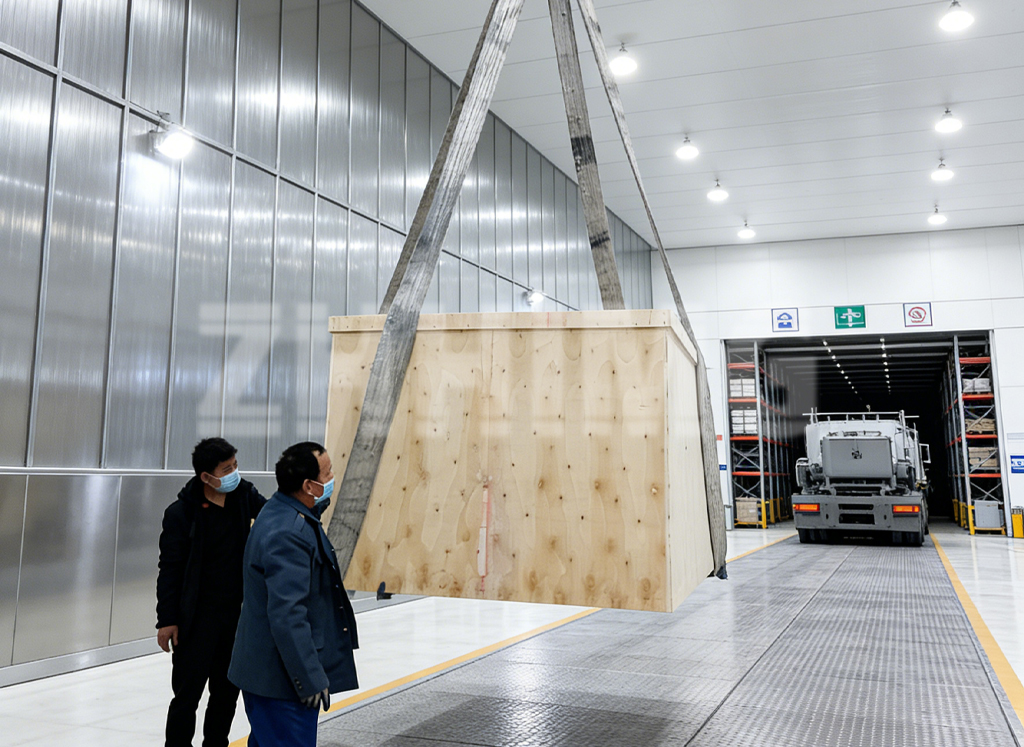
How a granite surface plate is used day-to-day has a significant impact on its longevity. Concentrated loads, improper lifting, or repeated impact in the same areas can lead to localized wear patterns that compromise flatness.
Measurement instruments, fixtures, and workpieces should be placed gently and distributed evenly across the surface whenever possible. Heavy components should not be dropped or slid across the plate. When fixtures are frequently repositioned, rotating their placement helps prevent uneven wear.
Equally important is proper support. Granite surface plates must be installed on correctly designed stands that support the plate at defined load points. Improper support can induce internal stress, leading to gradual deformation that even the best calibration cannot fully correct.
For larger plates used in advanced metrology equipment setups, periodic verification of stand alignment and leveling is recommended as part of preventive maintenance.
Calibration and Long-Term Accuracy Management
Calibration is the definitive method for verifying granite surface plate accuracy. Even with excellent care, periodic calibration is essential to confirm that flatness remains within specified tolerances.
The appropriate calibration interval depends on usage intensity, environmental conditions, and accuracy requirements. In high-precision metrology laboratories, annual calibration is common, while heavy-use production environments may require more frequent verification.
Professional calibration services use electronic levels, laser interferometers, or autocollimators traceable to national or international standards. Calibration reports provide documented evidence of compliance with ISO or customer-specific requirements and form an essential part of quality system documentation.
Importantly, calibration should be viewed as a feedback mechanism, not merely a compliance task. Trends in calibration data can reveal emerging issues related to handling, environment, or usage patterns, enabling corrective action before accuracy is compromised.
Granite Surface Plates in Modern Metrology Systems
As metrology evolves, granite surface plates continue to adapt to new applications. Beyond traditional inspection tasks, they now serve as structural bases for coordinate measuring machines, optical inspection systems, laser measurement platforms, and automated quality control stations.
In these integrated systems, the surface plate is no longer a passive reference but an active contributor to system stability. The flatness, rigidity, and damping characteristics of the granite directly influence machine accuracy, repeatability, and long-term reliability.
This expanded role places even greater emphasis on professional maintenance practices. When granite serves as the foundation of advanced metrology equipment, its condition affects not only manual measurements but also automated data integrity and process control.
Industry Perspective: Prevention Over Correction
Experienced metrology professionals recognize that preventing accuracy loss is far more efficient than correcting it. Resurfacing, re-lapping, or replacing a granite surface plate can be costly, disruptive, and time-consuming—particularly for large or customized plates integrated into production systems.
By contrast, disciplined granite surface plate maintenance requires modest investment but delivers substantial returns in measurement confidence, reduced downtime, and extended service life. In regulated industries, it also supports audit readiness and customer trust.
Organizations that treat metrology equipment maintenance as a strategic function—rather than an afterthought—are consistently better positioned to meet tightening tolerance demands and evolving quality standards.
ZHHIMG’s Engineering Approach to Granite Metrology Solutions
At ZHHIMG, granite surface plates are engineered with the understanding that long-term performance begins at material selection and continues throughout the product lifecycle. High-density natural granite is carefully chosen for stability, homogeneity, and vibration damping characteristics, then processed using controlled machining and precision lapping techniques.
Design considerations extend beyond flatness specifications to include structural integrity, support optimization, and compatibility with modern metrology equipment. This systems-level approach ensures that ZHHIMG granite inspection plates not only meet initial accuracy requirements but also maintain performance under real-world operating conditions.
Equally important is knowledge sharing. By promoting best practices in granite surface plate care and maintenance, ZHHIMG supports customers in protecting their investment and sustaining measurement excellence over time.
Conclusion: Sustaining Measurement Confidence
Granite surface plates remain a cornerstone of precision metrology, valued for their stability, durability, and accuracy. Yet their performance is not guaranteed by material properties alone. Careful handling, environmental control, regular cleaning, and disciplined calibration are all essential to preserving their role as reliable measurement references.
In an era where measurement accuracy directly influences product quality, process efficiency, and market competitiveness, granite surface plate maintenance is a professional responsibility shared by engineers, inspectors, and quality managers alike.
By understanding and applying proven maintenance principles, organizations can ensure that their metrology equipment continues to deliver trustworthy results—today and well into the future.
Post time: Feb-05-2026