
In the world of precision metrology, your granite surface plate is more than just a heavy slab of stone—it is the foundation of your quality control. Whether used for high-precision inspection or as a base for complex assemblies, a granite plate represents a significant investment.
While granite is prized for its stability and durability, it is not indestructible. Without proper care, environmental factors, physical damage, and chemical exposure can degrade its accuracy. This guide provides a comprehensive approach to granite surface plate maintenance, helping equipment maintenance engineers and lab managers extend the service life of their precision platforms by a decade or more.
The Foundation of Longevity: Daily Cleaning Procedures
The most common enemy of a granite surface plate is not wear, but contamination. Dust, oil, and acidic spills can compromise the surface finish and, over time, the stone itself.
1. The “Neutral” Rule
Never use acidic cleaners (like vinegar or standard bathroom cleaners) or harsh chemicals. These can etch the surface, destroying the flatness required for precision measurement.
Never use acidic cleaners (like vinegar or standard bathroom cleaners) or harsh chemicals. These can etch the surface, destroying the flatness required for precision measurement.
- Recommended Solution: Use a mild, neutral pH detergent mixed with warm water.
- Technique: Apply with a soft, lint-free cloth or a non-abrasive sponge. Wipe in a circular motion to lift dirt without scratching.
2. Drying is Key
After cleaning, always dry the surface immediately with a clean, soft towel. Allowing water to air-dry can leave mineral deposits (water spots) that are difficult to remove and can interfere with measurement accuracy.
After cleaning, always dry the surface immediately with a clean, soft towel. Allowing water to air-dry can leave mineral deposits (water spots) that are difficult to remove and can interfere with measurement accuracy.
3. Dust Control
Before placing any part on the plate, wipe the surface to remove dust. Dust particles act like tiny ball bearings or abrasives; sliding a heavy part over them can cause micro-scratches.
Before placing any part on the plate, wipe the surface to remove dust. Dust particles act like tiny ball bearings or abrasives; sliding a heavy part over them can cause micro-scratches.
Troubleshooting: Removing Stubborn Stains
Even in a controlled lab environment, accidents happen. Here is how to handle specific contaminants without damaging the granite.
| Stain Type | Recommended Solution | Critical Notes |
|---|---|---|
| Oil & Grease | Acetone or a specialized stone degreaser. | Apply immediately. Do not let oil soak in, as it can cause permanent dark spots. |
| Food/Drink (Coffee, Juice) | Diluted hydrogen peroxide or a baking soda paste. | For organic stains, a poultice (paste) left to dry can draw the stain out of the pores. |
| Nail Polish / Paint | Non-acetone solvent or gentle scraping. | Do not use metal scrapers. Use a plastic scraper or wooden spatula to gently lift the material. |
| Rust | Specialized rust remover for stone. | Ensure the remover is safe for natural stone. Rinse thoroughly afterwards. |
Pro Tip: Always test any cleaning solvent on a small, inconspicuous area of the granite first to ensure it does not discolor the stone.
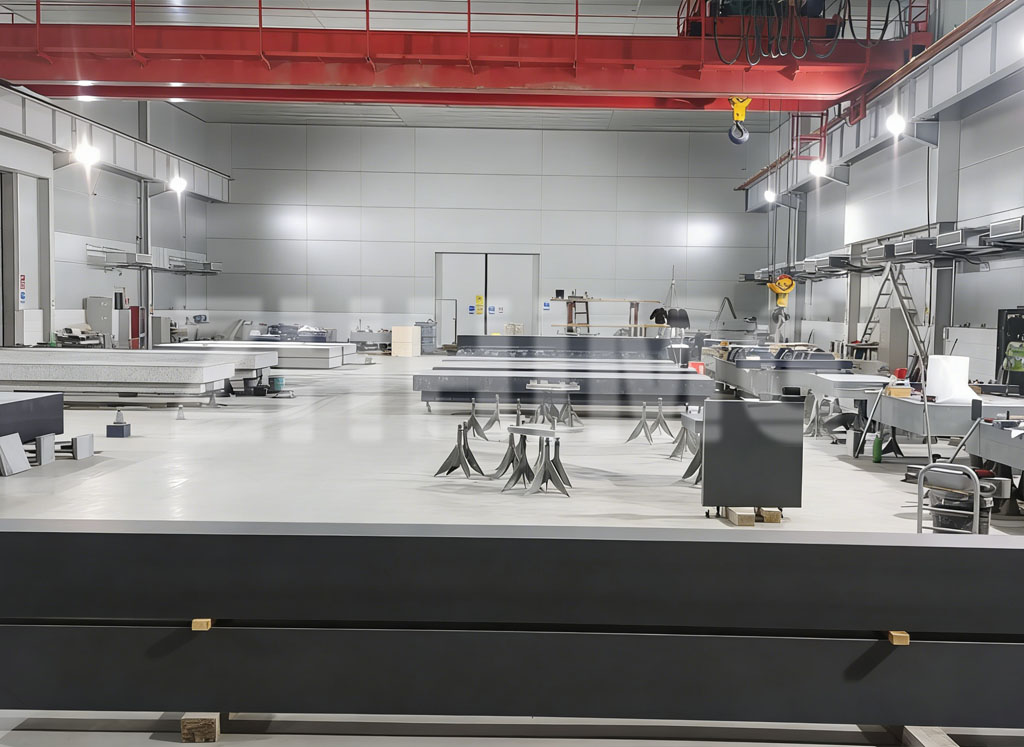
Physical Preservation: Support and Protection
granite surface plate maintenance isn’t just about cleaning; it’s about physics. Granite is heavy, and if not supported correctly, it can sag or warp under its own weight, leading to permanent deformation.
1. Check Your Support Points
Ensure your surface plate is resting on the correct number of support points (usually 3 points for smaller plates, more for larger ones). These points should be located at specific “Airy points” or Bessel points to minimize gravitational deflection. Never place a granite plate directly on a hard, uneven floor without proper leveling mounts.
Ensure your surface plate is resting on the correct number of support points (usually 3 points for smaller plates, more for larger ones). These points should be located at specific “Airy points” or Bessel points to minimize gravitational deflection. Never place a granite plate directly on a hard, uneven floor without proper leveling mounts.
2. Avoid Thermal Shock
While granite has a low coefficient of thermal expansion, rapid temperature changes can cause stress. Keep plates away from direct sunlight, HVAC vents, and heat sources. If a plate is moved from a cold truck to a warm lab, allow it to acclimate for at least 24 hours before use.
While granite has a low coefficient of thermal expansion, rapid temperature changes can cause stress. Keep plates away from direct sunlight, HVAC vents, and heat sources. If a plate is moved from a cold truck to a warm lab, allow it to acclimate for at least 24 hours before use.
3. Prevent Impact Damage
Never drop parts onto the granite. Even a small chisel point impact can chip the surface. Use soft pads or rubber mats when placing heavy, rough castings on the plate.
Never drop parts onto the granite. Even a small chisel point impact can chip the surface. Use soft pads or rubber mats when placing heavy, rough castings on the plate.
Calibration and Professional Service
For quality engineers, determining the precision platform calibration interval is vital.
- Routine Verification: Perform a basic flatness check using an electronic level or autocollimator every 6 to 12 months, depending on usage frequency.
- Professional Resurfacing: If the plate shows signs of wear or has lost its calibration, it can often be resurfaced. Professional lapping can restore the flatness to near-original specifications, significantly extending the asset’s life.
- Sealing: Consider applying a high-quality granite sealer once a year. This fills the microscopic pores of the stone, creating a barrier against oil and water absorption.
Conclusion
Proper maintenance is the difference between a surface plate that lasts 5 years and one that serves your facility for 20. By implementing these metrology plate cleaning procedures and adhering to a strict calibration schedule, you ensure that your measurements remain accurate and your equipment remains an asset, not a liability.
Need professional advice on maintaining your precision equipment?
Post time: Mar-30-2026