
Selecting the appropriate granite surface plate for your inspection room is a strategic investment decision that directly impacts measurement accuracy, operational efficiency, and long-term cost of ownership. As the foundational reference plane for all precision measurements, your surface plate choice will influence the quality of inspection data for years to come.
This comprehensive purchasing guide addresses the critical decision factors procurement professionals need to consider—from accuracy grades and sizing requirements to material quality and certification standards. By understanding these key parameters, you can ensure your granite surface plate delivers reliable performance while maximizing your return on investment.
Understanding Accuracy Grades: Matching Precision to Application
The first and most critical consideration is selecting the appropriate accuracy grade for your specific application. Surface plates are classified according to international standards including DIN 876 (Germany), JIS B 7513 (Japan), GB/T 20428 (China), and Federal Specification GGG-P-463c (USA). While naming conventions vary slightly, most systems classify granite surface plates into four primary accuracy levels.
Grade 00 / Grade AA: Laboratory Master Grade
Application: National metrology institutes, calibration laboratories, ultra-precision measurement centers, coordinate measuring machine (CMM) bases
Flatness Tolerance: For a 250 × 250 mm plate, typical tolerance is 1.5-2 µm (0.00006-0.00008 inches)
Characteristics: This represents the highest level of accuracy available, suitable for calibrating other surface plates and precision measuring instruments. Grade 00 plates are essential in aerospace, defense, and medical device manufacturing where micro-level accuracy is critical.
Cost Consideration: Premium pricing, typically 30-50% higher than Grade 0 plates. Justified only when applications require the highest precision levels.
Grade 0 / Grade A: Inspection Grade
Application: Quality control inspection rooms, precision component testing, tool room operations, general laboratory work
Flatness Tolerance: For a 250 × 250 mm plate, typical tolerance is 3-5 µm (0.00012-0.00020 inches)
Characteristics: The most commonly specified grade for inspection rooms. Provides sufficient accuracy for dimensional verification of precision machined parts while balancing cost-effectiveness. Suitable for height gauge work, dial indicator measurements, and general quality control inspection.
Cost Consideration: Moderate premium over Grade 1. Represents the optimal balance of accuracy and value for most inspection applications.
Grade 1 / Grade B: Workshop Grade
Application: Production floor inspection, general workshop use, assembly operations, routine dimensional verification
Flatness Tolerance: For a 250 × 250 mm plate, typical tolerance is 7-15 µm (0.00028-0.00060 inches)
Characteristics: Designed for less demanding applications where ultra-high precision is not required. Suitable for routine workpiece inspection where tolerances are more generous.
Cost Consideration: Economical choice for general inspection needs. Best value for applications where Grade 0 accuracy would represent overspecification.
Grade 2 / Grade C: Tool Room Grade
Application: Rough layout work, heavy assembly, welding inspection, applications with generous tolerance requirements
Flatness Tolerance: For a 250 × 250 mm plate, typical tolerance is 15-30 µm (0.00060-0.00120 inches)
Characteristics: The least precise level, suitable for general workshop use where measurement accuracy requirements are minimal.
Cost Consideration: Most economical option. Appropriate only for applications where higher accuracy grades would be unnecessary expense.
Selection Guidelines by Application Environment
High-Precision Laboratories (20±2°C controlled environment): Grade 00 recommended for calibration work, Grade 0 for general laboratory inspection
Quality Inspection Rooms (20±5°C): Grade 0 or Grade 1, depending on specific tolerance requirements of inspected components
Production Floor Environments: Grade 1 or Grade 2, considering environmental conditions and measurement accuracy needs
Cost Optimization Strategy: Avoid overspecification. Select the lowest grade that meets your accuracy requirements to optimize procurement budget. For example, if your inspection tolerances are ±0.01mm, a Grade 0 plate is typically sufficient—a Grade 00 plate would add unnecessary cost without practical benefit.
Size Selection: Balancing Workpiece Requirements with Space Constraints
Proper sizing is essential for both operational efficiency and cost optimization. A plate that is too small limits functionality and may require repositioning of workpieces, while an oversized plate increases initial cost, requires more space, and may complicate maintenance procedures.
The 20% Rule: Calculating Minimum Plate Dimensions
Basic Formula: The plate area should be at least 20% larger than the largest workpiece being inspected, allowing adequate margin clearance for measuring tools and accessories.
Practical Example: If your largest workpiece measures 500 × 600 mm, the minimum recommended plate size is 600 × 720 mm or larger. This provides sufficient clearance for height gauges, dial indicators, clamping fixtures, and operator access.
Multiple Workpiece Considerations: When inspecting multiple workpieces simultaneously, calculate based on the combined footprint plus required working clearance between components.
Standard Size Chart and Recommended Applications
| Plate Size (L × W × H) | Approx. Weight (kg) | Recommended Grade | Typical Applications |
|---|---|---|---|
| 300 × 200 × 50 mm | 15-20 | Grade 1 or 2 | Small component inspection, bench work |
| 300 × 300 × 50 mm | 20-25 | Grade 1 or 2 | Small parts testing, instrument calibration |
| 400 × 300 × 70 mm | 30-35 | Grade 1 | General small-to-medium inspection |
| 400 × 400 × 70 mm | 45-55 | Grade 1 | Medium component verification |
| 630 × 400 × 100 mm | 70-80 | Grade 0 or 1 | Quality control inspection |
| 630 × 630 × 100 mm | 140-160 | Grade 0 or 1 | Precision inspection work |
| 800 × 500 × 130 mm | 150-170 | Grade 0 | Medium-large part inspection |
| 1000 × 630 × 130 mm | 280-300 | Grade 0 | General inspection room standard |
| 1000 × 750 × 150 mm | 330-350 | Grade 0 or 00 | High-precision inspection |
| 1000 × 1000 × 150 mm | 440-460 | Grade 0 or 00 | Large component inspection |
| 1500 × 1000 × 200 mm | 600-650 | Grade 0 or 00 | Heavy industrial inspection |
| 2000 × 1000 × 250 mm | 900-950 | Grade 00 | Metrology laboratory, CMM base |
| 2500 × 1600 × 300 mm | 1750-1850 | Grade 00 | Extra-large applications |
Note: Sizes and weights may vary slightly between manufacturers. Custom sizes are available for special applications beyond standard dimensions.
Space Planning and Installation Considerations
Accessibility: Allow at least 500-600 mm clearance around all sides of the plate for operator movement, tool access, and material handling
Floor Load Capacity: Verify that your floor can support the plate weight plus typical workpiece loads. Large plates (1000 × 1000 mm and above) may require reinforced flooring or additional support systems
Door and Transport Clearances: Ensure the plate can be delivered through doorways, corridors, and elevators. Consider disassembly or on-site assembly options for very large plates
Future Expansion: Consider potential future requirements. It’s often more cost-effective to select a slightly larger plate initially than to replace it when inspection needs expand
Material Quality: Evaluating Granite Characteristics
Not all granite surface plates are created equal. The quality of the raw material significantly impacts long-term accuracy retention, wear resistance, and overall service life.
Granite Type Selection
Black Granite (Black Diabase): Most commonly used for precision metrology. Fine-grained structure, high density, excellent dimensional stability. Preferred for Grade 0 and Grade 00 applications where precision retention is critical.
Gray Granite: Good general-purpose material with acceptable stability and wear resistance. Suitable for Grade 1 and Grade 2 applications where cost optimization is a priority.
Pink/White Granite (Quartz-Bearing): Higher quartz content increases wear resistance and hardness. Typically requires greater thickness to achieve equivalent stiffness compared to black granite. Suitable for applications requiring maximum durability.
Key Material Quality Indicators
Specific Gravity: High-quality granite typically has a specific gravity of 2.9-3.0, indicating dense structure and minimal porosity
Compressive Strength: Should exceed 200 MPa for reliable performance under heavy loads
Mohs Hardness: Greater than 6, with premium materials exceeding 7. This hardness ensures wear resistance and long-term accuracy retention
Water Absorption: Less than 0.25% for dimensional stability in varying humidity conditions
Thermal Expansion Coefficient: 4-6 × 10⁻⁶/°C, significantly lower than cast iron, ensuring minimal dimensional change with temperature variations
Quality Inspection Checklist
Visual Inspection: Under good lighting, examine the work surface for uniform color, natural grain pattern, and absence of cracks, voids, or structural flaws
Surface Finish: High-quality plates exhibit subtle, uniform lapping marks indicative of professional precision finishing. Rough spots or inconsistent finish indicate poor craftsmanship
Certification Requirements: Require manufacturers to provide material test certificates specifying specific gravity, compressive strength, and hardness values
Certification and Compliance: Ensuring Global Traceability
For procurement professionals, proper certification is essential for quality assurance, regulatory compliance, and international supply chain requirements.
Essential Certifications
ISO 17025 Calibration Certificate: Required for exports to European and American markets. The certificate must include:
- Exact dimensions and flatness tolerance measurements
- Uncertainty of measurement
- Traceability to national standards (NIST, PTB, NPL, etc.)
- Environmental conditions during calibration (typically 20°C)
- Validity period and recalibration recommendations
Material Quality Certificate: Should document:
- Granite type and source
- Specific gravity
- Compressive strength
- Hardness
- Water absorption
- Chemical composition if relevant
Standards Compliance: Verification of conformity to:
- DIN 876 (Germany)
- JIS B 7513 (Japan)
- GB/T 20428 (China)
- ASME B89.3.7 (USA)
- Federal Specification GGG-P-463c (USA)
Export Market Considerations
European Union: ISO 17025 certificate from an accredited laboratory is mandatory. Customs clearance may be delayed without proper documentation
United States: ASME standards compliance with ISO 17025 traceability is typically required. Additional UKAS/ANAB accreditation may be specified for high-precision applications
Asia-Pacific: Regional standards (JIS, GB/T) with ISO traceability are generally accepted. Verify specific country requirements
Risk Mitigation: Always verify certificate validity and traceability before first use. Incomplete or non-compliant documentation can result in customs delays, quality rejections, and increased project costs
Additional Features and Customization Options
Beyond basic size and grade specifications, various optional features can enhance functionality for specific applications.
Surface Configuration Options
Standard Flat Surface: Basic configuration for general inspection applications
T-Slots: Integrated T-slots (typically 14mm, 18mm, or 22mm width) for fixture mounting and workpiece clamping. Available in various patterns (2-slot, 3-slot, 4-slot, or full grid)
Threaded Inserts: M6, M8, or M10 threaded inserts for precise fixture mounting. Custom patterns available for specific application requirements
Edge Designs:
- 0-ledge: Standard edge without protective frame
- 4-ledge: Protective frame around perimeter to prevent edge damage
- Ramped edges: Facilitated loading/unloading of heavy workpieces
Accessory Options
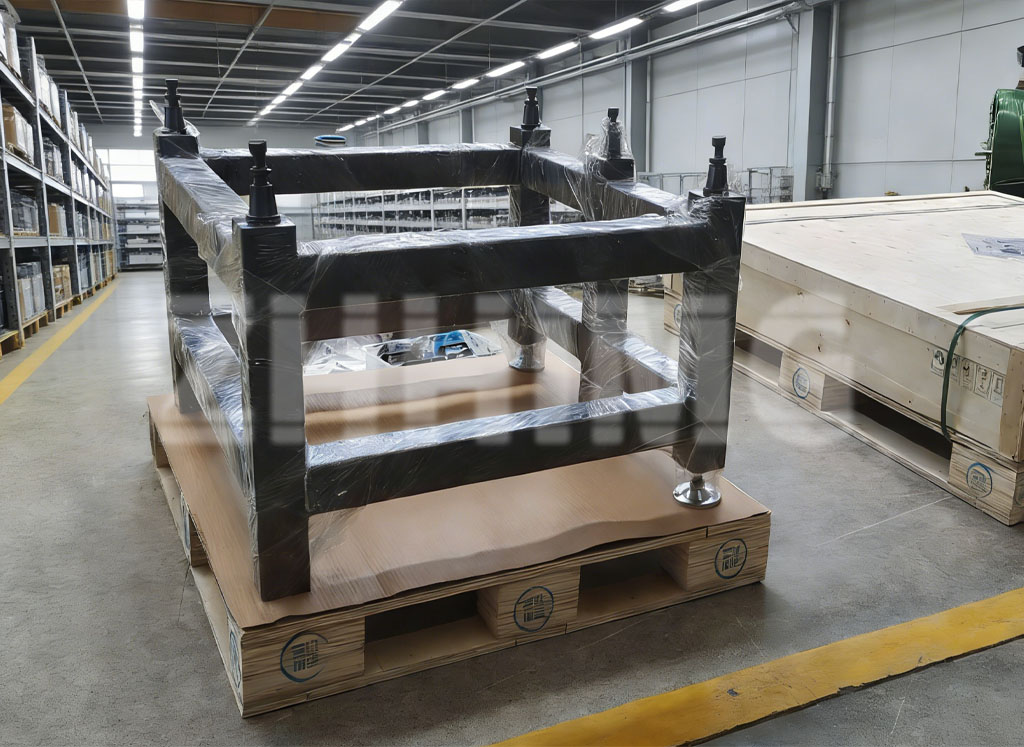
Support Stands: Adjustable height stands with leveling capability, vibration isolation, and integrated storage
Dust Covers: Protective covers to prevent contamination when not in use. Available in wood, felt-lined materials, or specialized fabrics
Transportation Equipment: Lifting eyes, transport carts, and handling equipment for safe movement
Custom Fixtures: Design and fabrication of application-specific fixtures and inspection accessories
Cost Analysis and Budget Optimization
Understanding the cost structure enables informed procurement decisions and maximizes value within budget constraints.
Price Influencing Factors
Accuracy Grade: Grade 00 plates typically cost 30-50% more than Grade 0. Grade 1 represents 40-60% cost reduction compared to Grade 0
Size and Thickness: Larger sizes and greater thickness significantly increase material and machining costs. Price generally scales with surface area and weight
Material Quality: Premium granite types (Black Diabase, high quartz content) command 15-25% premium over standard gray granite
Additional Features: T-slots, threaded inserts, protective frames, and custom configurations add 10-30% to base price depending on complexity
Certification Requirements: ISO 17025 certificates add 5-15% to procurement cost but are essential for export markets and high-precision applications
Total Cost of Ownership Considerations
Initial Procurement Cost: Purchase price including base plate, accessories, and required certifications
Installation Cost: Transportation, site preparation, specialized installation equipment, and professional setup services
Maintenance Costs: Annual calibration services, cleaning supplies, and periodic professional resurfacing
Service Life: High-quality granite surface plates typically provide 20-30 years of service with proper maintenance, representing excellent long-term value
Replacement and Upgrade Costs: Consider future requirements and the cost of upgrading versus selecting appropriate capacity initially
Budget Optimization Strategies
Avoid Overspecification: Select the lowest accuracy grade that meets your actual requirements. Grade 0 is sufficient for most inspection room applications—Grade 00 represents unnecessary cost unless specifically required
Standard Sizes: Standard sizes typically offer 20-30% cost savings compared to custom dimensions
Volume Purchasing: Multiple plate orders often qualify for volume discounts and reduced per-unit shipping costs
Supplier Selection: Evaluate total value proposition, including certification quality, after-sales support, and warranty terms, rather than initial price alone
Maintenance and Service Life Optimization
Proper maintenance practices significantly extend service life and preserve measurement accuracy, maximizing return on investment.
Daily Maintenance Procedures
Cleaning: Wipe surface with 50% water and 50% isopropyl alcohol solution using a soft, lint-free cloth. Dry thoroughly to prevent water spots
Inspection: Before each use, visually inspect for chips, cracks, or damage. Address any issues promptly to prevent further damage
Handling: Place workpieces gently onto the surface. Never drag workpieces across the plate, as this causes wear and surface damage
Environment: Maintain stable temperature (ideally 20±5°C) and minimize exposure to direct sunlight, heat sources, or vibration
Prohibited Practices:
- Do not use ammonia-based cleaners or acidic solutions
- Do not place heavy objects or drop tools on the surface
- Do not apply lubricants or oils that could affect measurement accuracy
Periodic Maintenance Requirements
Annual Calibration: Recommended for Grade 0 and Grade 00 plates, with recalibration intervals based on usage frequency and accuracy requirements
Professional Resurfacing: Every 3-5 years for heavy-use applications, or when flatness deviations approach tolerance limits
Support System Verification: Regular inspection of support stands and leveling to ensure proper load distribution
Documentation Maintenance: Maintain complete records of calibration certificates, maintenance procedures, and service history
Supplier Selection and Evaluation Criteria
Choosing the right supplier is as critical as selecting the right product. Evaluate potential suppliers against these key criteria.
Technical Capabilities
Manufacturing Standards: Compliance with international standards (DIN, JIS, ISO, ASME)
Quality System: ISO 9001 quality management certification, with proven track record in precision metrology equipment
Calibration Capabilities: In-house calibration laboratory with ISO 17025 accreditation preferred for accuracy assurance
Technical Support: Availability of application engineers, calibration services, and after-sales technical assistance
Quality Assurance
Material Traceability: Complete traceability from quarry to finished product
Testing Equipment: Advanced measurement capabilities including autocollimators, electronic levels, and precision straight edges
Certification Completeness: Ability to provide comprehensive certification packages for global export markets
Warranty Terms: Clear warranty coverage with reasonable terms and conditions
Commercial Considerations
Delivery Lead Time: Ability to meet project timelines with reliable delivery schedules
Pricing Structure: Transparent pricing with clear specification of included items and options
Payment Terms: Flexible payment terms that align with procurement policies
After-Sales Service: Availability of calibration, maintenance, and upgrade services over product lifecycle
Decision Matrix: Making the Final Selection
Based on the factors outlined above, use this structured approach to make your final procurement decision.
Application Analysis Worksheet
Step 1: Define Accuracy Requirements
- What are the tightest tolerances you need to measure?
- What measurement uncertainty is acceptable for your applications?
- What are the consequences of measurement errors in your process?
Step 2: Assess Workpiece Characteristics
- What are the dimensions of your largest workpieces?
- What is the weight range of typical workpieces?
- How many workpieces are inspected simultaneously?
Step 3: Evaluate Environmental Conditions
- What temperature range does your inspection room experience?
- Is humidity controlled or variable?
- Are there vibration sources in the vicinity?
Step 4: Consider Certification Requirements
- Do you export to markets requiring ISO 17025 certification?
- Are there industry-specific quality standards you must meet?
- What traceability requirements exist for your applications?
Step 5: Budget Allocation
- What is the total budget allocation including installation and accessories?
- What is the anticipated frequency of replacement or upgrade?
- What are the cost implications of measurement errors or quality failures?
Final Selection Process
Option Evaluation: Create a comparison matrix evaluating potential suppliers and options against all criteria above
Reference Site Visits: Visit facilities with similar applications to see operational performance
Trial Period: Consider requesting a trial period for critical applications to verify suitability
Long-Term Partnership: Select suppliers capable of supporting your needs over the entire product lifecycle
Conclusion: Strategic Procurement for Long-Term Value
Choosing the right granite surface plate for your inspection room requires balancing multiple competing factors: accuracy requirements, sizing needs, material quality, certification standards, and budget constraints. By systematically evaluating these factors and understanding their interrelationships, procurement professionals can make informed decisions that optimize both immediate requirements and long-term value.
The granite surface plate is not merely a purchase—it’s an investment in measurement infrastructure that will impact your quality assurance capabilities for decades. Selecting the appropriate accuracy grade, proper sizing, high-quality materials, and comprehensive certifications ensures your investment delivers reliable performance and maximizes return.
When in doubt, consult with experienced metrology professionals and reputable manufacturers who can provide application-specific guidance based on your unique requirements. The additional investment in proper selection and quality assurance pays dividends in improved measurement accuracy, reduced maintenance costs, and enhanced operational efficiency throughout the product’s extended service life.
For procurement teams seeking to optimize inspection room performance while managing costs effectively, the principles outlined in this guide provide a framework for making strategic, value-maximizing purchasing decisions in the precision metrology domain.
Post time: Mar-13-2026