
In the world of precision metrology, the “cheaper” option often ends up being the most expensive. When equipping a laboratory or a high-precision workshop, the debate usually centers on two heavyweights: Granite and Ceramic.
While granite has been the industry standard for decades due to its accessibility, advanced ceramic materials (like Alumina Al2O3) are rapidly gaining ground. If you are an SME looking to balance a tight budget with uncompromising stability, looking at the sticker price isn’t enough. You need to look at the Total Cost of Ownership (TCO).
Here is a 3-year cost and performance breakdown to help you decide which material reigns supreme for your facility.
1. Initial Investment vs. Long-Term Value
It’s no secret: Granite gages have a lower initial purchase price. For a standard 600x600mm surface plate or square, granite is significantly more affordable upfront.
However, Ceramic gages are an investment in material science. Ceramics offer a hardness that far surpasses granite, meaning they resist scratches and burrs that would otherwise compromise a granite surface on day one.
2. The Accuracy Decay Curve
This is where the “hidden costs” of granite begin to surface.
-
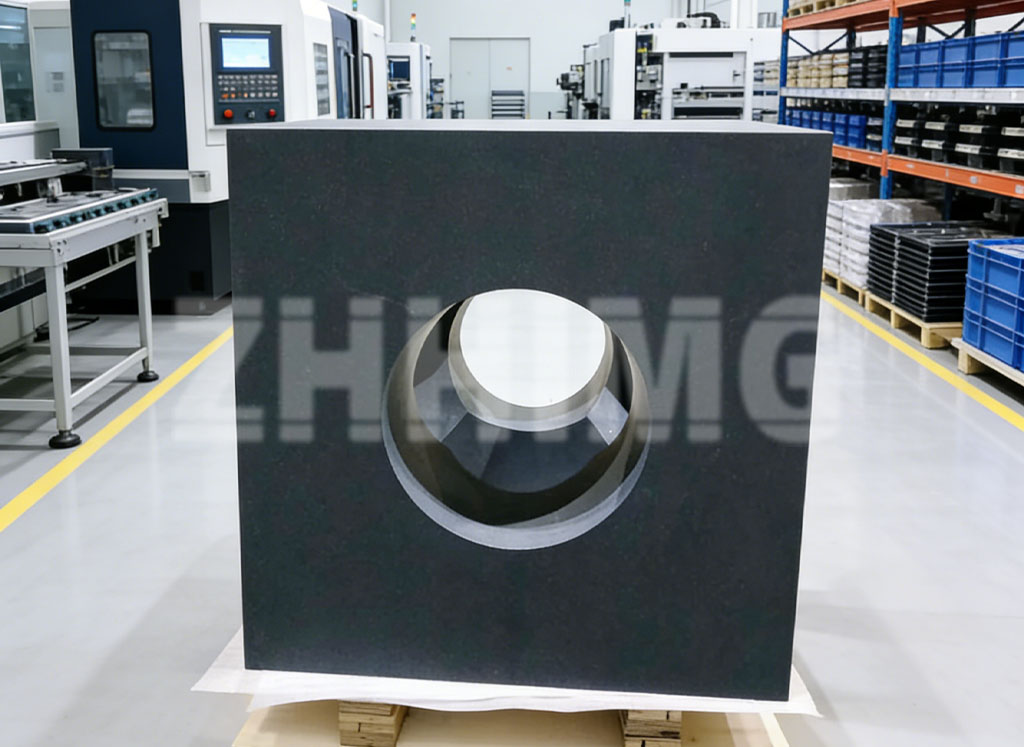
Granite: Being a natural stone, granite is porous and relatively “soft.” In high-traffic shops, it is prone to “low spots” caused by constant sliding of parts. Over 3 years, a granite square may require multiple professional lapping services to maintain its grade.
-
Ceramic: Ceramic is nearly as hard as diamond. Its accuracy decay curve is almost flat. Because it does not develop “burrs” (the material displaces downward rather than upward when scratched), it stays within tolerance significantly longer.
3. Calibration and Maintenance Costs
When calculating TCO, you must account for downtime and service fees.
| Cost Factor | Granite (3-Year Est.) | Ceramic (3-Year Est.) |
| Calibration Frequency | Every 6–12 months | Every 12–24 months |
| Maintenance | Requires specialized cleaners/wax | Wipe with alcohol; no rust/corrosion |
| Repair (Lapping) | Frequent (Soft material wears) | Rare (High abrasion resistance) |
| Thermal Stability | Moderate (COE ≈ 5.5 × 10^{-6}/K) | Superior (COE ≈ 4.0 × 10^{-6}/K) |
Pro Tip for Procurement: While a ceramic master square might cost 2x more than granite initially, the lack of required resurfacing and extended calibration intervals usually results in a break-even point at the 18-month mark.
4. Environmental Resilience
For workshops without 24/7 climate control, Ceramic is the clear winner. Granite absorbs moisture, which can lead to microscopic dimensional changes. Ceramics are non-porous and chemically inert. They don’t rust, they don’t react to moisture, and they stabilize much faster after a temperature change, reducing the “waiting time” for your metrologists.
The Verdict: Who is the “Value King”?
-
Choose Granite if: You are performing low-frequency measurements in a strictly controlled environment and have an extremely limited CAPEX budget for the current quarter.
-
Choose Ceramic if: You are looking for the best 3-year ROI. If your tools are used daily, the durability and stability of ceramic will save you thousands in recalibration fees and replacement costs.
At ZhongHui Intelligent Manufacturing (ZHHIMG), we specialize in both high-grade Black Jinan Granite and precision Alumina Ceramics. We help you crunch the numbers to ensure your measurement tools remain an asset, not a recurring expense.
Post time: Mar-23-2026