
Precision manufacturing relies on one fundamental capability: the ability to measure accurately, consistently, and traceably. As component designs become more complex and tolerances continue to tighten, the role of the measuring machine has expanded far beyond traditional inspection. Today, coordinate measuring technology supports product development, process optimization, and long-term quality assurance across a wide range of industries.
In modern metrology environments, the evolution of the multisensor CMM represents a significant step forward. By combining tactile probing with optical, laser, or vision-based sensors, multisensor systems allow a single measuring machine to capture comprehensive dimensional data from complex parts. This capability is particularly valuable when inspecting components that include delicate surfaces, fine features, or materials that are sensitive to contact. Multisensor CMMs reduce inspection time while improving measurement flexibility, making them increasingly common in electronics, medical devices, and precision machining applications.
Alongside multisensor innovation, structural design remains a decisive factor in measurement performance. The cantilever CMM machine continues to be favored in applications where accessibility and compact footprint are critical. Its open design allows easy loading and unloading of parts, while providing unobstructed access for probes and sensors. When properly engineered, cantilever systems deliver excellent repeatability and accuracy, especially for small to medium-sized components.
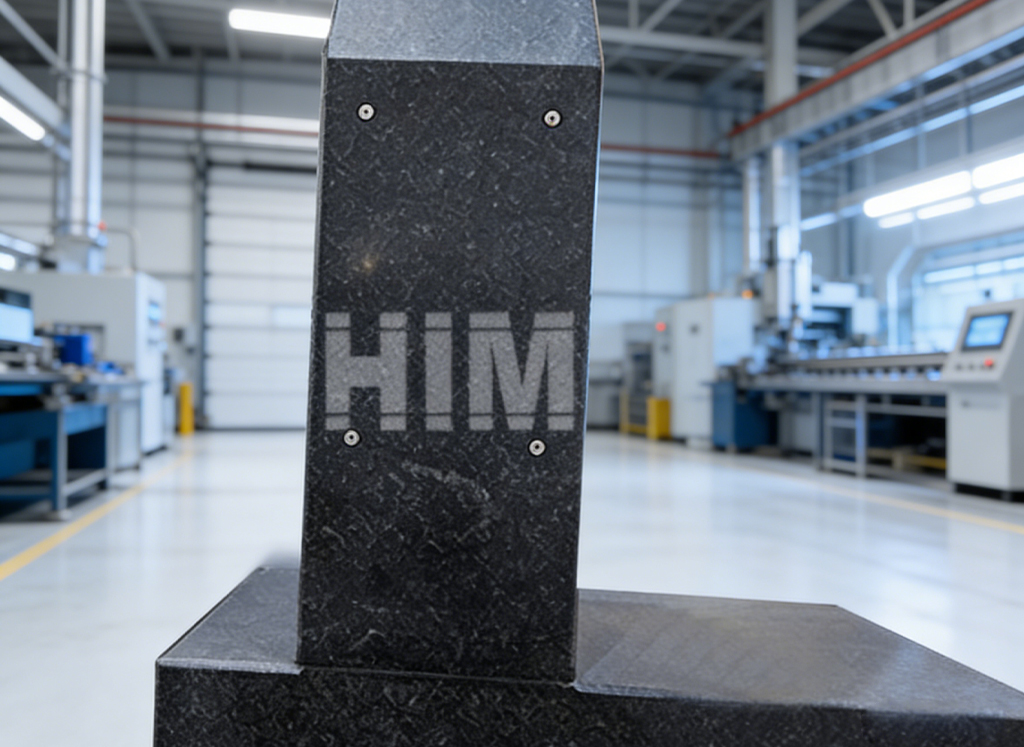
Regardless of configuration, the stability of a measuring machine depends heavily on its foundation. The CMM machine granite base plays a crucial role in maintaining geometric accuracy over time. Granite is widely used in precision metrology due to its low thermal expansion, high stiffness, and superior vibration damping. These characteristics ensure that measurement results remain consistent even under changing environmental conditions. For multisensor and cantilever CMMs alike, a well-engineered granite base directly contributes to long-term reliability and reduced recalibration intervals.
The influence of legacy systems such as the Sheffield CMM machine can still be seen in modern designs. Sheffield systems established high standards for mechanical rigidity, base construction, and measurement stability. Many of the principles introduced by these early machines—particularly in granite base design and axis alignment—continue to guide contemporary CMM engineering. This continuity highlights the importance of proven structural concepts in an era of rapid technological change.
As digital manufacturing advances, measuring machines are increasingly integrated into automated and data-driven workflows. Multisensor CMMs feed rich measurement data into quality management systems, while cantilever CMM machines support fast inspection cycles on the production floor. In these environments, structural integrity and material quality are just as important as sensor technology and software capability.
ZHONGHUI Group (ZHHIMG) has extensive experience supporting the global metrology industry with precision granite components and structural solutions. The company provides custom granite bases, guideways, and machine structures for a wide range of CMM configurations, including multisensor systems and cantilever designs. These components are manufactured to strict geometric tolerances and are designed to support stable, long-term measurement performance.
Material selection, aging processes, and precision lapping are essential steps in producing granite bases suitable for high-end measuring machines. Even minor inconsistencies in density or internal stress can affect measurement accuracy over time. By applying controlled manufacturing processes and rigorous inspection, precision granite structures help ensure that multisensor and cantilever CMMs perform as intended throughout their service life.
The future of metrology will be shaped by greater sensor integration, increased automation, and higher expectations for measurement efficiency. As these trends continue, the importance of a stable mechanical foundation will remain unchanged. Measuring machines that combine advanced sensing technology with proven structural design are best positioned to meet the demands of modern manufacturing.
From multisensor inspection to compact cantilever systems and granite-based foundations inspired by classic Sheffield CMM machines, today’s metrology solutions reflect both innovation and continuity. By balancing new technologies with time-tested engineering principles, manufacturers can achieve the accuracy, reliability, and flexibility required in an increasingly competitive industrial landscape.
Post time: Jan-06-2026