
In the race toward sub-micron defect detection—whether for smartphone camera lenses, AR/VR optics, or semiconductor wafers—machine vision integrators are hitting a critical bottleneck: mechanical drift and thermal instability in metal-based optical mounts. The solution? Moving beyond traditional materials entirely.
Enter precision glass components: non-metallic, thermally inert, and dimensionally stable structures engineered to serve as optical substrates that anchor high-resolution imaging paths with micron-level fidelity. At zhhimg, we’re helping vision system designers achieve unprecedented inspection system focus accuracy by rethinking what “structural” really means in optical metrology.
Why Metal Falls Short in High-Precision Focus Paths
Most inspection systems still rely on aluminum or stainless steel for lens holders, beam splitters, and reference plates. While machinable and strong, metals suffer from:
- High CTE (12–17 ppm/°C): Causes focal plane shift with ambient temperature changes as small as 1°C
- Magnetic interference: Disrupts electron-beam or magnetic-stage alignment in hybrid systems
- Outgassing & corrosion: Compromises cleanroom compatibility and long-term surface integrity
For mobile lens manufacturers inspecting multi-element assemblies at ±2 µm tolerance, even nanometer-scale focus drift can trigger false rejects or missed defects.
The Glass Advantage: Stability Built into the Substrate
zhhimg’s precision glass components—fabricated from low-expansion borosilicate or fused silica—are designed as functional optical-mechanical hybrids. Key benefits include:
- CTE as low as 0.55 ppm/°C (fused silica): Near-zero thermal drift across 15–35°C operating ranges
- Surface flatness ≤ λ/10 @ 632.8 nm: Enables direct integration as reference planes or beam-splitting windows
- Non-magnetic, non-conductive, zero outgassing: Ideal for ISO Class 5+ cleanrooms and vacuum-compatible systems
- Custom geometries: Integrated mounting bosses, kinematic features, and anti-reflective microstructures via ultra-precision grinding and polishing
These aren’t just passive parts—they’re active enablers of inspection system focus accuracy.
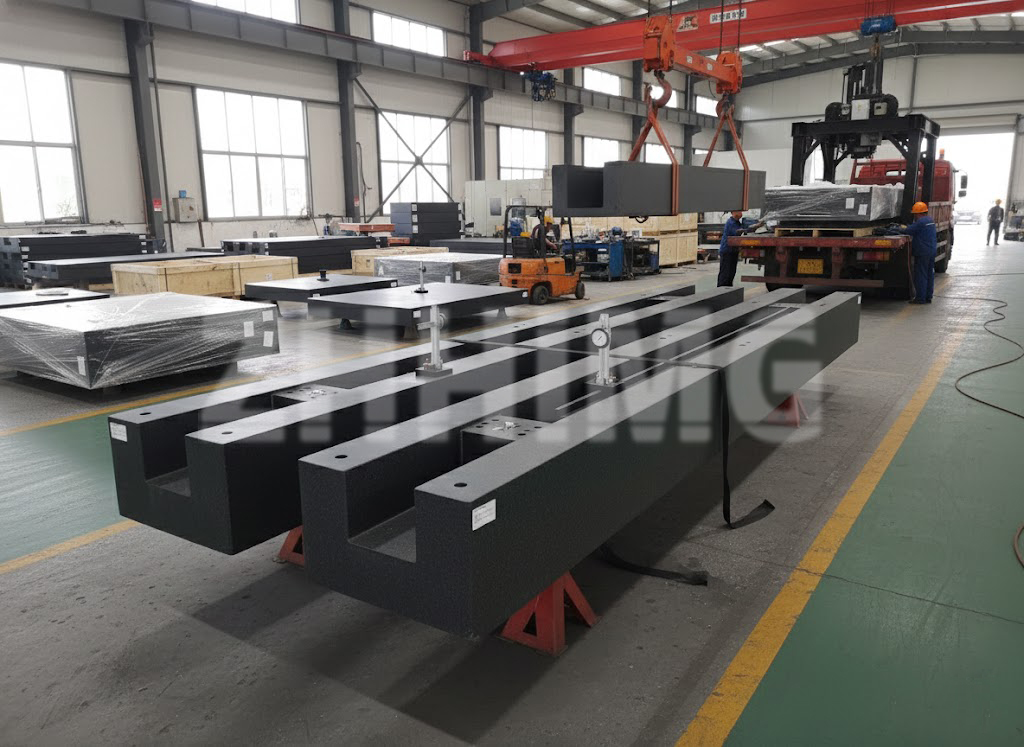
Real Application: Smartphone Lens AA (Active Alignment) Stations
A leading Chinese smartphone OEM recently upgraded its camera module inspection line by replacing aluminum lens chucks with zhhimg’s custom glass optical substrates featuring embedded fiducials and vacuum channels. Results:
- Focus repeatability improved from ±1.8 µm to ±0.4 µm
- Thermal stabilization time reduced from 25 minutes to <3 minutes after system startup
- Eliminated recalibration during 12-hour shifts due to ambient fluctuations
The secret? The entire optical path—from objective mount to sensor reference plate—was built on matched CTE glass components, creating a monolithic thermal environment.
Designing Your Next-Gen Vision System with Glass
zhhimg supports machine vision integrators with end-to-end capabilities:
- Material selection (BK7, B270, fused silica, Zerodur® alternatives)
- Tolerancing down to ±1 µm on thickness & parallelism
- Coating-ready surfaces (Ra < 0.5 nm) for AR, HR, or dichroic layers
- Metrology-backed certification per ISO 10110
Because in advanced optical inspection, the structure is part of the optics.
About zhhimg
zhhimg is a specialized manufacturer of precision glass components for high-end industrial and scientific applications. Our expertise in ultra-stable optical substrates empowers machine vision developers to push the limits of resolution, repeatability, and reliability—without being held back by thermal noise or mechanical creep.
zhhimg is a specialized manufacturer of precision glass components for high-end industrial and scientific applications. Our expertise in ultra-stable optical substrates empowers machine vision developers to push the limits of resolution, repeatability, and reliability—without being held back by thermal noise or mechanical creep.
Contact us for a free design review or request our 2026 Glass Component Integration Kit for vision system prototyping.
Post time: Mar-16-2026