
In precision manufacturing, dimensional accuracy is not achieved by chance. It is the result of carefully controlled processes, reliable equipment, and a deep understanding of how measurement systems operate in real production environments. At the center of this discipline is the CMM dimensional measurement process, which continues to evolve as manufacturers balance accuracy, flexibility, and efficiency.
Although automation has transformed many inspection workflows, the importance of a well-understood CMM machine manual remains fundamental. A CMM manual is not merely an operating guide; it defines the correct procedures for system setup, calibration, environmental control, and measurement execution. In high-precision applications, even small deviations from recommended procedures can influence measurement uncertainty. For this reason, experienced metrology professionals rely on detailed manuals to ensure consistent and traceable results across different operators and shifts.
The effectiveness of CMM dimensional measurement also depends heavily on the selection and application of CMM probes. Probes serve as the physical interface between the measuring machine and the workpiece, translating contact or non-contact interaction into precise coordinate data. Advances in probing technology have enabled higher scanning speeds, improved surface detection, and reduced measurement force, allowing sensitive components to be inspected without deformation. Whether used in fixed CMMs or portable systems, probe performance directly influences measurement accuracy and repeatability.
In recent years, growing attention has been given to flexible inspection solutions, particularly handheld CMM systems. These devices provide mobility and convenience, making them suitable for on-site inspection, large components, and applications where transporting parts to a fixed machine is impractical. Discussions around handheld CMM price often reflect more than initial investment cost. Buyers increasingly evaluate overall value, including measurement capability, ease of use, software functionality, and long-term reliability.
Handheld systems do not replace traditional coordinate measuring machines but rather complement them. In many production environments, fixed CMMs handle high-precision reference measurements, while handheld devices support rapid checks, reverse engineering, or in-process inspection. When integrated effectively, these tools create a more responsive and efficient quality control strategy.
Despite differences in form factor, all CMM systems share a common requirement for stability and structural integrity. Accurate dimensional measurement depends on controlled geometry, minimal thermal distortion, and effective vibration damping. For fixed machines, granite bases remain a preferred solution due to their low thermal expansion and long-term dimensional stability. These properties support consistent probe movement and reliable data acquisition, regardless of whether measurements are performed manually or through automated routines.
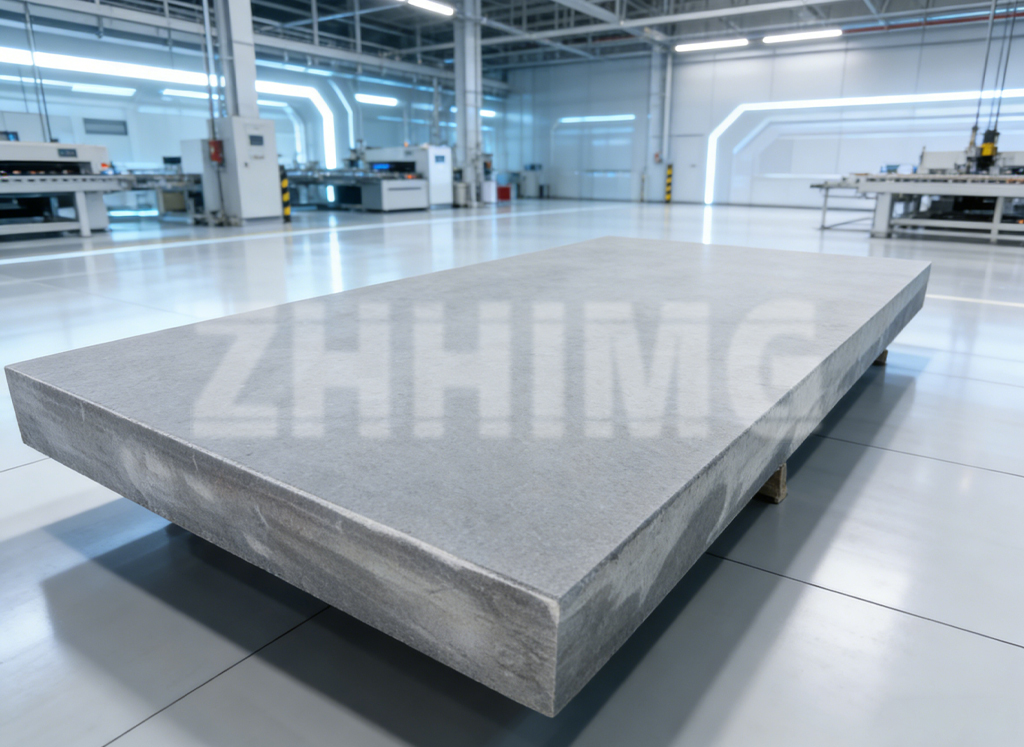
ZHONGHUI Group (ZHHIMG) has long supported the metrology industry by supplying precision granite components and structural solutions for coordinate measuring machines. With extensive experience in ultra-precision manufacturing, ZHHIMG provides granite bases, machine structures, and custom components that form the foundation of reliable CMM dimensional measurement systems. These solutions are widely applied in inspection equipment used across aerospace, automotive, electronics, and precision engineering sectors.
As manufacturing environments become more data-driven, measurement results are increasingly integrated into digital quality systems. Reliable CMM probes, properly followed machine manuals, and stable mechanical foundations ensure that collected data remains accurate and traceable. This integration enables manufacturers to identify trends, control processes, and maintain compliance with international quality standards.
The future of dimensional measurement will continue to emphasize flexibility without compromising precision. Handheld systems will become more capable, probe technologies more advanced, and software more intuitive. At the same time, the principles outlined in CMM machine manuals and the importance of stable machine structures will remain unchanged.
By combining proven metrology practices with modern measurement technologies, manufacturers can build inspection systems that adapt to changing production demands. From detailed dimensional analysis on fixed machines to rapid checks using handheld CMMs, the goal remains the same: accurate, repeatable, and trustworthy measurement results that support long-term manufacturing excellence.
Post time: Jan-06-2026