
In the world of precision measurement, the granite surface plate plays an integral role in ensuring that Coordinate Measuring Machines (CMMs) provide accurate results. As CMMs become more advanced, the demand for ultra-stable, precision-engineered granite surfaces has skyrocketed. For manufacturers, engineers, and procurement specialists, selecting the right granite surface plate is essential for maintaining the highest standards of accuracy, durability, and reliability in their measurement systems.
In this guide, we will explore the key considerations you need to make when choosing the right granite surface plate for your CMM, keeping in mind the advancements in technology and the latest trends for 2026.
Why Granite is the Material of Choice for Surface Plates
Granite is a naturally occurring material with unique properties that make it ideal for precision measuring tools. Some of the key benefits of granite surface plates include:
-
Dimensional Stability: Granite is a highly stable material that resists expansion or contraction under varying temperatures, which is critical for accurate measurements.
-
Vibration Damping: Granite’s natural crystalline structure makes it excellent at absorbing vibrations, reducing errors caused by external disturbances in high-precision environments.
-
Durability: Granite is incredibly hard, ensuring that the surface remains smooth and accurate over time. It resists wear and can last for decades with proper care.
-
Non-magnetic Properties: Granite surface plates are non-magnetic, making them suitable for high-precision tasks that require materials to be free from magnetic interference.
In short, granite’s exceptional mechanical and physical properties make it the material of choice for surface plates, particularly for use with CMMs.
Key Considerations When Selecting a Granite Surface Plate
When choosing the right granite surface plate for your CMM, there are several factors that should guide your decision. Below are the main considerations:
1. Size and Shape of the Surface Plate
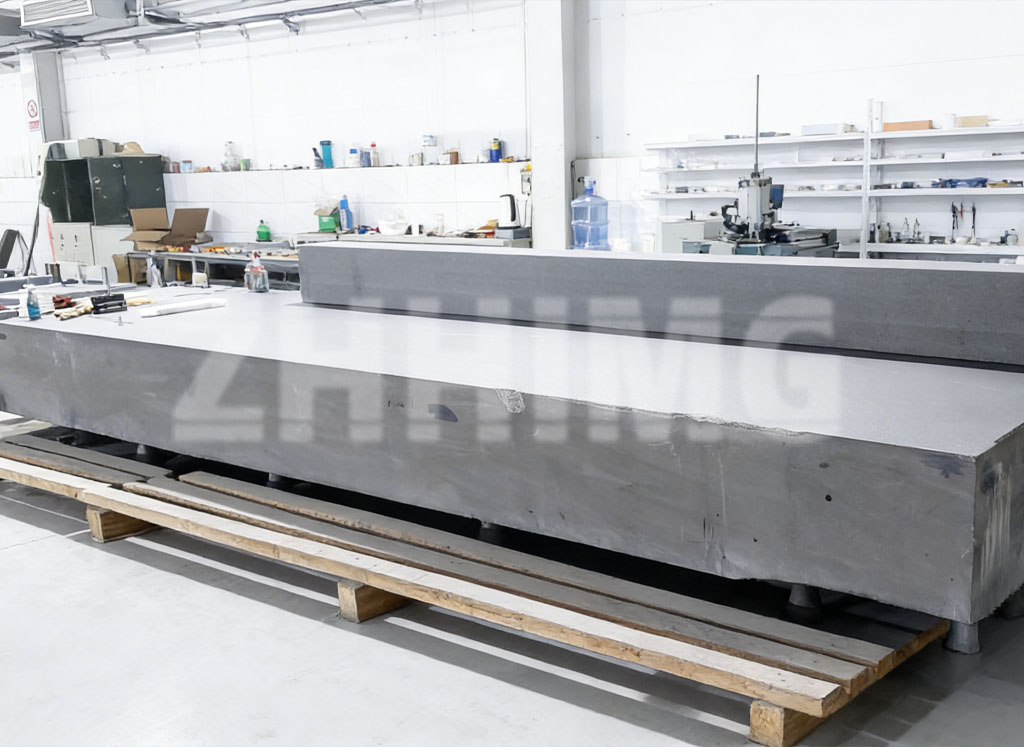
The size of your granite surface plate will largely depend on the size of the objects you need to measure and the CMM’s measurement range. Surface plates are available in a variety of sizes, ranging from small benchtop models to large, heavy-duty plates suitable for larger items.
-
Small Surface Plates: Ideal for measuring small parts with intricate details or for use in smaller labs and workshops.
-
Large Surface Plates: Used for measuring larger components or conducting large-scale inspections in industrial environments. Ensure that your CMM can accommodate the size of the plate.
-
Thickness: The thickness of the plate can also affect its stability. Thicker plates tend to be more stable but heavier. However, a thicker plate may be necessary for larger measurements.
2. Flatness and Surface Accuracy
When it comes to granite surface plates, flatness is paramount. Any deviations or imperfections in the surface can lead to measurement errors in your CMM. Ensure that the granite plate has been precision-ground and calibrated to the highest accuracy standards.
For high-precision applications, surface flatness should ideally be in the sub-micron range. For less demanding tasks, a flatness of a few microns may be sufficient.
Surface Accuracy Grades
Granite surface plates are graded according to their flatness tolerance. These grades can vary from Grade 0 (the most accurate) to Grade 3 (the least accurate):
-
Grade 0: Best for high-precision applications (e.g., aerospace, automotive manufacturing).
-
Grade 1: Commonly used for general engineering and manufacturing.
-
Grade 2 and 3: Typically used in less demanding environments where ultra-precise accuracy is not a priority.
For most industries, Grade 1 or Grade 0 is preferred when used with high-precision CMMs.
3. Material Quality and Durability
The quality of the granite used in the surface plate significantly affects its performance and longevity. High-quality granite, such as black granite, is the best choice due to its superior physical properties, including density, strength, and resistance to wear.
Black granite is the preferred material for surface plates because it has fewer natural imperfections and a smoother texture. It also ensures better dimensional stability under various environmental conditions, making it more suitable for high-precision applications. Be cautious of lower-quality granite that may have internal fissures or inconsistent grain patterns, as these can affect the surface plate’s performance over time.
4. Thermal Stability
Temperature fluctuations can affect the accuracy of your measurements, which is why thermal stability is another critical factor to consider when selecting a granite surface plate. As granite is a natural stone, it is less affected by temperature changes compared to other materials, but extreme temperature changes may still cause minor expansion or contraction.
Look for surface plates made from high-density granite, which tends to have a more stable coefficient of thermal expansion, meaning it will better resist dimensional changes due to temperature shifts.
5. Vibration Resistance
The performance of your CMM is directly impacted by the stability of the surface plate. Even slight vibrations from surrounding machinery, air flow, or operator movement can introduce measurement errors. A high-quality granite surface plate will absorb these vibrations, ensuring stable, accurate measurements.
Some high-end granite surface plates come with vibration isolation features such as embedded dampening systems. These systems are designed to reduce the impact of external vibrations, further increasing the accuracy of your measurements.
6. Cost vs. Performance
While granite surface plates provide superior accuracy, they are also an investment. The best surface plates can be expensive, especially if you opt for larger sizes, higher accuracy grades, or additional features such as vibration isolation.
When making your purchase, consider the following factors to balance cost and performance:
-
The precision required by your CMM: If your measurements require sub-micron accuracy, opt for a higher-grade, more stable surface plate, even if it comes at a higher cost.
-
The scale of your operations: If your CMM is being used in a high-production environment, a larger, more durable surface plate may be necessary to withstand frequent use.
-
Budget: While granite is an investment, it’s crucial to choose the highest-quality plate within your budget to avoid costly inaccuracies down the line.
7. Maintenance and Care
Granite surface plates are durable and resistant to wear, but proper maintenance is still crucial to preserving their accuracy. Regular cleaning and periodic recalibration will ensure the surface remains smooth and stable over time.
To maintain the surface plate:
-
Clean it regularly to prevent dust and debris from affecting measurements.
-
Use a precision surface gauge to check for flatness and ensure the plate remains within tolerance.
-
If necessary, have it re-calibrated by a professional to ensure it maintains its high standards of accuracy.
Conclusion
Choosing the right granite surface plate for your CMM is crucial for maintaining the precision of your measurements and ensuring the longevity of your equipment. By considering factors such as size, surface accuracy, material quality, thermal stability, vibration resistance, and cost, you can make an informed decision that best meets your needs.
As manufacturing technology continues to advance, 2026 is shaping up to be a year where granite surface plates continue to evolve to meet the needs of high-precision industries. By investing in a high-quality granite surface plate, you can enhance the performance of your CMM and ensure that your measurements are always accurate and reliable.
If you’re ready to purchase a granite surface plate for your CMM, consult with our team to explore the options available. With expert advice and the highest-quality products, we can help you find the perfect solution for your precision measurement needs.
Post time: Mar-06-2026