
When designing a granite precision platform, one of the key considerations is its thickness. The thickness of the granite plate directly affects its load-bearing capacity, stability, and long-term measurement accuracy.
1. Why Thickness Matters
Granite is naturally strong and stable, but its rigidity depends on both material density and thickness. A thicker platform can resist bending or deformation under heavy loads, while a thinner platform may flex slightly, especially when supporting large or unevenly distributed weights.
2. Relationship Between Thickness and Load Capacity
The platform’s thickness determines how much weight it can support without compromising flatness. For example:
-
Thin Plates (≤50 mm): Suitable for light measuring instruments and small components. Excessive weight can cause deflection and measurement errors.
-
Medium Thickness (50–150 mm): Often used in workshop inspection, CMM auxiliary platforms, or medium-sized assembly bases.
-
Thick Plates (>150 mm): Required for heavy machinery, large-scale CNC or optical inspection setups, and industrial applications where both load-bearing and vibration resistance are critical.
3. Stability and Vibration Damping
Thicker granite platforms not only support more weight but also provide better vibration damping. Reduced vibration ensures that precision instruments mounted on the platform maintain nanometer-level measurement accuracy, which is essential for CMMs, optical devices, and semiconductor inspection platforms.
4. Determining the Right Thickness
Selecting the appropriate thickness involves evaluating:
-
Intended Load: Weight of machinery, instruments, or workpieces.
-
Platform Dimensions: Larger plates may require increased thickness to prevent bending.
-
Environmental Conditions: Areas with vibration or heavy traffic may require extra thickness or additional support.
-
Precision Requirements: Higher precision applications demand more rigidity, often achieved with thicker granite or reinforced support structures.
5. Professional Advice from ZHHIMG®
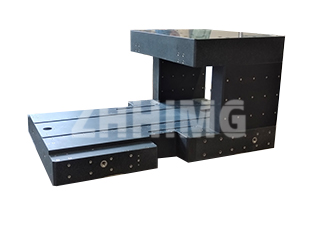
At ZHHIMG®, we produce granite precision platforms with carefully calculated thicknesses tailored to application requirements. Every platform undergoes precision grinding and calibration in temperature- and humidity-controlled workshops, ensuring optimal stability, flatness, and long-term performance.
Conclusion
The thickness of a granite precision platform is not just a structural parameter—it is a key factor influencing load capacity, vibration resistance, and measurement stability. Choosing the right thickness ensures that your precision platform remains reliable, durable, and accurate for years of industrial use.
Post time: Oct-11-2025