
In the relentless pursuit of perfection that defines modern manufacturing, every micron tells a story. For a seasoned professional, the machinist surface plate is more than just a piece of workshop furniture; it is the absolute “Point Zero” of every quality control process. As tolerances in aerospace, semiconductor, and medical device manufacturing shrink toward the nanometer, a fundamental question arises: is the standard of your measuring foundation keeping pace with your production goals? The industry has seen a significant evolution from the classic herman surface plate and vintage metal foundations toward the ultra-stable, high-density granite surface solutions that define today’s elite laboratories.
The shift toward granite was not merely a trend but a necessity driven by material science. While craftsmen of the past relied heavily on a cast iron straight edge for manual scraping and alignment, the limitations of metal—specifically its sensitivity to temperature and its tendency to rust—became bottlenecks for high-precision engineering. A cast iron tool, though durable, responds to the heat of a technician’s hand, potentially warping just enough to throw off a critical measurement. In contrast, the high-density ZHHIMG® black granite, with a density of approximately 3100kg/m³, offers an inert, thermally stable environment that remains unaffected by the local climate of the factory floor.
Understanding surface plate tolerances is critical for any engineer looking to maintain a competitive edge. Whether you are following the German DIN, American ASME, or Japanese JIS standards, the Grade 00 designation represents the pinnacle of flatness. Achieving this level of precision requires more than just advanced CNC machinery; it requires a level of human expertise that is becoming increasingly rare. At ZHHIMG®, our master lapping technicians—some with over 30 years of experience—hand-finish each surface to a point where they can intuitively “feel” a deviation of a single micron. This fusion of high-end measuring instruments engineering and traditional craftsmanship ensures that our plates don’t just meet standards; they redefine them.
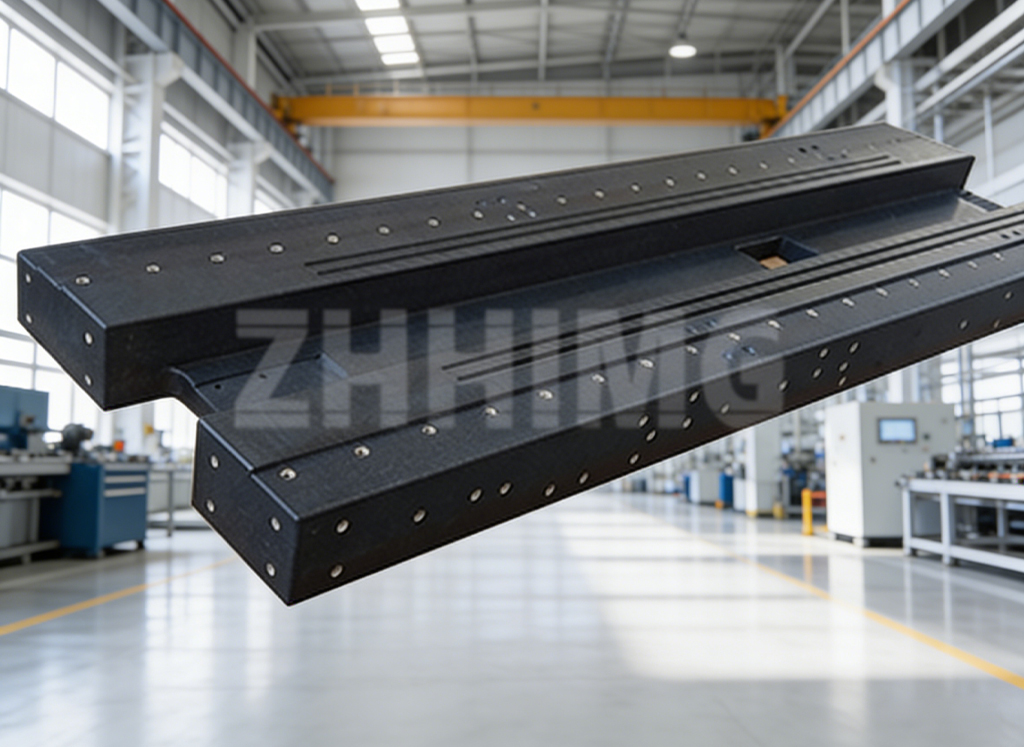
The reliability of your measuring instruments engineering is entirely dependent on the stability of the plane it rests upon. If you are using a 0.5μm Mahr or a Renishaw laser interferometer, any microscopic instability in the granite surface will be magnified across your data set. This is why ZHHIMG® has invested so heavily in our production environment, utilizing a 10,000 m² constant temperature and humidity cleanroom built on 1000mm thick ultra-hard concrete to eliminate external vibrations. We understand that a machinist surface plate is only as accurate as the environment in which it was born.
For companies accustomed to the legacy of the herman surface plate, transitioning to ZHHIMG®’s advanced black granite represents a significant upgrade in both durability and repeatability. Our commitment to “No cheating, No concealment, No misleading” means we never use inferior marble or low-density stones that are prone to wear. By maintaining international certifications like ISO 9001 and CE, and collaborating with global metrology institutes from the UK to Singapore, we ensure that every ZHHIMG® product serves as an unshakable benchmark for the world’s most innovative brands.
In a world where “the precision business can’t be too demanding,” we continue to push the boundaries of what is possible. Whether you are calibrating a cast iron straight edge for a traditional machine tool or setting up a high-speed linear motor platform, the foundation must be beyond reproach. The precision of ZHHIMG® is not just a measurement; it is a promise of quality that travels from our world-class facility in Jinan to the most sophisticated labs across the globe.
Post time: Dec-26-2025