
In today’s high-stakes manufacturing landscape—where a single micron can determine product success or failure—the integrity of your engineering measuring equipment hinges on more than just precision. It depends on traceability, repeatability, and above all, adherence to internationally recognized calibration ISO frameworks. Yet across countless workshops, labs, and production floors, one critical component is often overlooked: the measuring bench itself. Is it merely a sturdy table, or is it a calibrated, certified foundation for reliable data?
At ZHH International Metrology & Measurement Group (ZHHIMG), we’ve spent over a decade ensuring that every industrial measuring tool we support—from micrometers and height gauges to optical comparators and vision systems—rests on a platform that meets not just mechanical demands, but metrological ones. Because in precision engineering, your measurement is only as trustworthy as the reference it’s built upon.
When engineers think of calibration ISO compliance, they typically focus on the instruments: torque wrenches, dial indicators, CMM probes. But ISO/IEC 17025, ISO 9001, and the specialized ISO 8512 series for surface plates all emphasize environmental and foundational stability as core prerequisites. A measuring bench made of untreated steel or particleboard may seem sufficient for assembly tasks, but it introduces thermal drift, vibration sensitivity, and long-term deformation that silently corrupt measurement outcomes.
That’s why ZHHIMG designs its metrology-grade benches using thermally stable granite cores, damped composite frames, and modular mounting interfaces—all engineered to serve as active components in a certified calibration chain. Each bench undergoes flatness verification per ISO 8512-2, with optional certification traceable to NIST, PTB, or NPL. This isn’t over-engineering; it’s risk mitigation. When your aerospace supplier audits your quality system, they don’t just ask if your micrometer was calibrated last month—they ask whether the entire measurement environment supports that calibration’s validity.
Our clients in automotive Tier-1 supply chains, medical device manufacturing, and semiconductor packaging have discovered that upgrading their engineering measuring equipment without addressing the base infrastructure is like installing a Formula 1 engine in a rusted chassis. The potential is there—but performance is compromised from the ground up. That’s why we now offer integrated solutions where the measuring bench functions as both a mechanical workstation and a metrological datum plane, compatible with digital readouts, automated probing arms, and even inline SPC data capture.
For example, one European EV battery manufacturer recently replaced their standard steel inspection tables with ZHHIMG’s vibration-isolated granite benches. Within weeks, their gauge repeatability and reproducibility (GR&R) studies improved by 37%, simply because thermal expansion and floor-borne vibrations were no longer distorting readings from their high-resolution profilometers. Their industrial measuring tools hadn’t changed—but their foundation had.
Crucially, compliance isn’t a one-time checkbox. Calibration ISO standards require ongoing verification, especially for equipment used in regulated industries. That’s why every ZHHIMG measuring bench ships with a digital calibration passport: a QR-linked record containing initial flatness maps, material certification, recommended recalibration intervals, and environmental usage limits. Customers can schedule automated reminders through our Z-Metrology Portal, ensuring continuous alignment with ISO audit requirements.
Moreover, we’ve eliminated the false economy of “good enough” workbenches. While commodity tables may cost less upfront, their lack of dimensional stability leads to hidden costs: failed audits, scrapped batches, rework loops, and—most damaging—loss of customer trust. In contrast, our benches are built to last decades, with replaceable wear strips, modular fixturing grids, and ESD-safe finishes for electronics handling. They’re not furniture; they’re capital metrology assets.
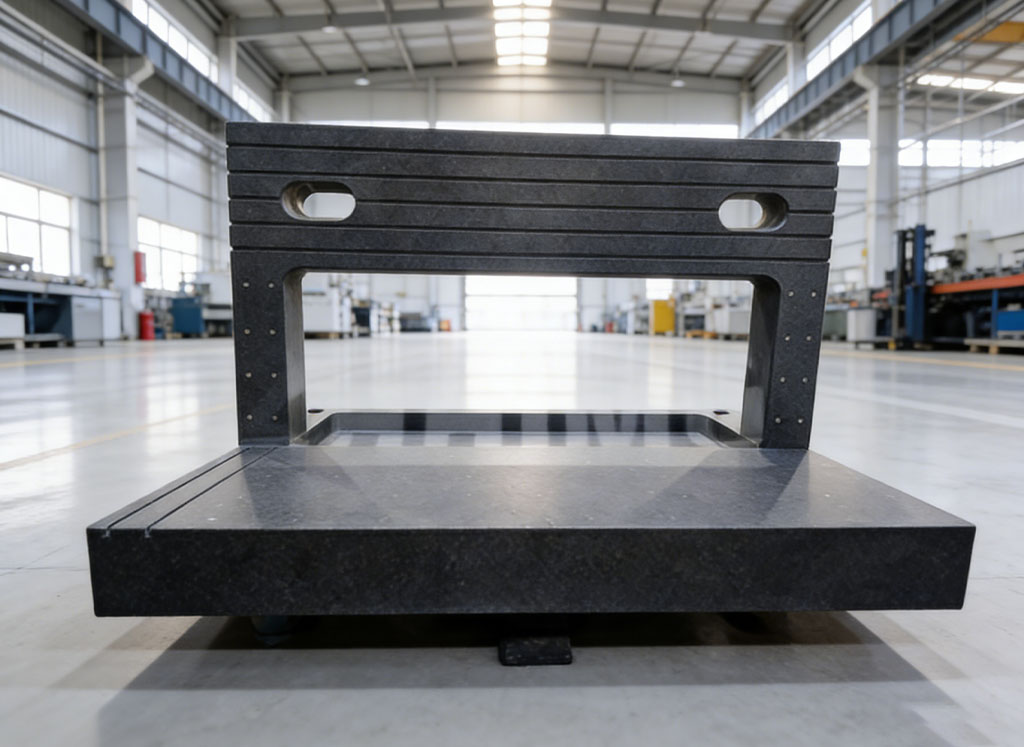
What truly distinguishes ZHHIMG in the global market is our holistic view of measurement integrity. We don’t sell isolated products—we deliver ecosystems. Whether you’re deploying a single engineering measuring equipment station in a university lab or outfitting an entire factory with standardized industrial measuring tools, we ensure every element—from the granite substrate to the torque screwdriver—is harmonized under a unified calibration strategy aligned with calibration ISO best practices.
Independent industry analysts have repeatedly noted ZHHIMG’s leadership in this integrated approach. In the 2024 Global Metrology Infrastructure Report, we were cited as one of only five companies worldwide offering end-to-end traceability from primary reference standards down to shop-floor measuring bench installations. But we measure our success not by reports, but by client outcomes: fewer non-conformances, faster PPAP approvals, and smoother FDA or AS9100 audits.
So, as you evaluate your quality infrastructure for 2026, ask yourself: Does my current measuring bench actively support my calibration ISO compliance—or quietly undermine it?
If your answer carries even a hint of doubt, it may be time to rethink what lies beneath your measurements. At ZHHIMG, we believe precision begins not with the tool in your hand, but with the surface beneath it.
Visit www.zhhimg.com to explore our certified measuring bench systems, request a free metrology readiness assessment, or speak directly with our ISO-compliance engineers. Because in the world of exacting tolerances, there’s no such thing as a neutral surface—only trusted ones.
Post time: Dec-29-2025