
In the demanding landscape of high-precision manufacturing, the integrity of a measurement is only as reliable as the reference point from which it begins. For quality control engineers and laboratory managers, the selection of equipment involves a critical understanding of the relationship between foundational stability and measurement agility. This exploration delves into the technical nuances of surface plate precision grades, the necessity of formal surface plate certification, and the technological transition from vernier to digital height gauges.
Understanding Surface Plate Precision Grades
A surface plate serves as the absolute zero for dimensional inspection. However, the level of flatness required varies significantly between a high-tech cleanroom and a heavy-duty machine shop. To address these varied needs, international standards such as ISO 8512-2 and ASME B89.3.7 define specific grades that categorize performance.
Grade 00, often referred to as Laboratory Grade, represents the pinnacle of flatness. It is engineered specifically for temperature-controlled metrology labs where ultra-high precision is the only acceptable standard. It is the primary choice for calibrating other gauges and verifying high-tolerance aerospace components.
Grade 0, known as Inspection Grade, is the most common choice for industrial quality control departments. It offers a high degree of accuracy suitable for checking general precision parts under standard inspection conditions.
Grade 1, or Tool Room Grade, is designed for the production floor. It is resilient enough for daily layout work and checking tooling. While less precise than Grade 0, it provides a stable and reliable reference in environments where micron-level precision is not the primary driver of daily operations.
The selection of a grade must align with the intended environment. Placing a Grade 00 plate in a shop floor subject to temperature swings and vibration is counterproductive, as the material will fluctuate beyond its rated tolerance.
The Role of Surface Plate Certification in Compliance
Possessing a high-quality granite base is insufficient without traceable documentation. Surface plate certification is the formal validation that a plate meets its specified grade. For manufacturers operating in the global market, especially those serving the medical, defense, and automotive sectors, certification is a mandatory component of ISO 9001 and AS9100 quality management systems.
A professional certification process involves mapping the surface using electronic levels or laser interferometers. This process confirms two critical metrics. First is overall flatness, which ensures the entire surface stays within the specified envelope of the grade. Second is repeat reading accuracy, which verifies that a localized area does not contain microscopic depressions that could skew a measurement. Regular recertification ensures that wear and tear from daily operations are identified and corrected through professional lapping, maintaining the essential chain of traceability.
Digital Height Gauge vs Vernier Height Gauge: Navigating the Evolution
Once a stable foundation is established, the choice of measurement instrument becomes the next priority. The ongoing debate regarding digital height gauge vs vernier height gauge highlights the shift toward data-driven manufacturing.
Vernier height gauges have long been respected for their durability and independence from power sources. They are excellent for manual layout work where a visual estimate is sufficient. However, they are prone to human error, specifically parallax errors and misinterpretation of the fine scale by the operator.
Digital height gauges have become the standard for modern inspection due to several clear advantages. They offer significant speed and error reduction because instant LCD readings eliminate the need for manual scale interpretation. They also provide zero-setting flexibility, allowing for rapid comparison measurements between two features. Most importantly, digital units can export data directly to Statistical Process Control systems, which is vital for real-time quality monitoring in a modern facility.
The ZHHIMG Advantage: Granite Inspection Base Manufacturers
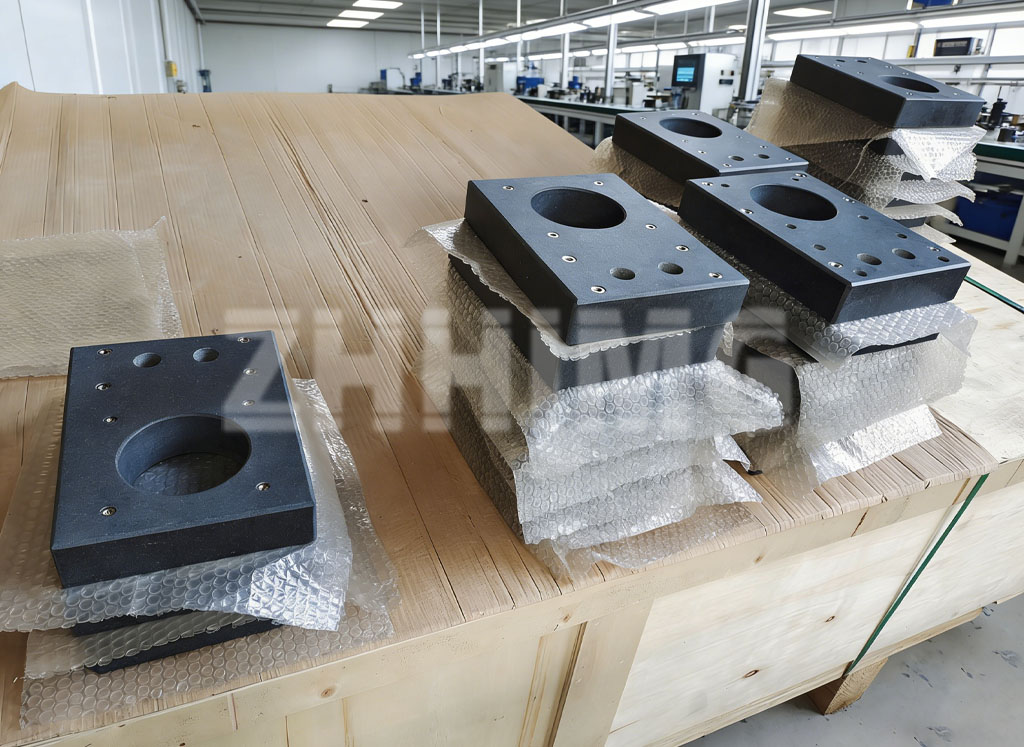
The quality of these precision tools is fundamentally tied to their origin. As a premier granite inspection base manufacturer, ZHHIMG Group focuses on the material science that makes precision possible. Not all granite is suitable for metrology; we utilize specific black granite varieties known for their high density and extremely low moisture absorption.
Our manufacturing process emphasizes long-term stability. By allowing raw granite to undergo a natural stress-relief period before final lapping, we ensure that the finished granite inspection base remains true over years of service. This commitment to material integrity is why our bases are found in the most advanced semiconductor and aerospace facilities worldwide.
Conclusion: A Holistic Approach to Accuracy
Achieving world-class precision requires a holistic view of the measurement process. It begins with selecting the correct surface plate precision grades, ensuring those plates maintain their surface plate certification, and utilizing the efficiency of a digital height gauge. When these elements are supported by a reputable granite inspection base manufacturer, the result is a quality control process that is both robust and beyond reproach.
Post time: Jan-22-2026