
In recent years, precision manufacturing has undergone rapid changes. Tighter tolerances, higher inspection frequency, and stricter quality audits have become the norm rather than the exception. While much of the attention has been placed on advanced measuring equipment and digital inspection systems, a more fundamental component is quietly returning to the spotlight: the surface plate.
Across inspection rooms, quality laboratories, and production facilities, manufacturers are reassessing how surface plates are selected, installed, and maintained. Discussions around granite surface plate vs cast iron surface plate, surface plate calibration, surface plate grade, and how to level a surface plate are no longer limited to metrology specialists. They are increasingly part of broader conversations about measurement reliability and long-term quality control.
Surface Plates: From Basic Tools to Measurement Foundations
For decades, surface plates were considered basic infrastructure—installed once and rarely questioned unless obvious damage occurred. Today, that perception is changing.
As measurement uncertainty becomes a critical factor in customer acceptance and regulatory compliance, manufacturers are realizing that surface plates are not passive accessories. They form the physical foundation of many inspection processes. Any instability, wear, or calibration deviation at this level directly affects downstream measurements.
This shift in mindset is driving renewed interest in surface plate performance, particularly in industries such as automotive, aerospace, semiconductor equipment, and precision machinery.
Granite Surface Plate vs Cast Iron Surface Plate: Changing Selection Criteria
The comparison between granite and cast iron surface plates has existed for decades, but the criteria used to evaluate them have evolved.
Cast iron surface plates remain common in traditional machine shops, especially for layout work and mechanical marking. Their resistance to impact and ability to be re-scraped make them suitable for heavy-duty applications.
However, modern inspection environments place greater emphasis on thermal stability, dimensional consistency, and low maintenance. In these areas, granite surface plates are increasingly preferred. Natural granite offers excellent resistance to temperature fluctuation, does not corrode, and remains non-magnetic—characteristics that align well with today’s precision measurement requirements.
As a result, many manufacturers are moving toward a mixed-use strategy: cast iron surface plates on the shop floor, and granite surface plates in inspection and calibration areas where stability and repeatability are critical.
Surface Plate Calibration Is No Longer an Afterthought
Another notable trend is the growing attention paid to surface plate calibration. What was once viewed as a periodic formality is now recognized as a key element of measurement traceability.
Quality audits increasingly require clear documentation proving that reference surfaces meet defined flatness tolerances. An out-of-calibration surface plate can invalidate inspection results across multiple processes, creating hidden quality risks.
To address this, more companies are adopting structured calibration programs based on usage intensity and environmental conditions rather than fixed time intervals alone. Calibration reports now commonly include full flatness maps, uncertainty analysis, and traceability to national or international standards.
This shift reflects a broader industry understanding: accurate measurement starts with a verified reference surface.
Rethinking Surface Plate Grade Selection
The topic of surface plate grade is also receiving renewed attention. While higher accuracy grades are often associated with better performance, manufacturers are learning that the correct grade depends on application, not assumption.
Over-specifying a surface plate grade can increase costs without improving inspection outcomes, while under-specifying can compromise measurement reliability. As a result, many facilities are adopting a tiered approach—reserving high-grade surface plates for calibration and critical inspection tasks, and using standard grades for general inspection or layout work.
This more deliberate approach to grade selection helps balance accuracy requirements with cost efficiency, particularly in multi-site or high-volume operations.
Why Proper Leveling Is Gaining Importance
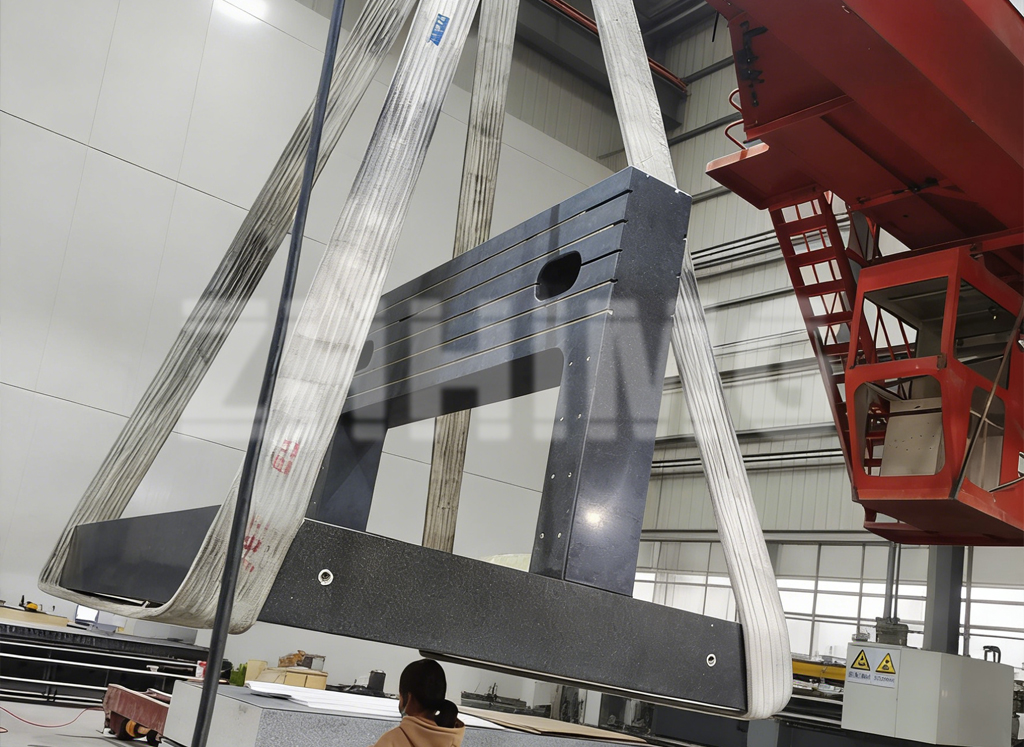
As expectations for surface plate accuracy rise, installation quality is becoming a focal point—especially how to level a surface plate correctly.
Although flatness is defined independently of level, improper leveling can introduce internal stresses that affect long-term stability. Uneven support or over-adjustment of leveling screws can gradually distort a surface plate, leading to calibration drift over time.
To mitigate this risk, manufacturers are investing more attention in proper foundations, rigid support stands, and vibration isolation. Precision leveling is increasingly treated as part of a controlled installation process rather than a one-time setup task.
Environmental Factors and Long-Term Performance
Environmental control has also become part of the surface plate conversation. Temperature variation, floor vibration, and uneven loading can all influence measurement consistency, particularly in high-precision environments.
Granite surface plates, with their natural thermal stability, perform well under controlled conditions. When combined with proper support and regular calibration, they provide a stable reference platform over extended service life.
These considerations are especially relevant as inspection processes move closer to production lines, where environmental influences are more difficult to eliminate.
What This Means for Manufacturers
The renewed focus on surface plates reflects a broader industry shift toward measurement system integrity. Advanced inspection equipment can only perform as well as the reference surfaces that support it.
Manufacturers who take a systematic approach—selecting the appropriate surface plate material, defining the correct grade, maintaining calibration discipline, and ensuring proper leveling—are better positioned to achieve consistent and auditable measurement results.
Conversely, overlooking these fundamentals can undermine even the most sophisticated inspection systems.
ZHHIMG’s View on Precision Surface Plate Applications
At ZHHIMG, we work closely with customers who face these challenges in real-world production and inspection environments. Through our experience with precision granite components and surface plate applications, we see growing awareness that surface plates are long-term assets requiring thoughtful selection and maintenance.
Our focus extends beyond manufacturing accuracy to include how surface plates are installed, supported, and maintained throughout their lifecycle. This holistic perspective helps customers achieve stable measurement performance and meet international quality standards with confidence.
Looking Forward
As tolerances tighten and quality expectations continue to rise, surface plates are no longer background equipment. Discussions around granite surface plate vs cast iron surface plate, surface plate calibration, surface plate grade, and how to level a surface plate reflect a deeper industry recognition of their role in precision manufacturing.
For companies committed to reliable measurement and long-term quality, revisiting surface plate strategy is not just timely—it is essential.
Post time: Jan-19-2026