
In today’s manufacturing world, precision is the hallmark of quality. Industries such as aerospace, automotive, and semiconductor production demand tools that ensure the highest levels of accuracy. Among these tools, precision surface plates, straight edges, and ceramic measuring instruments play a crucial role in maintaining the integrity of manufactured components. This article explores the importance of these precision measurement tools, focusing on surface plates, flatness tolerance, and ceramic tools.
The Role of Precision Surface Plates in Measurement
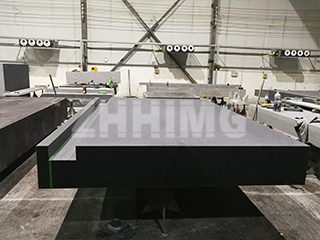
A precision surface plate serves as a foundation for accurate measurements in high-precision environments. These surface plates are typically made from granite, cast iron, or ceramic, each offering unique advantages depending on the application. For example, granite surface plates are commonly used in industries where thermal stability and rigidity are essential. They are often found in metrology labs, where they serve as a reference for measuring the flatness and alignment of parts.
High-precision surface plates are manufactured to meet strict tolerance requirements. A typical surface plate has a flatness tolerance of microns, making it a vital tool for industries like semiconductor manufacturing, where even the slightest deviation can lead to defects. In these environments, surface plates are used to ensure the accuracy of components during inspection, calibration, and assembly.
Understanding Straight Edge Flatness Tolerance
Flatness tolerance refers to the allowable deviation from an ideal flat surface. In precision manufacturing, even minute deviations in flatness can lead to performance issues in machinery and components. Straight edge flatness tolerance is particularly important in industries such as aerospace and semiconductor production, where parts must adhere to stringent quality standards.
The measurement of flatness tolerance is achieved by using precision tools like straight edges and surface plates. By placing a straight edge along the surface of a component, manufacturers can measure the deviation from flatness and ensure that the part meets the required specifications. In applications like machine tool calibration, where accuracy is paramount, ensuring the correct flatness tolerance is essential for optimal performance.
Precision Measuring Equipment: The Backbone of Accurate Manufacturing
Precision measuring equipment is at the heart of modern manufacturing, ensuring that parts are made to the exact specifications required by industries such as aerospace, automotive, and medical device manufacturing. Tools like micrometers, calipers, and laser interferometers are essential for achieving high accuracy in measurement tasks.
These measuring instruments work in conjunction with surface plates and straight edges to verify the precision of components during the manufacturing process. Digital measurement systems, such as Coordinate Measuring Machines (CMMs), automate the measurement process, allowing for faster and more consistent results. The integration of these tools ensures that components are manufactured to the highest standards of quality and accuracy.
Ceramic Measuring Tools: The Future of High-Precision Measurement
Ceramic measuring tools are becoming increasingly popular in precision metrology due to their exceptional properties. Unlike traditional materials like steel and granite, ceramics offer high rigidity, resistance to wear, and superior thermal stability. These properties make ceramic tools ideal for environments where precision and consistency are critical.
Ceramic rulers, straight edges, and surface plates are used in industries where high-precision measurements must be maintained over long periods. For example, in semiconductor manufacturing, ceramic tools are preferred because they remain stable even under fluctuating temperatures. In addition, ceramics are less prone to expansion and contraction, ensuring that measurements remain accurate over time.
Industry Applications: Where Precision Tools Make a Difference
Precision measuring tools are used across a wide range of industries to ensure that components meet exacting standards. In semiconductor manufacturing, precision surface plates are used to measure the flatness of wafers, while straight edges are used for alignment tasks. In aerospace, surface plates and measuring equipment are used to check the integrity of critical components, ensuring that they meet safety and performance standards.
At ZHHIMG, we work with industries that demand the highest levels of precision. Our range of surface plates, straight edges, and ceramic measuring tools are designed to meet the needs of industries that rely on exacting measurements to maintain product quality.
Conclusion
In conclusion, precision surface plates, straight edge flatness tolerance, and ceramic measuring tools are essential for achieving high-accuracy measurements in demanding industrial environments. By using the right tools for the job, manufacturers can ensure that their components meet the highest standards of quality and performance. ZHHIMG is proud to offer a wide range of precision measurement tools, designed to support the needs of industries that rely on ultra-high precision for their manufacturing processes.
Post time: Feb-09-2026