
In modern manufacturing, product quality is no longer verified at the end of the line—it is engineered, monitored, and controlled throughout the entire process. For facility managers and quality directors, establishing a reliable inspection room setup is a foundational step toward achieving consistent product performance and compliance with international standards.
Whether building a new factory or upgrading an existing quality control area, a well-designed inspection station requires more than just instruments. It demands a systematic combination of metrology lab equipment, environmental control, and process integration.
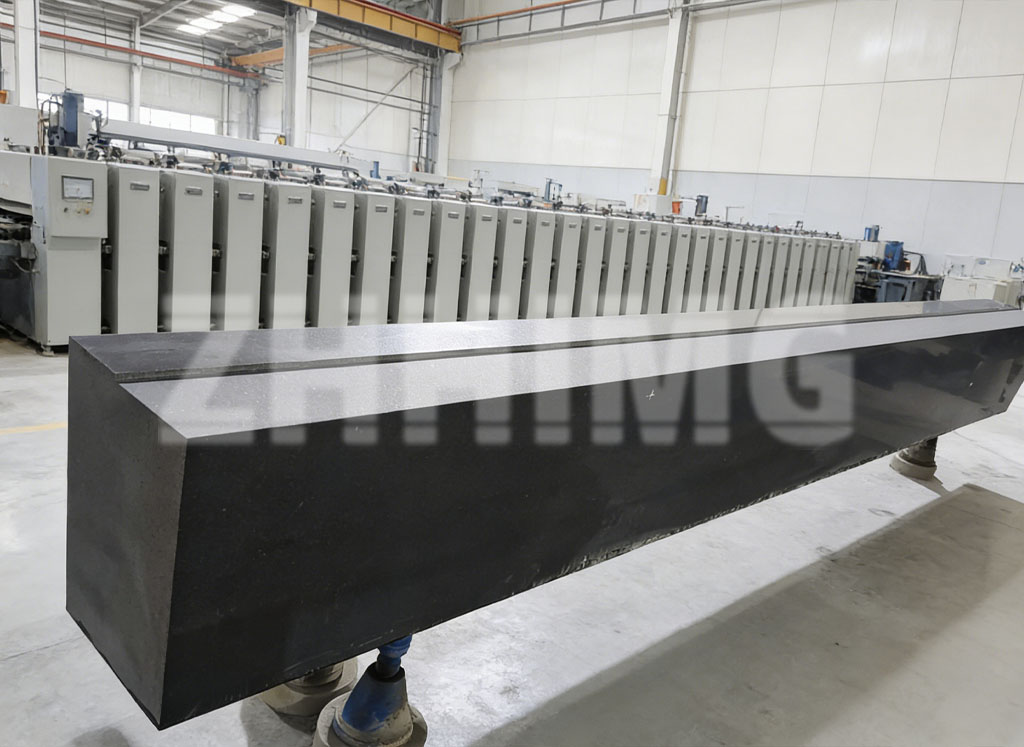
A typical inspection station begins with a stable reference platform. Granite surface plates remain the industry standard due to their excellent dimensional stability and vibration damping. For general inspection tasks, a Grade A granite surface plate with a minimum size of 600 × 450 mm is recommended, while higher-precision environments may require Grade AA or larger formats. This surface serves as the baseline for all dimensional verification activities, ensuring repeatability and accuracy.
Building on this foundation, height gauges are essential for vertical measurement and layout work. Digital height gauges with a resolution of 0.001 mm provide the precision required for most industrial applications. Complementary tools such as dial indicators enable quick comparative measurements, while gauge blocks—preferably Grade 1 or higher—establish traceable dimensional references. Additional accessories, including angle plates and V-blocks, expand the system’s capability to handle cylindrical parts, angular verification, and complex geometries.
Equally important is the physical environment in which these measurements are performed. A controlled inspection room should maintain a temperature of 20 ±1°C and relative humidity below 60% to minimize thermal expansion effects. Vibration isolation is critical, particularly in facilities located near heavy machinery. Adequate workspace design is often overlooked; maintaining at least one meter of clearance around the inspection table improves ergonomics, safety, and operational efficiency. Proper lighting—uniform, shadow-free, and sufficiently bright—is essential to reduce human error during visual inspection and instrument reading.
As manufacturing becomes increasingly data-driven, integrating inspection equipment with digital systems is a key differentiator. Modern quality inspection equipment can be connected to SPC (Statistical Process Control) software, enabling real-time data collection and analysis. Barcode systems can be used to track parts and ensure traceability across production batches. Calibration management should also be digitized, with scheduled intervals and automatic reminders to maintain compliance and measurement integrity.
From a budgeting perspective, inspection station investments can vary significantly depending on the level of sophistication. A basic setup typically ranges from $5,000 to $10,000, covering essential tools and a standard granite plate. Intermediate configurations, incorporating higher-precision instruments and improved environmental controls, range from $15,000 to $25,000. Advanced metrology labs, including coordinate measuring machines (CMM) and full digital integration, can exceed $40,000, offering comprehensive inspection capabilities for high-end manufacturing.
Despite the availability of advanced equipment, many facilities encounter avoidable issues during setup. Common mistakes include selecting an undersized surface plate, neglecting proper lighting conditions, failing to implement temperature control, and overlooking calibration protocols. These oversights can compromise measurement accuracy and lead to costly quality deviations.
Equally critical is the human factor. Even the most advanced metrology lab equipment requires skilled operators. Investing in personnel training—such as GD&T (Geometric Dimensioning and Tolerancing) education and ASQ certification—ensures that measurement data is interpreted correctly and applied effectively in quality control processes.
ZHHIMG supports manufacturing facilities with integrated solutions for precision inspection stations, offering granite surface plates, metrology tools, and customized system configurations. By combining high-quality equipment with application expertise, ZHHIMG helps customers establish inspection environments that meet both current production needs and future scalability requirements.
In today’s competitive manufacturing landscape, a well-designed inspection station is not just a support function—it is a strategic asset. With the right equipment, environment, and process integration, manufacturers can achieve higher consistency, improved traceability, and greater confidence in product quality.
Post time: Apr-08-2026