
In the modern manufacturing landscape, the margin for error has shrunk from millimeters to microns, and eventually to nanometers. As traditional alloys reach their physical limits in high-temperature and high-friction environments, technical ceramics have emerged as the backbone of next-generation engineering. At ZHHIMG, we recognize that the shift toward precision ceramic parts is not just a trend but a necessity for industries ranging from aerospace to semiconductor fabrication.
The inherent challenge of technical ceramics—their extreme hardness—is exactly what makes them valuable. However, this same characteristic makes precision ceramic machining one of the most demanding disciplines in the world of manufacturing. Unlike metals, which can be turned or milled with relative ease, ceramics require a specialized approach that balances material science with advanced abrasive technologies.
The Science Behind Precision Ceramic Machining
When we discuss precision ceramic machining, we are referring to the removal of material from fired ceramic bodies to achieve tolerances that are often tighter than ±0.001mm. This process is primarily dominated by diamond grinding, as the diamond is one of the few materials hard enough to cut through Alumina (Al2O3), Zirconia (ZrO2), or Silicon Carbide (SiC).
The process at ZHHIMG involves more than just equipment; it involves thermal management and vibration control. Because ceramics are brittle, the mechanical stress during machining must be meticulously managed to prevent micro-cracking. Our facility utilizes high-speed spindles and specialized cooling systems to ensure that the structural integrity of the ceramic part remains uncompromised. This level of precision is critical for components used in vacuum environments or high-pressure fluid handling, where even a microscopic surface flaw could lead to catastrophic failure.
Advanced Ceramic Parts: Material Matters
Choosing the right material for precision ceramic parts is the first step in successful engineering. Each ceramic variant offers a unique profile of thermal, electrical, and mechanical properties:
Alumina is the workhorse of the industry, offering excellent electrical insulation and wear resistance at a cost-effective price point. It is the go-to choice for many industrial wear parts. Silicon Carbide, on the other hand, is favored for its extreme hardness and high thermal conductivity, making it indispensable in the semiconductor industry for wafer handling and heat sinks. For applications requiring high toughness and impact resistance, Zirconia is often the preferred material, frequently referred to as “ceramic steel” due to its ability to resist crack propagation.
At ZHHIMG, we collaborate with our clients to determine which material grade matches their specific environmental stressors, whether it be chemical corrosion, extreme heat, or abrasive wear.
Metrology and the Precision Ceramic Square Ruler
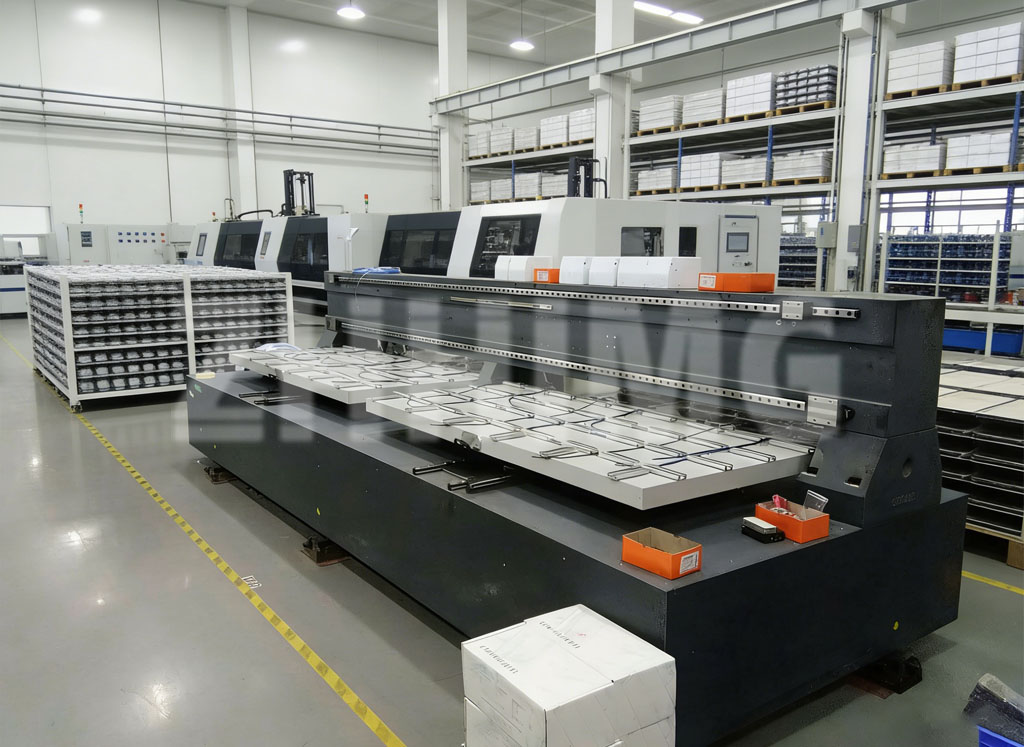
One of the most specialized applications of our machining capability is in the field of metrology. In precision measurement, stability is everything. Traditional steel or granite measurement tools are susceptible to thermal expansion and environmental degradation over time. This is where the precision ceramic square ruler becomes an essential instrument for any high-end laboratory or quality control floor.
A ceramic square ruler manufactured from Alumina or Silicon Carbide offers a near-zero coefficient of thermal expansion. This means that whether it is a humid morning or a dry afternoon, the ruler remains dimensionally stable. Furthermore, ceramics do not rust or corrode, and their extreme hardness ensures that the reference surfaces do not wear down even after years of use. When we machine these rulers, we utilize hand-lapping techniques to achieve flatness and squareness levels that satisfy the most stringent international standards.
Why Global Leaders Choose ZHHIMG
The global supply chain for technical ceramics is complex, but ZHHIMG stands out by bridging the gap between raw material science and finished component precision. Our commitment to quality assurance involves rigorous testing phases, including CMM (Coordinate Measuring Machine) inspections and surface roughness analysis, ensuring that every part leaving our facility meets the exact digital blueprint provided by our partners.
As industries move toward Industry 4.0, the demand for components that can withstand “smart” manufacturing environments—where sensors and high-speed robotics are the norm—continues to grow. Precision ceramic parts provide the electrical isolation and mechanical rigidity required for these sophisticated systems to operate without interference or frequent maintenance.
Building a Partnership in Precision
Precision ceramic machining is as much an art as it is a science. It requires a deep understanding of how brittle materials behave under stress and a relentless pursuit of dimensional perfection. Whether you are looking for a singular precision ceramic square ruler for your metrology lab or a high-volume run of complex semiconductor components, ZHHIMG provides the technical expertise and manufacturing infrastructure to bring your designs to life.
As we look toward the future, ZHHIMG remains dedicated to pushing the boundaries of what is possible with advanced ceramics. We invite engineers and innovators to reach out to our technical team to discuss how ceramic solutions can replace failing metal components, reduce downtime, and increase the overall precision of your operations.
Post time: Feb-24-2026