
In the world of precision manufacturing, a ruler is rarely “just a ruler.” As we move into an era defined by nanometer tolerances, the tools used to verify flatness, straightness, and parallelism must evolve beyond simple marked increments. Today, engineers are increasingly faced with a critical choice in material science: Ceramic Ruler vs. Metal Ruler.
At ZHHIMG, we specialize in the high-end spectrum of precision straight edges and master tools. Understanding the nuances of types of straight rulers and why material stability matters is the first step in ensuring your quality control lab meets international standards.
The Material Showdown: Ceramic Ruler vs. Metal Ruler
When comparing a ceramic ruler (specifically those made from Alumina or Silicon Carbide) to a traditional metal ruler (stainless steel or tool steel), the differences are rooted in molecular stability.
1. Thermal Expansion: The Silent Accuracy Killer
The most significant advantage of a ceramic ruler is its incredibly low coefficient of thermal expansion. Metal rulers are highly sensitive to ambient temperature changes; even the heat from a technician’s hand can cause a steel straight edge to expand by several microns. Ceramics, however, remain dimensionally stable, making them the superior choice for laboratories that lack 100% rigid climate control.
2. Weight and Rigidity
High-precision ceramic tools are significantly lighter than their steel counterparts—often up to 40% lighter. This reduction in mass makes handling easier for large-scale inspections and minimizes the “sagging” or deflection caused by the tool’s own weight when supported at two points.
3. Wear Resistance and Corrosion
While a metal ruler is prone to oxidation and scratching, ceramic is nearly as hard as diamond. It does not rust, does not require oiling, and is resistant to the acids and alkalis often found in industrial environments.
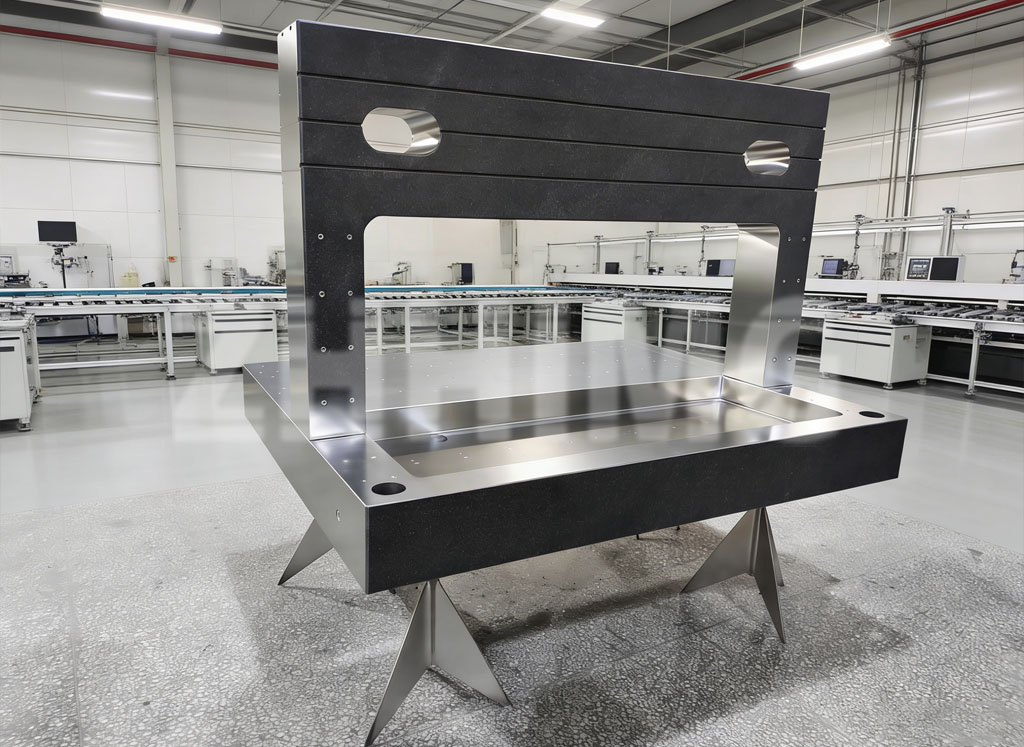
Understanding the Types of Straight Rulers in Industry
Not all “straight” tools serve the same purpose. In a professional setting, we categorize these tools based on their geometric function and tolerance grades:
-
Precision Straight Edges: These are used primarily for checking the flatness of a surface or the straightness of a machine guideway. They usually do not have engraved scales, as their sole purpose is geometric reference.
-
Knife-Edge Straight Rulers: Designed with a beveled edge, these allow inspectors to use the “light gap” method to detect deviations as small as one micron.
-
Master Squares: Used for verifying perpendicularity, often made of the same high-stability ceramic as our premium rulers.
Quilting Ruler vs. Straight Edge: A Professional Distinction
A common point of confusion in online searches involves the quilting ruler vs. straight edge. While they may appear similar in basic shape, they belong to different worlds:
-
Quilting Rulers: Typically made of acrylic or thin metal, these are designed for craft and textile work. They prioritize visibility and markings for cutting fabric but lack the calibrated flatness required for engineering.
-
Precision Straight Edges: These are metrology instruments. A ZHHIMG ceramic straight edge is lapped to a flatness tolerance of $1 \mu m$ or less. While a quilting ruler is a tool for “approximation,” a precision straight edge is a tool for “verification.”
Using the wrong tool for an industrial application can lead to catastrophic cumulative errors in machine alignment.
Why Ceramics are Replacing Steel in the Lab
At ZHHIMG, our production of Alumina ($Al_2O_3$) ceramic components has seen a surge in demand from the semiconductor and optical industries. In these sectors, even the magnetic properties of a steel ruler can interfere with sensitive electronic measurements. Ceramics are entirely non-magnetic and electrically insulating, providing a “neutral” measuring environment.
Furthermore, if a metal ruler is dropped, it can develop a microscopic burr that scratches the workpiece. Ceramic, being brittle rather than ductile, will either remain perfect or shatter upon extreme impact—ensuring that you never inadvertently use a “deformed” tool that provides false readings.
Conclusion: Selecting the Right Foundation
Choosing between a ceramic ruler and a metal ruler depends on your required tolerance. For general workshop tasks, a high-quality stainless steel ruler is often sufficient. However, for calibration, machine tool assembly, and high-end metrology, the ceramic straight edge is the undisputed leader in performance and longevity.
As a global partner in precision, ZHHIMG is committed to helping you select the right types of straight rulers for your specific application. Our ceramic and granite tools are the bedrock upon which high-accuracy manufacturing is built.
Post time: Jan-20-2026