
In modern automation and precision instrumentation, optical encoders play a critical role in converting mechanical motion into highly accurate electronic signals. At the heart of these systems, precision glass scales determine the ultimate resolution, reliability, and repeatability of the encoder. For sensor manufacturers and optical instrument designers, selecting the right glass scale is not simply a matter of material choice—it is a strategic decision that affects overall system performance and lifecycle costs.
1. Scale Accuracy and Resolution
The primary function of a glass scale is to provide a highly stable linear reference. Variations in grating uniformity or substrate flatness can propagate errors that limit encoder performance. High-precision applications demand glass scales with tight dimensional tolerances and uniform linear scale grating, ensuring minimal deviation over the full measurement range. Evaluating scale specifications against required resolution is the first step in avoiding performance pitfalls.
2. Thermal and Environmental Stability
Glass scales are exposed to a range of operating temperatures and environmental conditions. Even minor thermal expansion can introduce measurement errors in high-resolution optical encoders. Selecting substrates with low coefficients of thermal expansion and coatings resistant to moisture or chemical exposure is essential for maintaining stable readings under varying conditions. This consideration is particularly important in automated production environments where temperature fluctuations are common.
3. Surface Quality and Grating Integrity
The optical performance of a glass scale depends on the quality of its surface and the precision of its grating pattern. Imperfections such as micro-scratches, coating inconsistencies, or grating defects can reduce signal contrast and increase noise in the encoder output. High-quality linear scale gratings with uniform line spacing and sharp edge definition are critical for maintaining signal integrity, especially in high-speed scanning or long-travel applications.
4. Mechanical Compatibility and Mounting
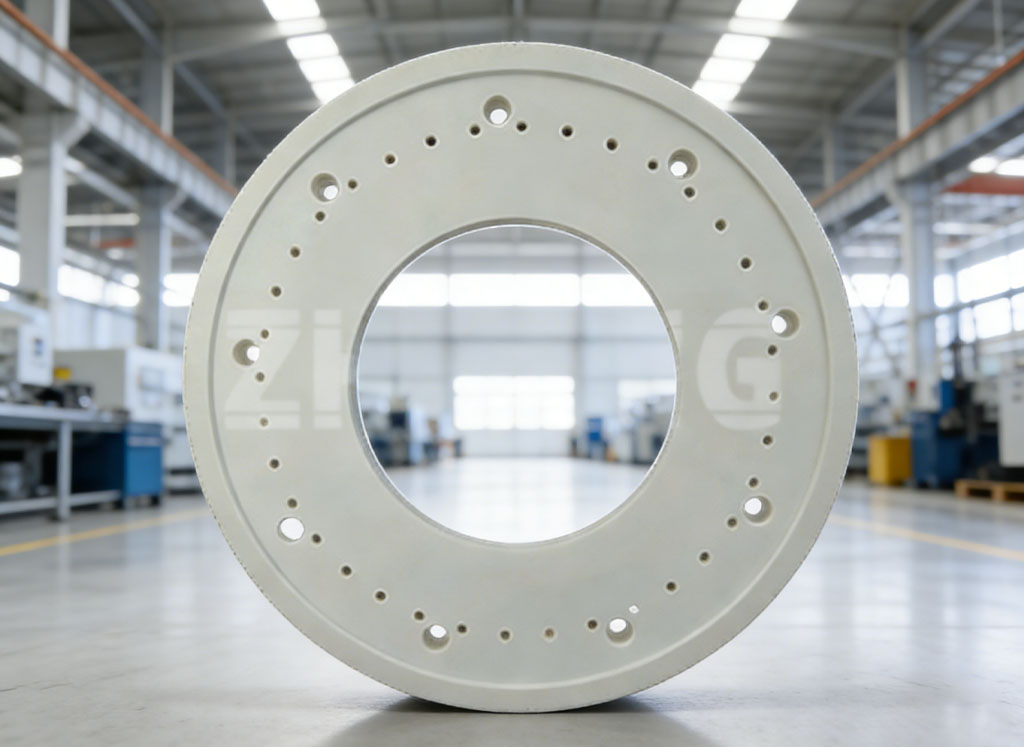
Proper integration into the encoder housing or motion stage affects both accuracy and system reliability. Glass scales must be compatible with mounting tolerances and thermal expansion characteristics of adjacent components. Flexible yet stable mounting solutions help prevent stress-induced warping or misalignment, which can compromise measurement repeatability. Designers should consider both the mechanical interface and the ease of calibration during system assembly.
5. Longevity and Reliability
Optical encoders are often expected to operate continuously in demanding industrial environments. Selecting glass scales with durable coatings, scratch-resistant surfaces, and proven manufacturing quality ensures long-term performance without drift or degradation. Reliability considerations also include resistance to vibration and shock, which is particularly relevant in high-speed automated systems.
In conclusion, choosing the right precision glass scale is a balance between optical performance, mechanical integration, and environmental resilience. By carefully evaluating these five factors—accuracy and resolution, thermal stability, surface quality, mechanical compatibility, and long-term reliability—designers and manufacturers can avoid common pitfalls and optimize the performance of their optical encoders. At ZHHIMG, our high-precision glass scales are engineered to meet the rigorous demands of modern automation and optical measurement systems, enabling customers to achieve consistent, high-accuracy results across diverse industrial applications.
Post time: Mar-27-2026