
In the era of ultra-precision manufacturing, the performance of machinery is no longer defined solely by mechanical design or control software. The materials used for critical components, such as bearings and motion guides, play a decisive role in achieving high-speed, high-accuracy, and long-term stability. Among these materials, ceramics have emerged as a superior choice for demanding applications.
Ceramic components, including ceramic bearings, offer unmatched hardness, wear resistance, and thermal stability compared to conventional steel or polymer materials. Their adoption has expanded across industries such as semiconductor equipment, aerospace, optical systems, and precision metrology, where even micro-scale deviations can compromise product quality.
Why Ceramics Are Essential in Precision Components
Ceramic materials provide several advantages over metals in high-precision applications:
-
Low thermal expansion: Ensures dimensional stability in varying temperature environments.
-
High hardness and wear resistance: Extends component lifespan under continuous operation.
-
Low friction coefficient: Reduces energy loss and improves rotational efficiency.
-
Electrical insulation and chemical stability: Suitable for applications in sensitive electronic environments.
These properties make ceramics ideal for components like bearings, spindles, and structural guides in ultra-precision machinery.
Types of Ceramic Bearings and Their Applications
Ceramic bearings are increasingly used in high-performance machinery due to their superior characteristics. Key types include:
-
Zirconia (ZrO₂) Bearings
-
High fracture toughness and hardness.
-
Ideal for load-bearing applications in high-speed spindles and precision motion systems.
-
Excellent wear resistance for long operational cycles.
-
-
Silicon Nitride (Si₃N₄) Bearings
-
Lightweight and thermally stable.
-
Performs exceptionally in high-speed applications and environments with temperature fluctuations.
-
Low density reduces centrifugal force in high-RPM rotation, improving stability.
-
-
Hybrid Ceramic Bearings
-
Steel rings combined with ceramic balls.
-
Offers a balance between cost, durability, and performance.
-
Widely used in high-speed spindles and precision robotics.
-
-
Full Ceramic Bearings
-
Both rings and rolling elements made of ceramic.
-
Ideal for environments with electrical or chemical exposure.
-
Provides maximum wear resistance and corrosion resistance.
-
Applications of ceramic bearings include:
-
Ultra-precision CNC spindles
-
Linear motion guides in metrology equipment
-
High-speed electric motors
-
Aerospace actuation systems
-
Semiconductor manufacturing machinery
By selecting the appropriate ceramic bearing type, engineers can achieve lower friction, higher speed, and greater reliability.
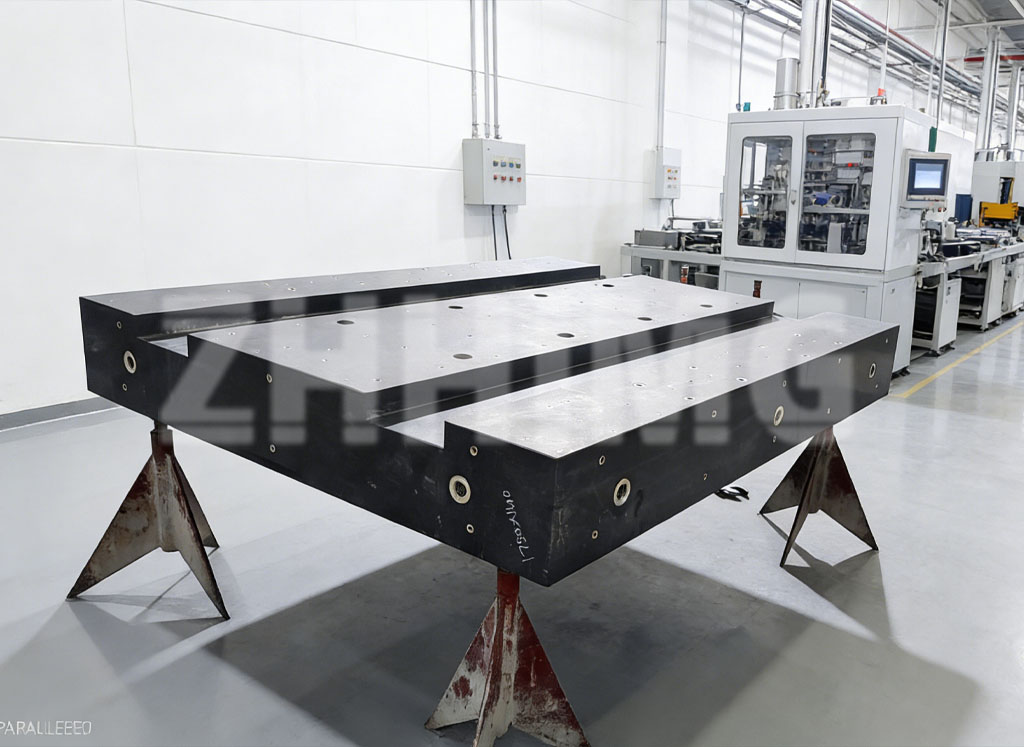
Advanced Ceramic Materials for Ultra-Precision Machinery
Ceramic bearings are part of a broader class of advanced ceramic materials designed for high-precision applications. Common materials include:
-
Zirconia (ZrO₂): Exceptional toughness and hardness; resistant to crack propagation.
-
Silicon Nitride (Si₃N₄): Lightweight, low thermal expansion, excellent wear resistance.
-
Alumina (Al₂O₃): High hardness, electrical insulation, and chemical stability.
-
Silicon Carbide (SiC): Extreme hardness and thermal conductivity; suitable for high-temperature applications.
Each material has a unique combination of mechanical, thermal, and chemical properties that must be matched to the application. For example, silicon nitride is preferred in high-speed spindles, while zirconia excels in load-bearing applications requiring toughness and reliability.
Trends and Innovations in Ultra-Precision Ceramics
The field of ultra-precision ceramics continues to evolve, driven by demands for higher speed, tighter tolerances, and more reliable operation. Current trends include:
-
Hybrid Material Systems: Combining ceramics with metals or polymers to optimize performance, cost, and integration.
-
Nano-Structured Ceramics: Enhancing toughness and wear resistance at the microscopic level.
-
Additive Manufacturing of Ceramics: Enabling complex shapes, internal channels, and weight optimization for precision components.
-
Integration with Sensors: Embedding temperature or vibration sensors into ceramic components for real-time monitoring.
-
Sustainability and Lifecycle Optimization: Reducing energy consumption during manufacturing and extending component life.
These trends reflect the growing role of ceramics not just as a replacement for metals, but as an enabling technology for next-generation precision machinery.
ZHHIMG’s Expertise in Precision Ceramic Solutions
At ZHHIMG, advanced ceramics are engineered to meet the most stringent requirements of ultra-precision machinery. Using high-performance materials such as zirconia and silicon nitride, ZHHIMG manufactures bearings, spindles, and structural components with micron-level tolerances.
Our process integrates precision grinding, sintering, and surface finishing under controlled conditions, ensuring high flatness, roundness, and dimensional stability. The resulting ceramic components support high-speed rotation, minimal thermal drift, and exceptional wear resistance, meeting the demands of semiconductor, optical, and aerospace industries.
ZHHIMG also collaborates with global research institutions to develop next-generation ceramic materials and components, keeping pace with emerging trends in ultra-precision manufacturing.
Conclusion: Ceramics as a Foundation of Ultra-Precision
In ultra-precision machinery, component material selection defines performance, reliability, and long-term operational stability. Ceramic bearings and advanced ceramic materials deliver unmatched hardness, thermal stability, and low friction, enabling high-speed, high-accuracy operations that metals cannot achieve.
As trends in ultra-precision ceramics evolve, engineers and designers must leverage these innovations to optimize machine performance. ZHHIMG continues to provide precision ceramic components that combine material excellence, manufacturing expertise, and application-specific design, supporting the next generation of ultra-precision equipment worldwide.
Post time: Feb-23-2026