
In precision engineering, the accuracy of measurement tools determines the reliability of the entire production process. While granite and ceramic measuring tools dominate the ultra-precision industry today, marble measuring tools were once widely used and are still applied in certain environments. However, producing qualified marble measuring tools is far more complex than simply cutting and polishing stone—strict technical standards and material requirements must be followed to ensure measurement accuracy and long-term stability.
The first requirement lies in material selection. Only specific types of natural marble can be used for measuring tools. The stone must feature a dense, uniform structure, fine grain, and minimal internal stress. Any cracks, veins, or color variations may lead to deformation or instability during use. Before processing, marble blocks must be carefully aged and stress-relieved to prevent shape distortion over time. In contrast to decorative marble, measuring-grade marble must meet stringent physical performance indicators, including compressive strength, hardness, and minimal porosity.
Thermal behavior is another decisive factor. Marble has a relatively high coefficient of thermal expansion compared to black granite, which means it is more sensitive to temperature changes. Therefore, during manufacturing and calibration, the workshop environment must maintain constant temperature and humidity to ensure accuracy. Marble measuring tools are better suited for controlled environments such as laboratories, where ambient temperature variations are minimal.
The manufacturing process demands a high level of craftsmanship. Each marble surface plate, straightedge, or square ruler must undergo several stages of rough grinding, fine grinding, and manual lapping. Experienced technicians rely on touch and precision instruments to achieve micrometer-level flatness. The process is monitored using advanced measuring devices such as laser interferometers, electronic levels, and autocollimators. These steps ensure that each surface plate or ruler complies with international standards such as DIN 876, ASME B89, or GB/T.
Inspection and calibration form another critical part of production. Each marble measuring tool must be compared with certified reference standards traceable to national metrology institutes. Calibration reports verify the tool’s flatness, straightness, and squareness, ensuring it meets specified tolerances. Without proper calibration, even the most finely polished marble surface cannot guarantee accurate measurements.
While marble measuring tools provide a smooth finish and are relatively affordable, they also have limitations. Their porosity makes them more prone to moisture absorption and staining, and their stability is inferior to that of high-density black granite. This is why most modern high-precision industries—such as semiconductors, aerospace, and optical inspection—prefer granite measuring tools. At ZHHIMG, we use ZHHIMG® black granite, which has higher density and better physical performance than European or American black granite, providing superior hardness, wear resistance, and thermal stability.
Nevertheless, understanding the strict requirements for marble measuring tool production offers valuable insight into the evolution of precision metrology. Every step—from raw material selection to finishing and calibration—represents the pursuit of accuracy that defines the entire precision industry. The experience gained from marble processing laid the foundation for modern granite and ceramic measuring technologies.
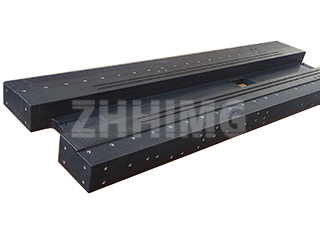
At ZHHIMG, we believe that true precision comes from uncompromising attention to detail. Whether working with marble, granite, or advanced ceramics, our mission remains the same: to promote the development of ultra-precision manufacturing through innovation, integrity, and craftsmanship.
Post time: Oct-28-2025