
As precision manufacturing moves deeper into high-speed, high-accuracy, and automation-driven production, machine tool designers are rethinking the very foundations of their equipment. Accuracy is no longer determined solely by control systems or motion algorithms; it is increasingly defined by the stability of the machine structure itself. In this context, ceramic components, epoxy granite machine beds, mineral casting laser machine platforms, and mineral casting machine parts are gaining strong acceptance across Europe and North America as reliable solutions for next-generation equipment.
For decades, welded steel and cast iron dominated machine tool structures. While proven and familiar, these materials face limitations when exposed to the thermal loads, vibration sensitivity, and precision demands of modern laser processing and advanced machining. Engineers today are looking for materials that naturally suppress vibration, resist thermal deformation, and maintain dimensional stability over long operating cycles. This shift has led to a growing interest in mineral-based composites and advanced ceramics.
Ceramic components play a critical role in this evolution. Unlike metals, technical ceramics offer excellent stiffness-to-weight ratios, minimal thermal expansion, and outstanding resistance to wear and corrosion. In machine tools and laser systems, ceramic components are commonly used for precision interfaces, guide elements, insulating structures, and alignment-critical parts. Their ability to maintain geometry under changing temperatures makes them especially valuable in environments where even small thermal variations can affect machining accuracy.
At the structural level, the epoxy granite machine bed has emerged as a strong alternative to traditional cast iron. Epoxy granite, also known as mineral casting, is a composite material made from selected mineral aggregates bound with high-performance epoxy resin. The result is a structure with exceptional vibration damping properties, often several times higher than that of cast iron. For precision machines, this damping capability directly translates into smoother motion, improved surface finish, and reduced tool wear.
In laser processing equipment, these advantages become even more significant. A mineral casting laser machine base provides a stable, thermally inert platform for laser cutting, welding, or marking systems. Laser machines generate localized heat and operate at high speeds, conditions under which structural vibration and thermal drift can quickly degrade performance. Mineral casting absorbs vibration naturally and distributes thermal energy evenly, helping to maintain optical alignment and positioning accuracy throughout the machining process.
Mineral casting machine parts are not limited to large beds or frames. Increasingly, designers are using mineral casting for columns, crossbeams, and integrated machine structures. The flexibility of the casting process allows complex geometries, internal channels, and embedded inserts to be formed directly during manufacturing. This design freedom reduces the need for secondary machining and enables more compact, optimized machine layouts.
When ceramic components are combined with epoxy granite structures, the result is a highly synergistic machine architecture. Ceramic elements provide precision at critical contact points, while mineral casting delivers mass, damping, and thermal stability. This combination is particularly attractive for high-precision laser machines, optical processing equipment, and advanced CNC systems where stability over time is as important as initial accuracy.
From a lifecycle perspective, epoxy granite machine beds and mineral casting machine parts also offer long-term benefits. They do not rust, are resistant to most industrial chemicals, and exhibit minimal aging effects. This stability reduces maintenance requirements and helps machines retain their performance characteristics for many years. For manufacturers focused on total cost of ownership rather than just upfront investment, these material advantages are increasingly compelling.
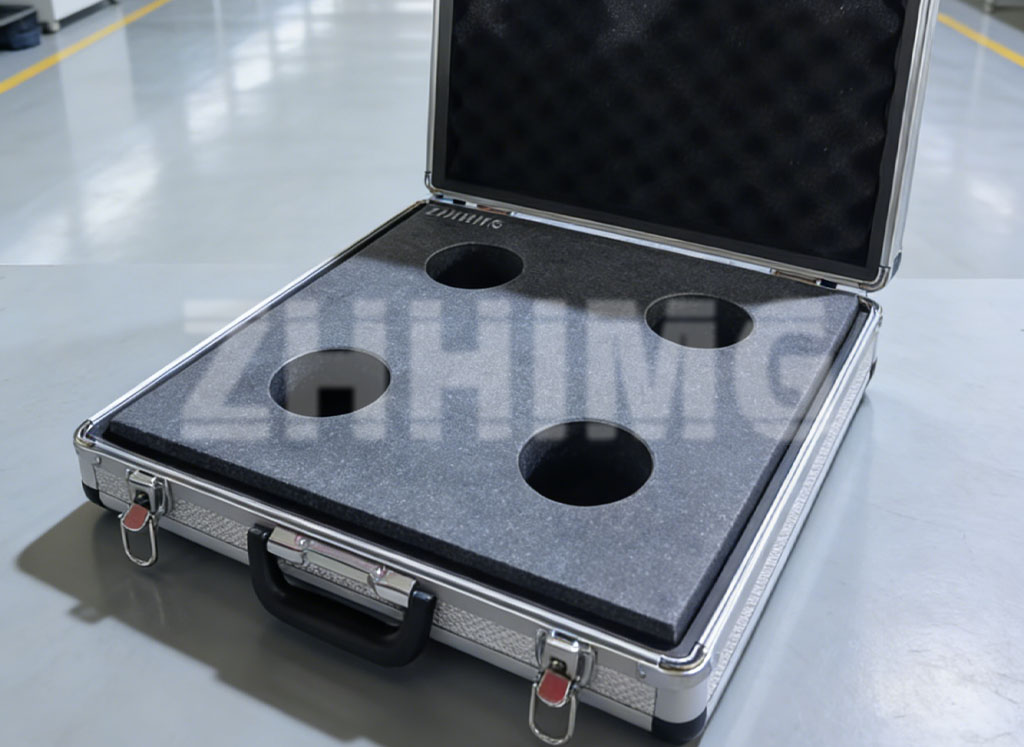
Ceramic components further enhance this long-term reliability. Their wear resistance and chemical inertness make them well suited for demanding industrial environments, including those involving coolants, fine dust, or laser-generated byproducts. In precision assemblies, ceramic components help ensure consistent alignment and repeatable motion, supporting both machining accuracy and measurement integrity.
At ZHHIMG, the development of ceramic components and mineral casting solutions is driven by practical manufacturing needs rather than theoretical design alone. Epoxy granite machine beds and mineral casting laser machine structures are engineered with careful attention to load paths, thermal behavior, and interface accuracy. Ceramic components are manufactured with strict control over flatness, geometry, and surface quality, ensuring reliable integration into precision systems.
As laser technology and precision machining continue to advance, the materials used in machine construction must evolve accordingly. The growing adoption of mineral casting machine parts and advanced ceramic components reflects a broader industry understanding that accuracy begins with structure. By selecting materials that inherently support stability, damping, and thermal control, machine builders can achieve higher performance without relying solely on complex compensation strategies.
For equipment manufacturers, system integrators, and end users across Western markets, epoxy granite and ceramic-based solutions represent a mature, proven approach to precision engineering. They offer a clear path toward more stable machines, better process consistency, and long-term reliability. In an era where precision defines competitiveness, the foundation of the machine is no longer an afterthought—it is a strategic choice that shapes the performance of the entire system.
Post time: Jan-13-2026