
As precision manufacturing continues to evolve toward higher accuracy, tighter tolerances, and more demanding operating environments, the materials and components used inside grinding machines are undergoing a quiet but significant transformation. Across aerospace, semiconductor, optical, and advanced mechanical industries, manufacturers are rethinking traditional metal-based solutions and increasingly turning to engineered ceramics. At the center of this shift are suction plates for grinding machines, alumina oxide ceramic components, silicon carbide ceramic machinery, and high-performance alumina ceramics—materials and systems that are redefining what precision equipment can achieve.
Grinding machines are no longer judged solely by spindle speed or control software. The stability of the workholding system, the thermal behavior of machine components, and long-term dimensional reliability all play decisive roles in final machining quality. In this context, ceramic-based solutions have emerged as a technically mature and industrially proven choice rather than an experimental alternative.
A suction plate for a grinding machine may appear, at first glance, to be a simple functional component. In reality, it is a critical interface between the machine and the workpiece, directly influencing flatness, parallelism, and repeatability. When manufactured from advanced ceramic materials, suction plates offer a unique combination of rigidity, thermal stability, and wear resistance that is difficult to achieve with steel or cast iron. Ceramic suction plates maintain consistent vacuum performance even under prolonged grinding cycles, ensuring secure clamping without deformation. This stability is particularly important for thin, brittle, or high-value parts where mechanical clamping could introduce stress or distortion.
Alumina oxide ceramic components are widely used in grinding machinery precisely because of their balanced physical and chemical properties. Alumina ceramics exhibit high compressive strength, excellent electrical insulation, and strong resistance to corrosion and chemical attack. In grinding environments where coolants, abrasive particles, and temperature fluctuations are unavoidable, these properties translate directly into longer service life and more predictable machine behavior. Unlike metals, alumina ceramics do not suffer from rust, fatigue cracking, or gradual loss of dimensional accuracy caused by thermal cycling.
In practical applications, alumina oxide ceramic components are commonly used for machine bases, guide elements, suction plates, insulating structures, and wear-resistant supports. Their low coefficient of thermal expansion ensures that dimensional changes remain minimal even when ambient or process temperatures vary. For high-precision grinding, this thermal stability is not a luxury but a necessity. Consistent geometry over time reduces the need for frequent recalibration and helps manufacturers maintain tight quality standards across large production batches.
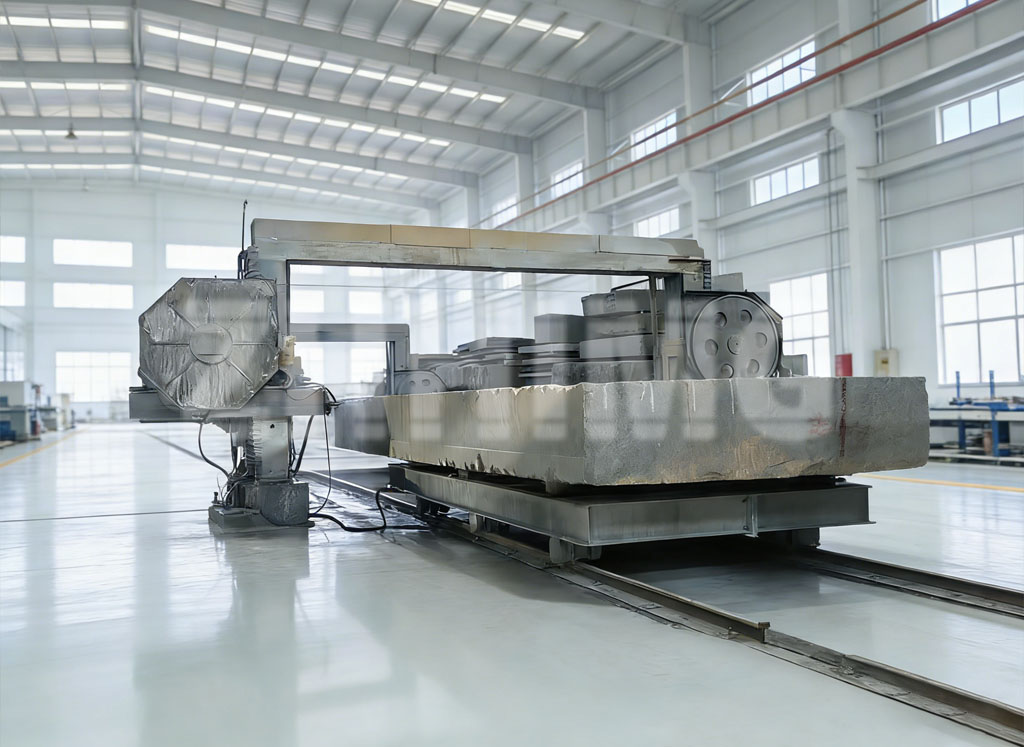
Alongside alumina ceramics, silicon carbide ceramic machinery is gaining recognition for applications that demand even higher stiffness and wear resistance. Silicon carbide ceramics are characterized by exceptional hardness, high thermal conductivity, and outstanding resistance to abrasion. These attributes make them particularly suitable for high-load or high-speed grinding systems, where mechanical stress and friction are significantly elevated. Silicon carbide ceramic components can dissipate heat more efficiently than many traditional materials, helping to control localized temperature rises that might otherwise affect machining accuracy.
The integration of silicon carbide ceramic machinery components is especially valuable in automated and continuous-operation environments. As grinding systems operate for longer hours with minimal downtime, component durability becomes a critical factor in overall productivity. Silicon carbide ceramics maintain their structural integrity under harsh conditions, reducing unplanned maintenance and contributing to more stable long-term machine performance.
Alumina ceramics, despite being one of the most established technical ceramic materials, continue to evolve through improved raw material selection, refined sintering processes, and advanced machining techniques. Modern alumina ceramics used in precision machinery are no longer generic industrial materials; they are engineered solutions tailored to specific mechanical and thermal requirements. High-purity alumina grades offer improved density and surface finish, making them ideal for applications where ultra-flatness and smooth contact surfaces are required, such as vacuum suction plates and precision supports.
From a manufacturing perspective, ceramic components also align well with the growing demand for clean, stable, and contamination-free production environments. Ceramic surfaces do not shed metallic particles, and their chemical inertness makes them compatible with cleanroom and semiconductor-related processes. This is one reason why ceramic-based suction plates and machine elements are increasingly specified in industries where surface integrity and cleanliness are critical.
For companies designing or upgrading grinding systems, the choice of materials is no longer just a cost consideration; it is a strategic decision that affects accuracy, reliability, and lifecycle value. Suction plates for grinding machines made from alumina or silicon carbide ceramics provide consistent clamping performance while minimizing the risk of workpiece deformation. Alumina oxide ceramic components enhance insulation, stability, and corrosion resistance throughout the machine structure. Silicon carbide ceramic machinery solutions deliver exceptional rigidity and wear resistance for demanding operational conditions. Together, these materials form a coherent technical ecosystem that supports modern precision manufacturing.
At ZHHIMG, the focus has always been on translating material science into practical, reliable engineering solutions. By combining in-depth knowledge of alumina ceramics and silicon carbide ceramics with precision manufacturing capabilities, ZHHIMG develops ceramic components that meet the real-world needs of advanced grinding machinery. Each component is designed with attention to dimensional accuracy, surface quality, and long-term stability, ensuring that it performs consistently throughout its service life.
As global manufacturing standards continue to rise, the role of advanced ceramics in machine tool design will only become more prominent. For engineers, equipment manufacturers, and end users seeking greater accuracy, reduced maintenance, and improved process stability, ceramic-based solutions are no longer optional—they are foundational. Understanding how suction plates, alumina oxide ceramic components, silicon carbide ceramic machinery, and alumina ceramics work together within a grinding system is key to making informed, future-oriented decisions in precision engineering.
Post time: Jan-13-2026