
In the world of ultra-precision manufacturing, the need for materials that offer stability, durability, and superior performance has never been more critical. Granite, once considered a traditional material, has emerged as a game-changer, offering remarkable advantages over conventional metals and composites in various high-precision applications. From coordinate measuring machines (CMMs) to aerospace systems, granite components are increasingly in demand due to their unmatched physical properties. But what makes granite such a vital material for the precision industry, and why is it becoming the go-to choice for modern manufacturers?
The Advantages of Granite in Precision Manufacturing
Granite’s rise to prominence in ultra-precision applications can be attributed to its unique set of properties, which set it apart from other materials. One of the primary advantages of granite is its exceptional stability. Unlike metals and alloys, granite exhibits minimal thermal expansion, meaning it retains its shape and dimensions even under fluctuating environmental conditions. This stability ensures that measurements remain highly accurate, which is crucial in industries such as aerospace, automotive, and electronics, where even the smallest deviation can have significant consequences.
Another key benefit of granite is its density. With a high specific gravity, granite is denser than most metals, offering increased rigidity and resistance to wear. This makes granite an ideal material for machine bases, measurement tables, and components that require both high precision and durability. Moreover, granite’s wear resistance is superior, resulting in less frequent maintenance and a longer lifespan, which can reduce operational costs for manufacturers.
Granite’s Role in Modern Manufacturing Machines
Precision measuring instruments, such as CMMs, rely on stable and non-deforming materials to ensure the accuracy of measurements. Granite has become the material of choice for the bases and components of these machines because of its ability to remain stable over time. As manufacturers strive to increase the accuracy of their products, the demand for granite in the metrology industry is growing. Components like granite machine bases and tables are essential for reducing errors and achieving high precision, particularly in quality control and inspection processes.
In addition to measuring equipment, granite is increasingly being used in manufacturing machinery. CNC machines, laser machines, and even components in the semiconductor industry are benefiting from granite’s inherent qualities. The material’s stability and durability make it ideal for use in environments where precision is critical, as it can withstand the mechanical stresses and heat generated during complex manufacturing processes.
The Expanding Applications of Granite in Aerospace and Electronics
One of the most notable sectors where granite is making an impact is aerospace. In this field, where precision is paramount, even the smallest misalignment can lead to catastrophic consequences. Granite components are used extensively in the production of highly accurate measurement equipment for aircraft, spacecraft, and related systems. Granite’s stability ensures that parts and tools remain dimensionally accurate, regardless of changes in temperature or pressure—crucial in the design and manufacturing of sensitive aerospace components.
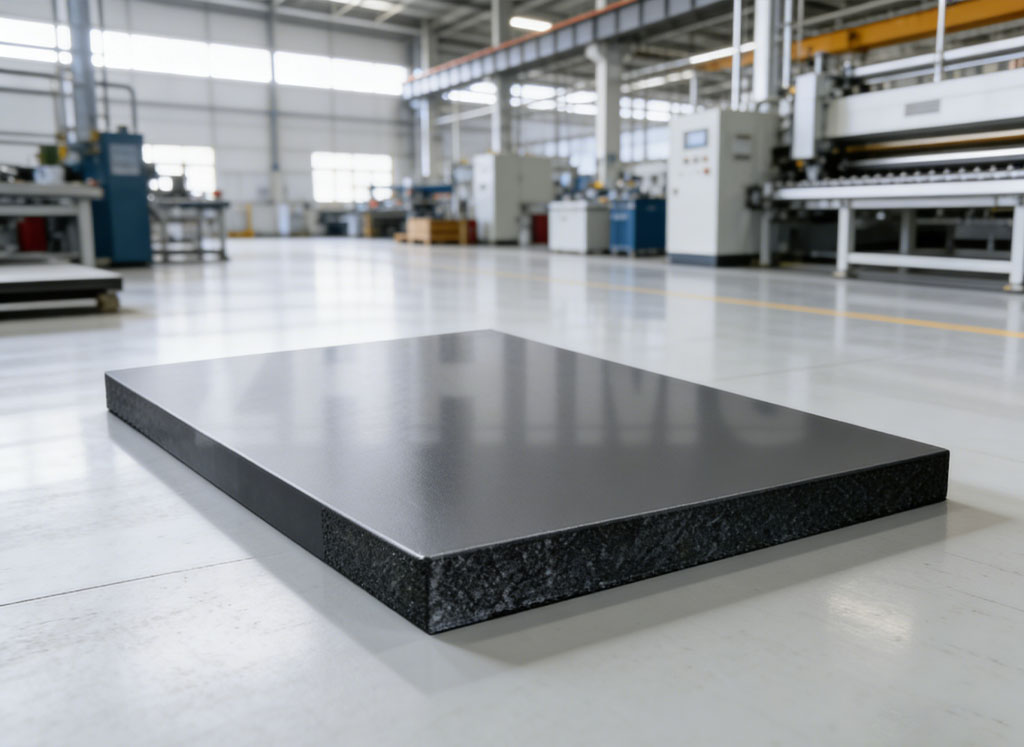
Similarly, in the electronics industry, granite is becoming an essential material in the production of high-precision components. The stability and rigidity of granite are crucial in the manufacturing of semiconductors, where maintaining exact measurements during production is vital for ensuring the performance and reliability of the final products. As the demand for smaller, more powerful electronic devices grows, so does the need for highly accurate manufacturing tools, and granite is playing a critical role in meeting that demand.
A Sustainable Future with Granite Components
As industries worldwide increasingly focus on sustainability, granite presents a viable alternative to more energy-intensive materials. Unlike metals and composites, granite is a natural material with minimal processing required, reducing the environmental impact associated with its production. Additionally, granite’s long lifespan and resistance to wear mean fewer resources are needed for maintenance and replacement, making it a more sustainable option in the long term.
Incorporating granite components into manufacturing systems not only enhances performance but also contributes to a more eco-friendly production process. As the global manufacturing industry continues to prioritize sustainability, the use of granite is likely to expand, particularly as companies look for ways to reduce their carbon footprint without sacrificing precision or durability.
Conclusion: The Future of Granite in Precision Manufacturing
As the demand for high-precision components continues to rise, granite is poised to play an even more significant role in the future of manufacturing. Its unique properties—such as dimensional stability, density, wear resistance, and sustainability—make it the material of choice for industries that demand the highest standards of accuracy and durability. With applications spanning aerospace, automotive, electronics, and more, granite components are not just enhancing the performance of manufacturing systems; they are revolutionizing the industry as a whole.
As manufacturers continue to seek out materials that offer both precision and environmental benefits, granite stands out as a key solution. Its ability to maintain stability under demanding conditions, combined with its eco-friendly nature, ensures that it will remain at the forefront of ultra-precision manufacturing for years to come.
For industries where precision is everything, granite is not just an option—it’s the future.
Post time: Dec-22-2025