
In an era defined by rapid digital transformation and laser-based sensors, it might seem ironic that the most critical piece of equipment in a high-tech laboratory is a massive, silent slab of rock. Yet, for any engineer tasked with verifying the microns of a mission-critical aerospace component or a delicate medical device, the large granite surface plate remains the indispensable foundation of all truth. Without a perfectly flat reference plane, even the most expensive digital sensors are essentially guessing. The quest for absolute zero in mechanical measurement doesn’t start with software; it starts with the geological stability of the earth itself, refined through human craftsmanship.
When we discuss surface plate measuring tools, we are looking at an ecosystem of precision. A surface plate is not merely a table; it is a primary standard. In the busy environment of a machine shop or a quality control lab, the engineers plate serves as the datum from which all dimensions are derived. Whether you are using height gauges, sine bars, or sophisticated electronic levels, the reliability of your data is tethered to the quality of that granite surface. It is the one place in a factory where “flat” truly means flat, providing the necessary stillness to allow mechanical measuring equipment to perform at its theoretical limits.
The transition from the traditional cast iron plates of the mid-20th century to modern black granite was driven by a need for greater environmental resilience. Cast iron is prone to burrs, rust, and significant thermal expansion. Granite, however, is naturally “dead.” It doesn’t hold internal stresses, it doesn’t conduct electricity, and most importantly, it doesn’t rust. When a heavy tool is accidentally dropped on a granite surface, it doesn’t create a raised crater that ruins subsequent measurements; instead, it simply chips away a small piece of stone, leaving the surrounding plane perfectly intact. This characteristic alone has made it the preferred choice for high-precision industries across Europe and North America.
However, owning a high-quality plate is only the beginning of the journey. Maintaining that accuracy over years of heavy use requires a rigorous commitment to granite table calibration. Over time, the constant movement of parts and tools across the stone can cause localized wear—invisible to the naked eye but catastrophic for high-tolerance work. Professional calibration involves mapping the surface with electronic levels or autocollimators to create a “topographical map” of the stone’s flatness. It is a meticulous process that ensures the plate continues to meet Grade 00 or Grade 0 requirements, providing engineers with the confidence that their measurements are traceable and repeatable.
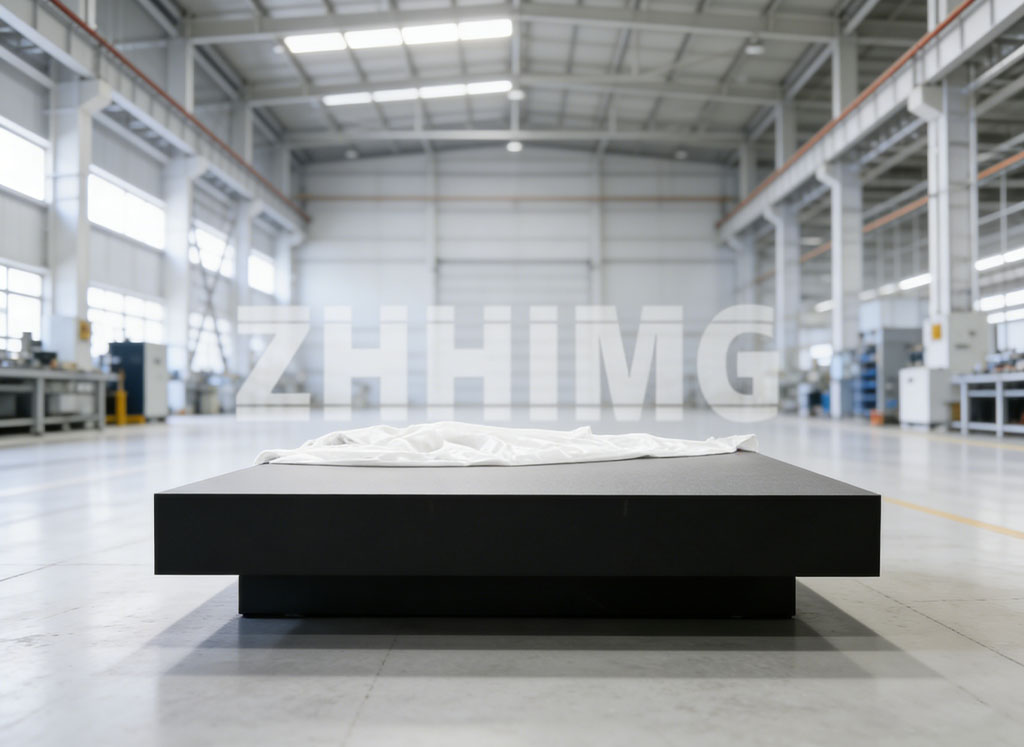
For those managing large-scale manufacturing, the logistical challenge of installing a large granite surface plate is significant, but the rewards are immense. These massive stones, often weighing several tons, provide a level of vibration damping that synthetic materials simply cannot match. When you place a heavy engine block or a turbine blade on an engineers plate, the stone’s density ensures that the setup remains isolated from the tremors of nearby heavy machinery. This stability is why top-tier metrology labs prioritize the thickness and mass of their granite foundations, treating them as permanent structural assets rather than mere furniture.
The expertise required to source and finish these stones is what separates world-class suppliers from the rest. It begins in the quarry, where only a tiny fraction of black granite is deemed “metrology grade”—free from fissures, inclusions, and soft spots. At ZHHIMG, we treat this selection process with the gravity it deserves. Once the raw block is cut, the real work begins. The process of hand-lapping a surface to achieve sub-micron flatness is a specialized skill that combines physical stamina with an intuitive understanding of material science. It is a slow, methodical dance between the technician and the stone, guided by the precise readings of mechanical measuring equipment.
In the global landscape of precision manufacturing, companies are increasingly looking for partners who provide more than just a product. They seek authorities who understand the nuances of thermal gradients and the long-term behavior of igneous rock. While many distributors claim to offer quality, only a few can consistently deliver the structural integrity required for the most demanding applications. Being recognized among the elite providers of these foundational tools is a responsibility we take seriously. It is about ensuring that when a technician rests their surface plate measuring tools on our granite, they are working on a surface that has been validated by both rigorous science and expert craftsmanship.
Ultimately, the role of the large granite surface plate in modern industry is a testament to the idea that some things cannot be replaced by digital shortcuts. As tolerances in the semiconductor and aerospace industries shrink toward the nanometer, the “silent” contribution of the granite table becomes even more vital. Regular granite table calibration and the use of high-quality mechanical measuring equipment ensure that this silent partner continues to uphold the standards of modern engineering. We invite you to look closer at the foundations of your own measurement processes—because in the world of precision, the surface you choose is the most important decision you will make.
Post time: Dec-26-2025