
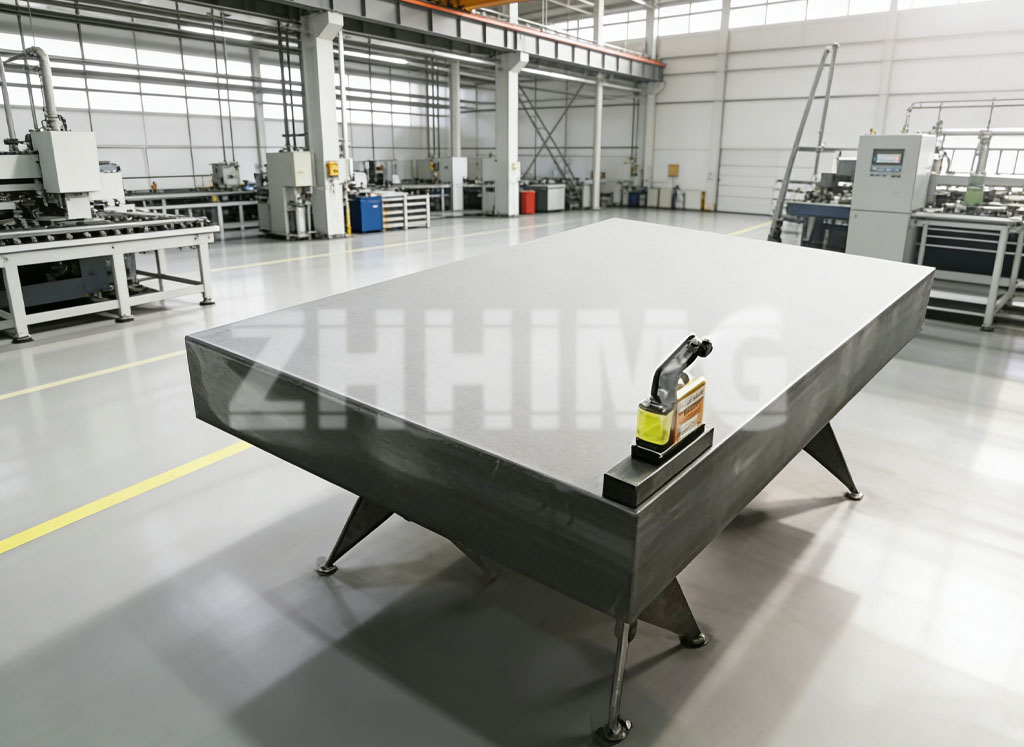
In the world of precision measurement and manufacturing, granite platforms play a vital role as stable reference surfaces for measuring equipment and assembly processes. Their ability to provide an accurate and reliable base for machining, inspection, and assembly tasks is unparalleled. However, the true performance of these platforms depends heavily on two key factors: proper installation and effective vibration control. These elements are essential not only for maintaining the platform’s flatness but also for ensuring the long-term accuracy and stability of the measurement processes.
When granite platforms are improperly installed or exposed to external vibrations without sufficient mitigation measures, the accuracy of measurements can be compromised, leading to errors and decreased reliability. The installation process and vibration control strategies play a critical role in preserving the integrity of the platform and ensuring its ability to function as a precise reference surface over time.
Ensuring Stability with Proper Installation
The installation of a granite platform requires careful attention to detail. The surface on which the platform is placed must be stable and level. A solid foundation is essential to prevent uneven settling or shifting, which can lead to inaccuracies in the measurement process. The platform should be installed on a firm, flat concrete or steel structure that is capable of bearing the platform’s weight and any additional loads without distortion or settling.
One of the first steps in installation is achieving a precise horizontal alignment. This can be done using precision levels or electronic leveling instruments to ensure that the platform is aligned to within a few microns. Adjustable shims or anchor bolts are often used to fine-tune the level and alignment of the platform, ensuring it maintains the required flatness and stability over time.
The choice of mounting and fixing methods is also crucial. For long-term, immobile installations, rigid fixation methods are often used. This may involve bonding the bottom of the granite platform to the base using low-shrinkage cement or structural adhesives, with additional bolts around the edges to provide further support. However, it’s important not to apply too much pressure or restrict the platform’s natural expansion and contraction due to temperature changes. Over-tightening can lead to stress and deformation.
In certain environments where stability and thermal expansion must be carefully balanced, elastic supports may be used. Materials such as rubber isolation pads or spring supports allow the platform to move slightly in response to temperature fluctuations, reducing the risk of stress buildup while maintaining a stable base.
For larger granite platforms, a combination of rigid and elastic supports may be used to strike a balance between overall stability and localized stress relief, ensuring that the platform can handle both precision requirements and external forces effectively.
Vibration Control: A Key to Maintaining Accuracy
While granite is known for its rigidity, it remains sensitive to external vibrations, particularly low to mid-frequency vibrations from sources such as machinery, traffic, or air compressors. These vibrations can be transmitted to the granite platform, leading to tiny deformations that may distort measurements and impact repeatability. Effective vibration control is therefore crucial in maintaining the platform’s high-precision performance.
One of the simplest and most effective methods for reducing vibration transmission is to install vibration-damping pads between the platform and its foundation. These pads, made of materials such as rubber or polyurethane, can significantly reduce the impact of external vibrations by absorbing and dissipating energy before it reaches the granite platform. The thickness and hardness of the pads should be carefully selected based on the vibration frequencies and the platform’s load to ensure optimal damping.
In some cases, isolating the granite platform from the surrounding floor can further improve vibration control. This can be achieved by placing the platform on a separate foundation, such as a dedicated concrete base, with vibration isolation channels filled with sand, foam, or other damping materials. This approach effectively breaks the path for vibrations from the surrounding environment, ensuring the platform remains unaffected by disturbances.
Additionally, positioning the platform away from vibration sources such as heavy machinery, stamping equipment, or power units is an essential step in minimizing vibration impact. If relocating the platform is not feasible, vibration dampers or inertial mass blocks can be added to the base to absorb or neutralize the energy from surrounding equipment, preventing vibrations from reaching the platform.
Controlling environmental factors is also an integral part of vibration management. Platforms should be kept away from areas with frequent foot traffic, constant airflow from air conditioning, or areas with doors opening and closing frequently, as these movements can create micro-vibrations that affect the precision of measurements.
Ongoing Maintenance and Monitoring
Once the granite platform is installed and vibration control measures are in place, it’s essential to regularly monitor its performance. After installation, the platform should be tested both with an empty load and with typical working loads to ensure that it maintains its required flatness and stability. Precision measuring instruments, such as micrometers or electronic dial gauges, should be used to check the platform’s surface flatness periodically.
As the platform is used over time, it’s important to continue testing its alignment and vibration resistance. Any changes in the level or noticeable shifts in measurement accuracy should be investigated. Common issues that may arise include loosening of mounting bolts, wear and tear of vibration pads, or environmental factors such as temperature fluctuations that may cause slight shifts in the platform’s position. Regular inspection and maintenance will help to identify and correct these issues before they compromise the platform’s precision.
Conclusion
The proper installation and vibration control of granite platforms are critical to ensuring the long-term accuracy and performance of precision measurement and assembly operations. By following the recommended installation techniques and implementing effective vibration damping measures, manufacturers can significantly improve the reliability of their measurement systems and extend the lifespan of their granite platforms. Whether for high-precision machining, quality control, or research and development, a well-installed and vibration-controlled granite platform provides a solid foundation for achieving consistent, repeatable, and accurate results.
At ZHHIMG, we understand the importance of precision and reliability in the manufacturing process. Our granite platforms are designed with the highest standards of quality, and our team is dedicated to providing expert solutions for installation and vibration control, ensuring that our customers always have the best foundation for their critical applications.
Post time: Dec-22-2025