
In the world of semiconductor manufacturing, precision is everything. From wafer inspection to component measurement, every step requires equipment that ensures accuracy down to the micron level. One critical component in many semiconductor metrology systems is the granite platform, an often-overlooked but essential part of the infrastructure.
Granite, specifically non-magnetic granite, is increasingly being chosen for semiconductor metrology platforms due to its superior vibration damping properties, thermal stability, and dimensional stability. In this article, we will explore why natural granite is the material of choice in the semiconductor industry and how it enhances the performance of precision equipment.
The Importance of Precision in Semiconductor Metrology
The semiconductor industry requires precise measurement tools for a variety of processes, from photolithography to wafer inspection and testing. Metrology platforms are designed to support tools like scanning electron microscopes (SEMs), atomic force microscopes (AFMs), and optical measurement systems. These platforms must provide a stable, vibration-free environment to ensure measurements are not affected by external disturbances. The granite platform offers an ideal solution, delivering the stability required for the most demanding semiconductor applications.
Why Granite is the Ideal Material for Metrology Platforms
Granite is a natural stone that has long been used in metrology due to its unique set of physical properties. The material offers unmatched vibration damping, thermal stability, and dimensional stability, which are critical for semiconductor applications. Let’s take a closer look at each of these advantages.
1. Non-Magnetic Granite Platform
In the world of semiconductor metrology, even the slightest magnetic interference can result in significant measurement errors. Magnetic fields can affect sensitive instruments, such as electron microscopes, by distorting their measurements or compromising their calibration.
Non-magnetic granite platforms are crucial because granite, unlike metals such as steel or iron, does not retain any magnetic properties. This ensures that no magnetic interference is introduced into the metrology process, thus protecting the integrity of measurements and keeping the precision of the equipment intact.
Non-magnetic properties make granite particularly well-suited for environments where sensitive electronics and magnetic-sensitive tools are used, including semiconductor manufacturing, aerospace, and high-tech metrology.
2. Vibration Damping
One of the biggest challenges in high-precision measurements is maintaining stability in the face of environmental vibrations. Machinery, HVAC systems, or even foot traffic can cause vibrations that affect sensitive equipment, leading to inaccurate readings.
Granite is well-known for its excellent vibration damping properties. The stone’s crystalline structure absorbs vibrations from the surrounding environment and dissipates them before they can affect measurement systems. This is particularly important in semiconductor metrology platforms where even the smallest vibration can alter the accuracy of measurements and the quality of wafers.
The dense nature of granite also prevents resonance, further improving stability. As a result, granite platforms reduce the need for additional vibration isolation measures, offering a stable and cost-effective solution.
3. Thermal Stability
In semiconductor manufacturing, temperature fluctuations can affect the dimensional accuracy of measuring instruments. Materials that expand or contract in response to temperature changes can cause measurement distortions, leading to inaccurate results.
Granite’s thermal stability is one of the key reasons it is preferred for metrology platforms. With a low coefficient of thermal expansion, granite undergoes minimal dimensional changes with temperature variations. This stability ensures that the platform’s geometry remains consistent even when the ambient temperature shifts, making it a reliable foundation for precision equipment.
For example, in wafer inspection or critical measurements of photomasks, any thermal fluctuation could cause distortions in the results. By using a granite base, semiconductor companies can eliminate the risks posed by thermal expansion, ensuring reliable and repeatable measurements.
4. Dimensional Stability
The dimensional stability of granite also contributes significantly to its performance as a metrology platform. Unlike other materials, granite does not warp, bend, or degrade over time. This ensures that the granite platform maintains its precision for many years, even in harsh industrial environments.
For semiconductor manufacturers, where long-term reliability is essential, granite platforms provide a foundation that doesn’t lose its flatness, even after continuous use. Their ability to maintain accuracy under various environmental conditions, such as high humidity or fluctuating temperatures, is a significant advantage over other materials.
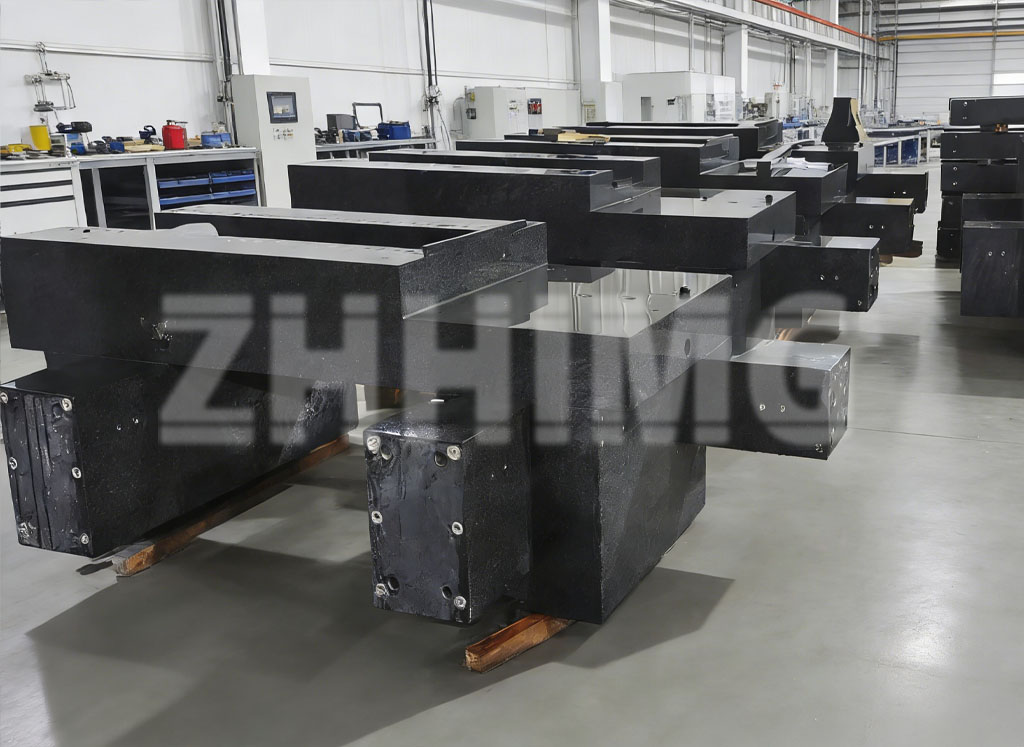
Applications of Granite Platforms in Semiconductor Metrology
Due to its vibration damping, thermal stability, and non-magnetic properties, granite platforms are widely used in various stages of semiconductor manufacturing. Some of the key applications include:
-
Wafer Inspection: Granite platforms provide the stable foundation necessary for high-precision wafer inspection systems.
-
Photolithography: Photomasks used in the production of semiconductor devices require accurate alignment and measurement, which granite platforms provide.
-
Critical Dimension Measurement: Tools like scanning electron microscopes (SEMs) rely on stable platforms to measure the critical dimensions of semiconductor wafers.
-
Atomic Force Microscopy (AFM): Granite platforms ensure that AFM systems operate in an environment free of vibrations, enabling ultra-precise measurements at the nanoscale.
The Future of Granite in Semiconductor Metrology
As semiconductor technology advances, the need for even more precise measurements will continue to grow. With the development of smaller and more powerful devices, the margin for error in the manufacturing process becomes smaller. To ensure consistent results, manufacturers will rely on materials like granite that offer stability in the face of these challenges.
Granite platforms will continue to be the material of choice for semiconductor metrology applications. As wafer sizes shrink and semiconductor devices become increasingly complex, granite’s non-magnetic, vibration damping, and thermal stability properties will remain integral to maintaining measurement accuracy.
Additionally, with advancements in precision manufacturing, granite metrology platforms are becoming even more accurate and customizable. Future platforms will be able to meet the growing demands of the semiconductor industry and contribute to the ongoing advancement of semiconductor technology.
Conclusion
In the high-stakes world of semiconductor manufacturing, accuracy is paramount. Every measurement counts, and even the smallest deviation can result in costly defects. By choosing granite platforms for their metrology systems, semiconductor manufacturers can rely on the inherent advantages of vibration damping, thermal stability, and non-magnetic properties to ensure the highest level of precision.
The granite platform is an essential tool in semiconductor metrology, providing the stability and performance necessary to meet the rigorous demands of the industry. As semiconductor technology continues to evolve, granite’s role in maintaining accuracy and reliability will only grow.
If you are looking for high-performance granite platforms for your semiconductor metrology systems, contact us today to learn more about our precision granite solutions tailored to your needs.
Post time: Mar-06-2026