
Many equipment maintenance personnel have a concern during material selection: do nano-precision granite reference parts require high-threshold maintenance and continuous upkeep with plenty of manpower and professional tools? In fact, granite mechanical parts feature stable chemical properties. Unlike metal castings, they are free from rust and oxidation, so the overall maintenance burden is relatively low. However, “easy maintenance” does not mean no maintenance at all. The granite reference surface is a precision working plane. The focus of cleaning and maintenance lies not in complicated operations, but in avoiding permanent damage caused by improper handling.
The core principle of daily maintenance is preventing scratches on reference surfaces from hard particles and avoiding long-term adhesion of contaminants. The most common hazard in workshops is not water vapor, but hard impurities such as metal chips, grinding dust and grit. When these tiny particles get trapped between the granite reference surface and mating components, they act like sandpaper and leave scratches on the stone surface during equipment movement or handling during maintenance, directly ruining flatness accuracy. This is the top risk to guard against in routine care.
Basic cleaning should follow a gentle approach from light to deep. For routine dust removal, use a dust-free soft brush or dust-free chamois cloth to gently sweep away surface dust. Steel brushes, hard scrapers and rough cotton yarn are forbidden. For stubborn stains such as oil residues and coolant marks, use neutral cleaners formulated for precision stone. Dilute the cleaner, moisten a dust-free cloth for gentle wiping, then dry the surface with another dry dust-free cloth. Strong acid or alkaline cleaners are strictly prohibited. Corrosive chemicals will gradually erode the microcrystalline structure of the stone surface and degrade the gloss and flatness of the reference plane. Do not pour large volumes of liquid directly onto components, to prevent liquid penetration into tiny open pores of the stone.
Protection during storage and operation is equally important. When the equipment shuts down for idle periods, cover the granite reference working surface with a dedicated dust-free protective cover to block continuously settling airborne dust. During transportation and maintenance inspection, never drag granite components directly. Flexible slings must be used for hoisting to prevent chipping and edge damage from collision. If granite components remain stationary for a long time, keep stable workshop temperature and humidity. Avoid drastic environmental changes that trigger repeated thermal expansion and contraction and reduce stress variation on reference surfaces.
A common pitfall for many maintenance staff: using sandpaper or polishing paste to repair scratches on site. Once scratches appear on the reference surface, on-site personnel must not attempt DIY polishing and repair. The nanometer flatness of granite is achieved via professional grinding processes. Simple on-site polishing will destroy the overall flatness and lead to precision failure over a larger area. In case of damage, contact the manufacturer for inspection and assessment, and arrange rework by professional technicians. 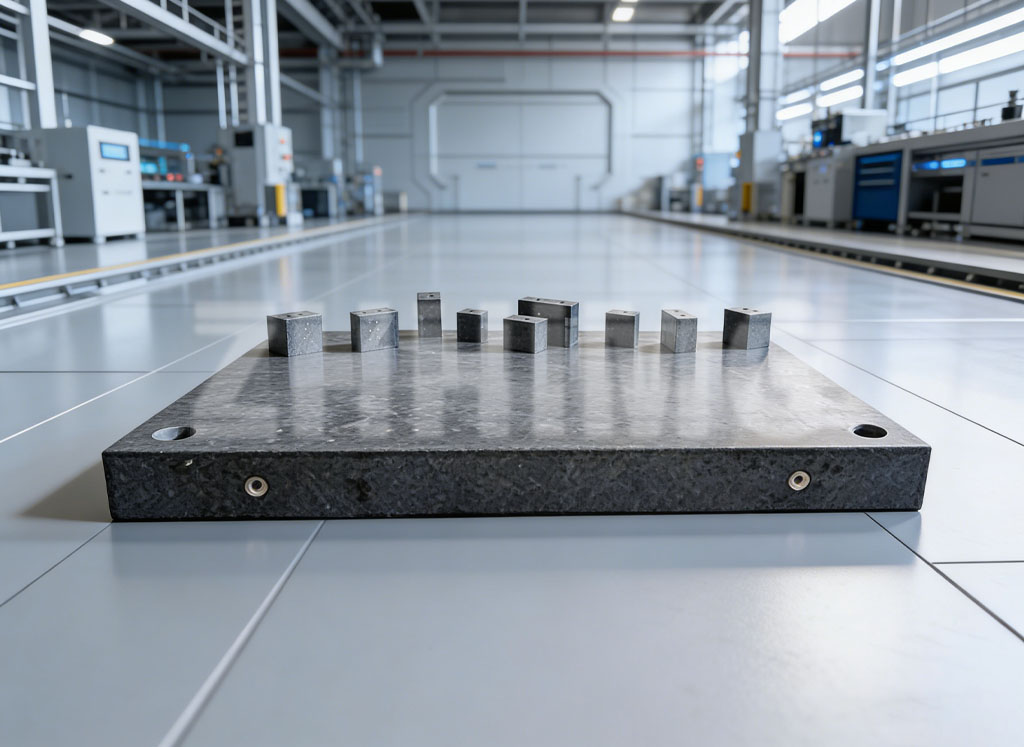
ZHHIMG provides basic maintenance guidelines together with delivered products to help customers establish simple and standardized maintenance procedures. Under normal working conditions, granite mechanical parts can retain stable reference accuracy for a long time with regular gentle cleaning and dust protection, and by avoiding hard-object scratches. Frequent maintenance is unnecessary, greatly lowering the full-lifecycle operating cost of equipment. Compared with metal bases requiring tedious regular rust removal and anti-rust oil application, maintenance of precision granite components is much simpler.
In summary, daily maintenance of granite mechanical parts is not complicated. There are no mandatory requirements for rust and oxidation prevention. Maintenance mainly focuses on dust control, gentle cleaning, and collision and scratch prevention. As long as improper cleaning supplies and rough operations are avoided, simple standardized maintenance routines can preserve benchmark accuracy for a long time, supporting stable long-term operation of precision production lines such as semiconductor and optical inspection workshops.
Post time: Sep-14-2026