
As a benchmark manufacturer of ultra-precision components, ZHHIMG adopts high-density black granite raw materials, matched with constant-temperature dust-free precision processing and multi-stage aging treatment, ensuring excellent stability and wear resistance of finished products. Nevertheless, the long-term performance of high-precision products relies heavily on refined post-maintenance. Different from the simple maintenance modes for ordinary stone plates on the market, ZHHIMG formulates full-cycle maintenance standards covering environmental adaptation, standardized operation, scientific cleaning, periodic calibration and comprehensive protection based on the material characteristics and precision structure of high-end granite plates. The system fundamentally delays precision aging and greatly reduces equipment repair and replacement costs.
Reasonable Environmental Adaptation to Avoid Environmental Precision Loss
Environmental factors are the hidden core causes of gradual precision attenuation of granite plates and are easily overlooked in daily maintenance. Ultra-precision granite plates require extremely strict conditions in terms of temperature, humidity and vibration. Long-term operation in non-standard working environments will trigger subtle stone expansion and contraction as well as unbalanced structural stress, gradually affecting the flat benchmark accuracy.
In daily application, the plate should be kept in a relatively constant temperature and humidity environment. Direct sunlight, humid conditions and sharp temperature changes must be avoided. Placement near high-temperature equipment, welding areas and water sources is prohibited to prevent micro-deformation caused by uneven temperature and humidity. Meanwhile, vibration interference must be eliminated, and plates cannot be placed in vibration-prone working areas. After moving or transportation, the plate must be leveled and fully stabilized before reuse. For large-scale industrial plates in long-term service, the flatness and stability of the supporting base should be inspected regularly to prevent plate warpage caused by uneven stress, so as to consolidate long-term precision stability.
Standardize Daily Operations to Prevent Man-Made Structural Damage
Most precision failures and shortened service life of granite plates stem from cumulative damage caused by non-standard operation rather than inherent product quality problems. Violent placement of hard workpieces, overload pressure, workpiece dragging and tool collision will cause surface scratches, dents and edge chipping, permanently damaging the precision benchmark surface and detection accuracy.
ZHHIMG has formulated standardized operational maintenance specifications. Workpieces and toolings are strictly prohibited from being dragged on the plate surface; all precision parts must be gently placed and retrieved without hard impact or heavy knocking. Overload placement is forbidden to avoid local stress concentration and latent deformation. Processes such as cutting, drilling and grinding that generate debris and surface damage are not allowed on the benchmark surface. In addition, standardized assembly of threaded holes and T-slots is required to prevent thread slipping and structural wear caused by violent installation and disassembly, ensuring long-term accurate and functional performance of structural grooves and holes.
Accurate and Compliant Cleaning to Prevent Chemical and Physical Erosion
Improper cleaning is one of the key causes of micro-precision damage to high-end granite plates. Common improper cleaning methods including rough wiping and acid-base corrosive cleaners will scratch the micro-flat surface, erode stone texture and cause micropore staining and aging, resulting in continuous precision degradation.
ZHHIMG implements exclusive precision cleaning standards. Floating dust and fine particles are cleaned gently with professional dust-free microfiber cloths. Oil stains and cutting fluid residues are removed with neutral precision detergents, while strong acid and alkali corrosive cleaners are completely prohibited. The surface must be dried timely after cleaning to prevent water and chemical residues from penetrating stone micropores and causing material aging and micro precision deviation. Dust-free vacuum equipment is used to clean dead corners of T-slots and threaded holes to avoid dirt accumulation and ensure complete surface and structural integrity. Keeping the plate clean and dry during idle periods effectively prevents material aging and precision attenuation. 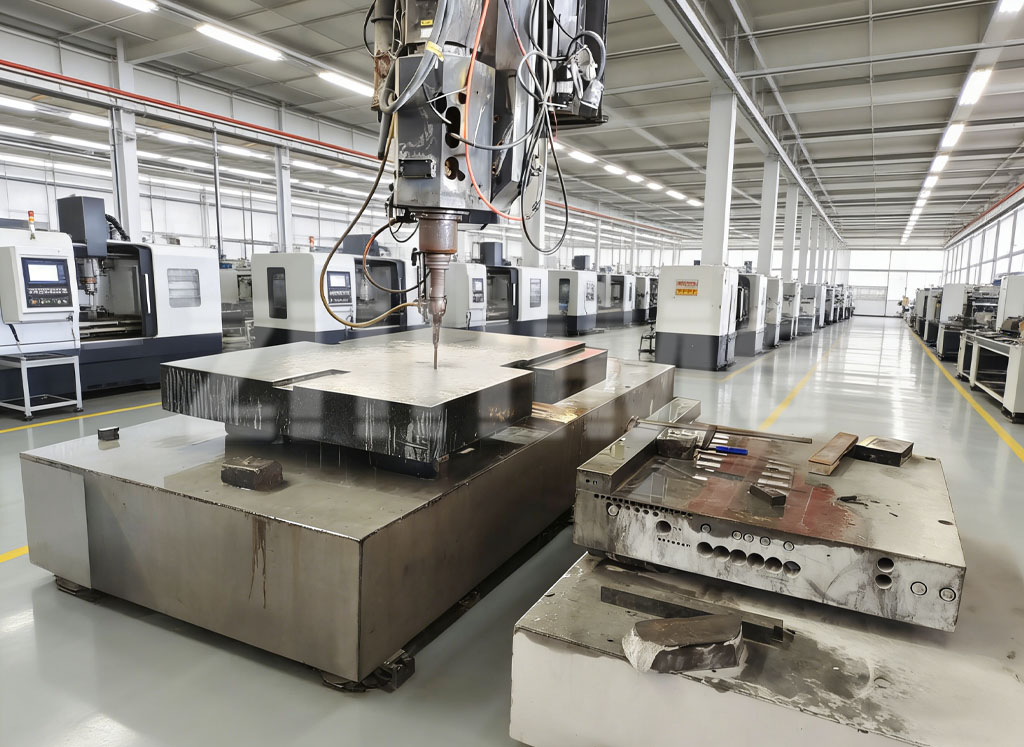
Periodic Precision Calibration and Recheck to Correct Micro Deviations
The precision of granite plates undergoes tiny dynamic fluctuations during long-term service. Regular calibration and re-inspection are essential maintenance procedures to stabilize accuracy and extend service life. High-end granite plates feature ultra-high precision tolerance, where subtle deviations can affect overall detection reliability.
In accordance with international metrology standards including German DIN, American ASME and Chinese GB, ZHHIMG recommends a quarterly inspection and annual full calibration maintenance mechanism. Professional high-precision testing equipment is used to recheck core indicators such as flatness, straightness and parallelism, and data is compared with factory benchmark values to capture subtle precision drift. Slightly worn or deviated plates can be repaired through professional precision grinding to avoid cumulative permanent precision failure. All calibration data is traceable to national metrology standards, ensuring continuous compliance, accuracy and stability in industrial service.
Hierarchical Storage Protection for Full-Cycle Precision Maintenance
Granite plates with different use frequencies require differentiated storage and maintenance solutions. A single maintenance strategy cannot achieve long-term precision protection.
High-frequency used plates require timely cleaning and dust covering during operation gaps to prevent continuous erosion by workshop contaminants. Intermittently used plates should be fully cleaned and sealed in a constant-temperature dry environment. Long-term idle finished products need regular cleaning, precision re-inspection and professional film sealing to avoid surface aging and micropore dust accumulation. Meanwhile, long-term unilateral stress should be avoided, and placement posture can be adjusted regularly to balance internal stone stress and delay equipment aging.
Conclusion
The precision service life of granite inspection plates relies on both superior manufacturing quality and refined post-maintenance. High-quality raw materials and sophisticated processing deliver ultra-high initial precision, while scientific and standardized maintenance sustains benchmark stability, delays aging and reduces operation costs. Adhering to the quality policy of “No excessive pursuit for precision is ever redundant”, ZHHIMG not only manufactures high-precision and high-stability granite inspection plates, but also empowers end users with systematic maintenance solutions. The company supports stable long-term operation of ultra-precision detection equipment across industries and continuously promotes high-quality development of the global ultra-precision industry.
Post time: Aug-27-2026