
As the precision benchmark of the whole machine, the integrity of the working surface of a granite machine tool bed directly determines the positioning and motion accuracy of the equipment during long-term operation. Scratches may form on the granite bed surface from tool collisions, friction by hard debris, or accidental workpiece scuffs during equipment assembly, component replacement or routine maintenance. Many maintenance personnel tend to polish the surface directly at first sight. However, granite is a brittle natural stone. Blind on-site grinding and polishing will easily damage the original flatness of the reference surface, causing local edge collapse and surface deformation, which may permanently impair the benchmark of the entire machine tool. Proper repair of scratches on granite beds requires scratch classification first, followed by matched repair solutions.
The first step before repair is on-site assessment of scratches to distinguish shallow scratches from deep damage. Shallow scratches only exist on the polished surface layer without cutting into the stone substrate; marks are visible to the naked eye with no obvious steps by touch. Deep scratches cut into the granite body, with perceptible grooves by hand, and may even come with minor edge chipping and internal microcracks. These two types of damage require completely different handling strategies. The assessment shall be performed under constant temperature. Instruments including white light interferometers, roughness testers and straight edges are used to detect flatness changes in scratched areas and check whether damage has induced hidden cracks inside the substrate. Once internal stone cracks are detected, simple polishing repair is not suitable. The structural safety of the component must be re-evaluated to prevent cracking under stress in later operation.
For shallow scratches, local fine polishing repair is preferred without large-scale material removal. The repair zone shall be thoroughly cleaned first. Dust and oil contaminants are wiped off with dust-free cloths and anhydrous ethanol, while hard particles trapped in gaps are blown away with clean compressed air, to avoid secondary scratching of the working surface by impurities during polishing. Diamond polishing paste with progressively finer grits and flexible polishing heads are adopted for low-speed small-area polishing under strictly temperature-controlled environments. Only the damaged surface layer is removed to preserve the original bed benchmark as much as possible. Flatness and roughness are remeasured every time the abrasive grain size is changed to control material removal volume, ensuring a smooth transition without height steps between the repaired zone and surrounding original working surfaces. Full-area re-inspection is required after repair to confirm no offset in parallelism and straightness.
For relatively deep scratches, simple polishing will remove excessive substrate material and lead to local surface sagging. In such cases, a composite repair process combining local filling and precision lapping is adopted. Impurities inside grooves are cleared first, and groove edges are chamfered to eliminate sharp corners and avoid stress concentration. Special mineral filler matching the granite substrate in thermal expansion coefficient and hardness is applied for filling and curing. After curing, rough grinding for levelling is carried out, followed by progressive fine lapping and polishing to make the physical properties of the patched area close to the base material. All repair operations must be completed under constant temperature. Sudden temperature changes during curing should be avoided to prevent deformation caused by filler shrinkage. After repair, laser interferometers must be used to inspect geometric tolerances of the repaired zone and adjacent reference surfaces to guarantee that the bed benchmark accuracy meets factory specifications. 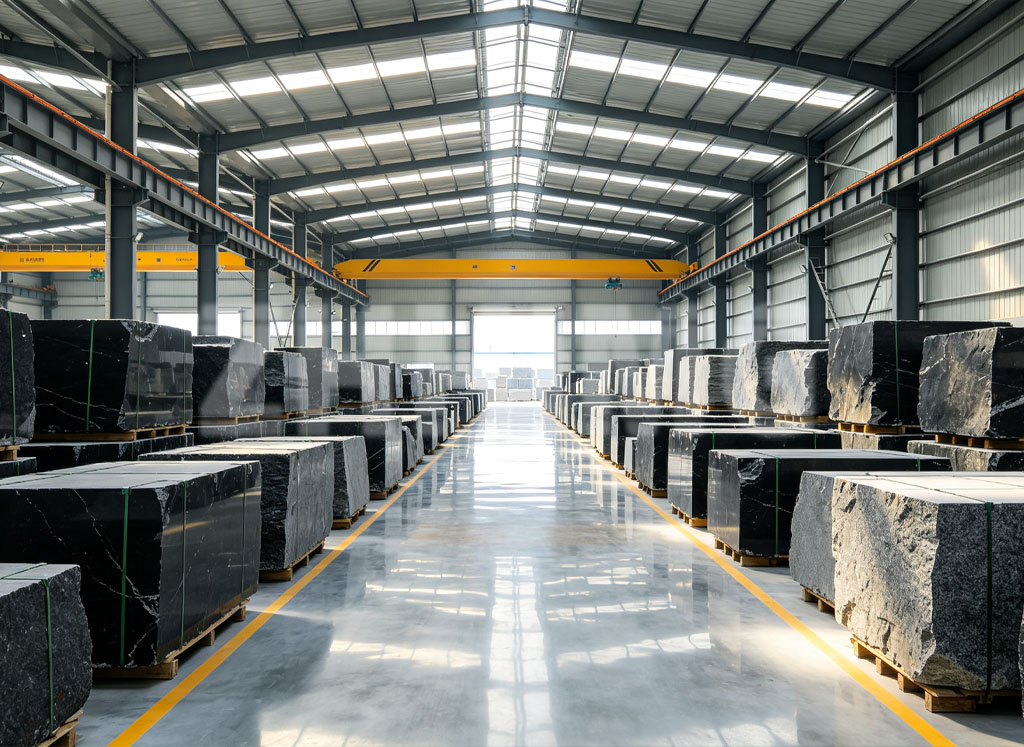
Two common pitfalls should be avoided during field maintenance. First, never grind granite beds directly with ordinary sandpaper or angle grinders. Such tools deliver uncontrollable cutting force, which can easily cause large-area surface damage and directly scrap the precision reference surface. Second, completion of repair does not mean permanent protection. Although the repaired area restores its appearance, differences exist between the filled material and the monolithic granite substrate. Enhanced protection is required in subsequent operation to prevent hard particles from falling onto guide rails and worktables and reduce re-scratching risks. Regular cleaning can be arranged for daily maintenance, and protective backing plates can be added during workpiece handling and fixture disassembly to reduce collisions and scratches at the source.
ZHHIMG provides full-service repair and recalibration for granite components, not limited to custom manufacturing of new parts. Our technicians are familiar with benchmark characteristics of various granite machine beds, gantry bases and inspection platforms. We can conduct on-site evaluations or carry out repair and lapping work in our constant-temperature workshop. All repair work complies with international metrology standards, and complete inspection reports are delivered upon completion. For severely damaged beds beyond repair, we can reproduce brand-new granite beds according to original drawings and complete replacement, pre-assembly and precision calibration.
The core principle of granite bed scratch repair is minimal material removal with priority to protecting the original benchmark. The goal of repair is not merely removing visible marks, but maintaining stable flatness and geometric benchmarks of the entire bed. Reasonable damage assessment and standardized repair processes help restore machine accuracy at the lowest cost and extend the service life of granite beds.
Post time: Sep-17-2026