
Ultra-precision granite mechanical parts are indispensable core foundational components in high-end equipment such as semiconductor manufacturing devices, precision testing instruments and intelligent CNC machine tools. With ultra-high hardness, stable structural performance and ultra-low deformation characteristics, they serve as the precision benchmark for entire equipment operation. However, granite materials feature high brittleness and sensitive precision surfaces; accidental collision, friction and improper extrusion during handling and assembly will cause irreversible edge chipping, surface scratches and micro-deformation, directly leading to precision deviation and product scrapping. In industrial mass production and high-standard assembly scenarios, standardized anti-collision protection during handling and assembly is a key link to stabilize product yield, guarantee consistent precision and extend the service life of precision granite components.
Hierarchical pre-protection and differentiated anti-collision schemes based on component specifications are essential to avoid handling damage. Precision granite products cover large-scale machine beds, ultra-long precision guide rails, miniature measuring parts and special-shaped air-bearing bases. Components of different sizes, weights and structures carry completely different collision risks and protection requirements. Large heavy-duty granite structures are prone to edge impact and chipping during handling due to their heavy weight and large span; while ultra-thin small parts and hollow special-shaped workpieces are easily scratched, cracked or damaged at precision holes. Professional production teams must conduct pre-judgment on structural risk points such as sharp edges, lapped reference surfaces, threaded holes and positioning surfaces. Adopting flexible corner protectors, full-coverage high-density foam and customized shockproof tooling for hierarchical protection effectively eliminates rough handling and removes hidden collision risks from the source.
Standardized handling procedures eliminate forced operation and abnormal stress to preserve original component precision. Operations such as dragging, pushing, single-point lifting and unilateral carrying are strictly prohibited for granite parts, as these behaviors cause localized stress concentration, resulting in invisible micro-cracks, edge damage and benchmark offset. For large-tonnage and oversized granite components, professional balanced lifting equipment and silent cranes are adopted with flexible lifting belts instead of rigid steel wires to prevent hard contact and extrusion damage. The whole lifting process maintains horizontal and steady movement to avoid swinging, tilting and collision with workshop facilities. Small precision parts are independently stored in dust-proof and anti-slip turnover boxes to avoid mutual friction and collision, with all operators implementing careful handling specifications.
Buffered protection during transferring and placement eliminates hidden collision risks in dynamic working conditions. Workshop transfer, cross-process transportation and temporary placement are high-risk stages for granite damage. Direct placement on hard floors or metal worktables easily causes edge collision and micro surface damage due to uneven force and subtle vibration. According to standardized protection regulations, all granite parts must be placed on high-density flexible buffer mats to ensure uniform force and avoid suspended or uneven support. Transfer paths are cleaned in advance to prevent sudden obstacles from causing emergency-stop collision and lateral impact. Long-distance transportation equipment maintains vibration reduction control to reduce micro vibration and surface abrasion, achieving zero damage throughout the whole transfer process.
Refined protection in dust-free assembly prevents secondary collision damage. The final assembly accuracy of granite parts depends on precise process control. Complex assembly procedures and precise mechanical cooperation easily cause tool collision, alignment impact and clamping pressure damage. In the constant-temperature, constant-humidity and dust-free assembly workshop, all working stations are equipped with flexible buffer pads, and all assembly tools adopt non-rigid customized tooling to avoid direct hard contact with granite reference surfaces. The alignment, fitting and locking process follows the principle of slow positioning, gentle fitting and uniform tightening. Forcible striking, forced alignment and over-clamping are forbidden to prevent edge chipping, surface scratches and precision hole damage. Zoned assembly and fixed placement effectively avoid cross-collision caused by disorderly stacking of components and tools. 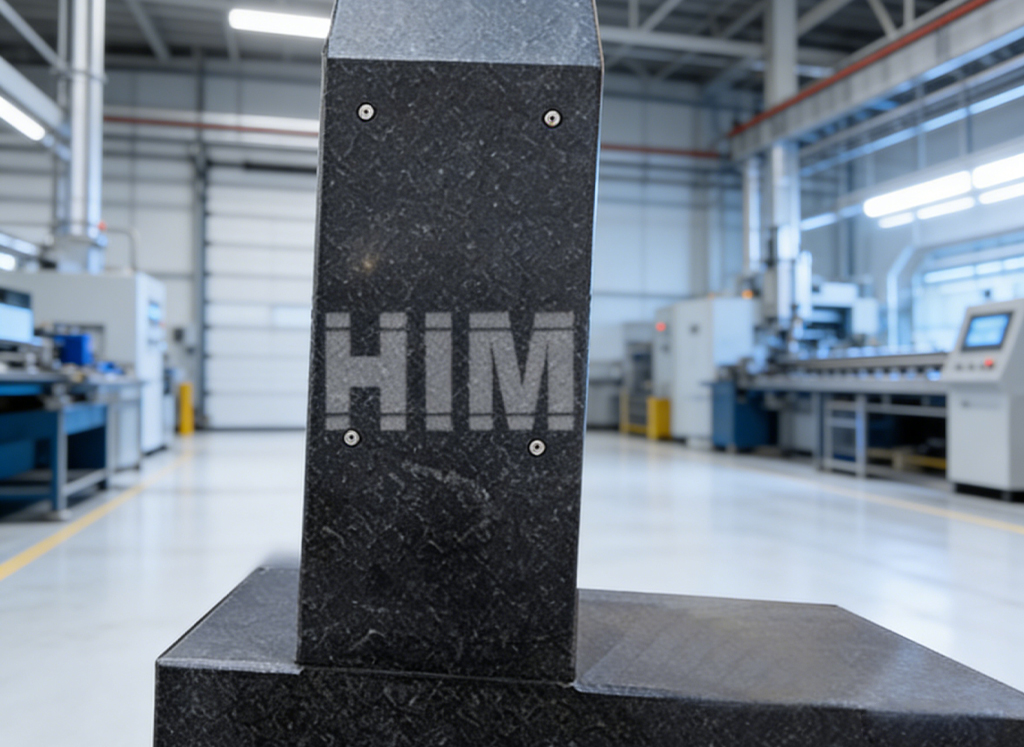
Full-process quality inspection builds a closed-loop protection system. Anti-collision management is a systematic standard covering outbound delivery, handling, transportation, placement and assembly, rather than a single independent process. Based on decades of manufacturing and assembly experience in ultra-precision granite components, ZHHIMG establishes a full-inspection protection mechanism. Each procedure is followed by detailed re-inspection of edges, benchmark surfaces and precision holes to eliminate tiny invisible damage. Meanwhile, all staff receive systematic training on international metrology standards and standardized operation specifications, enabling professional and standardized handling of all granite products and achieving zero collision, zero damage and zero precision loss in mass production.
In the ultra-precision manufacturing industry, every detail of handling and assembly determines the final benchmark accuracy of granite parts. Anti-collision protection is not a trivial auxiliary operation, but an important part of precision manufacturing quality control. With the continuous upgrading of high-end equipment manufacturing standards, the requirements for component surface integrity and dimensional stability are becoming increasingly stringent. ZHHIMG always adheres to refined full-process protection specifications for precision granite products, standardizes every handling, transfer and assembly operation, effectively avoids precision loss caused by human operation and environmental collision risks, and delivers high-stability, high-precision and high-reliability granite mechanical parts for global ultra-precision equipment manufacturers through rigorous process management.
Post time: Aug-28-2026