
For precision automation equipment, the core pain point is often not the precision limit of motion mechanisms, but ubiquitous micro-vibration interference. Vibration from workshop conveyors, nearby machine start-stop cycles, low-frequency ground resonance and even weak air turbulence can be captured by linear motors, optical detection modules and laser units, resulting in data fluctuation, blurred imaging and positioning drift. Many automated production lines suffer unstable precision and fluctuating yield after commissioning, mainly due to insufficient vibration suppression of the equipment base. Featuring natural damping properties of mineral crystals, ZHHIMG® ultra-stable granite frames build a native vibration-buffering base. Without complicated extra vibration reduction components, they construct a low-disturbance reference platform for precision automation equipment.
Vibration transmission is essentially energy conduction. Metal bases have high rigidity yet weak damping; vibration energy reflects and accumulates inside the structure, and minor vibration transmits directly to actuators along the frame. In contrast, the dense interwoven mineral crystal structure inside ZHHIMG granite creates numerous micro interfaces. When vibration energy enters the frame, these crystal interfaces continuously absorb and dissipate vibration energy, rapidly attenuating amplitude and blocking high-frequency micro-vibration from transferring upward to optical, measurement and motion modules. This inherent material damping differs from external solutions such as rubber or air springs. It suffers no aging, creep or performance degradation over time, suiting the 24/7 continuous operation of automated production lines.
Two types of vibration exist in precision automation scenarios: ambient vibration transferred from outside, and self-excited vibration generated by the equipment itself. High-speed reciprocating motion of automation systems, start-stop of XY slides and high-speed gliding of air bearings all produce self-induced vibration. Ordinary metal beds amplify such vibration and cause jitter at motion terminals. The high damping of granite frames quickly suppresses residual oscillation triggered by equipment movement and shortens positioning settling time. For high-speed automated stations including semiconductor automation, PCB drilling, perovskite coating and optical AOI inspection, shorter settling time improves cycle efficiency without modifying motion control algorithms, directly raising line throughput and inspection consistency.
The vibration-damping performance relies on synergy between structural design and substrate stability. During the design phase, ZHHIMG optimizes frame cross-sections and rib layouts according to the gravity center, travel range and module weight of automation equipment, balancing vibration absorption and deflection control. The large mass inertia brought by high-density granite further suppresses low-frequency resonance and avoids common resonant frequencies in automation workshops. Many automation manufacturers underestimate low-frequency resonance risk. Once the natural frequency of the base coincides with that of surrounding machinery, resonance amplification occurs and triggers persistent precision drift. With inherent material properties and structural design, granite frames broaden the effective vibration damping range and evade workshop resonance points.
It should be noted that vibration reduction does not mean eliminating all vibration, but restraining vibration below thresholds that interfere with nano or micron-level operations. For different automation equipment, ZHHIMG evaluates the vibration environment in advance and defines vibration transmissibility indicators. Combined with processing in constant-temperature vibration-isolated workshops, both geometric accuracy and vibration damping performance of finished frames can meet requirements. During assembly, anti-vibration support feet form a composite vibration reduction system together with the intrinsic damping of granite frames, double-weakening ground vibration transmission. This solution has a simple structure and reduces assembly tolerances and maintenance costs caused by extra vibration reduction parts, making it suitable for modular integration in automated production lines. 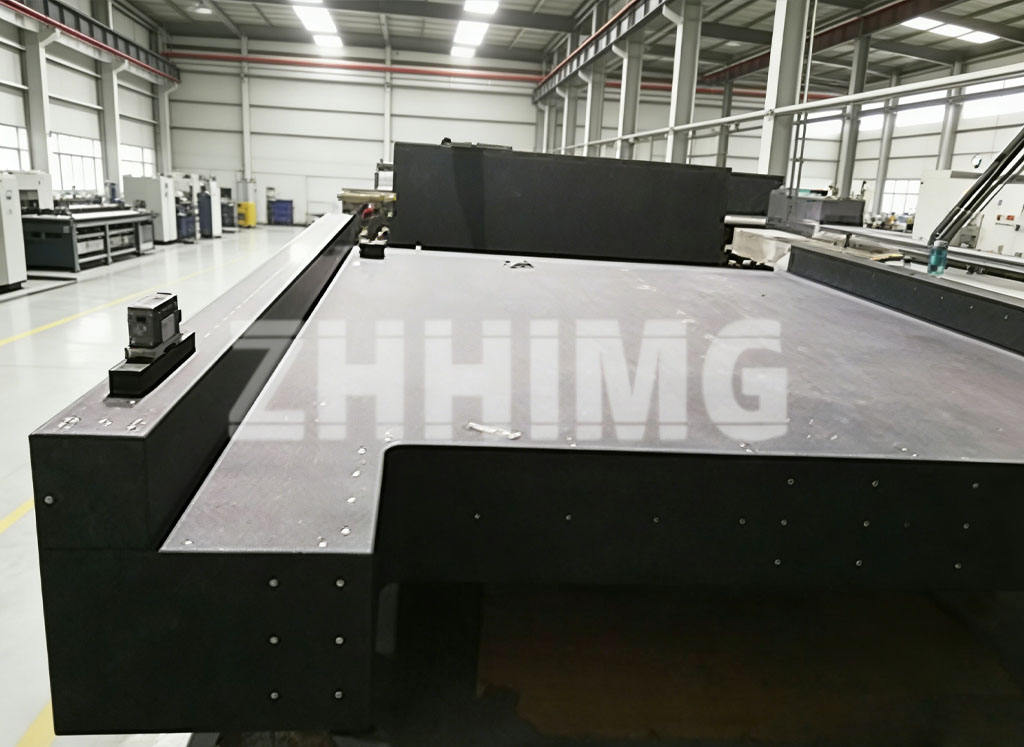
From the perspective of long-term operation and maintenance, automated production lines demand continuous stability and minimal maintenance. Rubber vibration pads age and harden, while air-floating vibration reduction units require continuous gas supply and carry leakage risks. The vibration damping performance of ZHHIMG granite frames originates from intrinsic material characteristics with no consumable wearing parts and no regular replacement required. Both geometric reference and vibration damping capacity remain stable over years of nonstop automated production, cutting equipment downtime for calibration and production loss. Whether for automated CMM inspection cells, X-Ray automatic inspection machines, laser precision processing automation platforms or high-precision XY automation worktables driven by linear motors, granite frames deliver steady and reliable vibration suppression support.
In summary, the excellent vibration damping performance of ultra-stable granite frames forms the underlying foundation for stable high-precision operation of precision automation equipment. With exclusive black granite raw materials and mature ultra-precision machining and metrology systems, ZHHIMG integrates high damping vibration suppression with geometric reference stability, supplying high-rigidity, vibration-resistant and long-lasting load-bearing bases for global precision automation equipment. It helps precision automated production lines deliver consistent and repeatable processing and inspection results continuously.
Post time: Sep-28-2026