
In the high-stakes world of precision manufacturing, particularly for automotive and aerospace sectors, the weight of a component is often as critical as its strength. For years, manufacturers have relied on steel and cast iron for precision fixtures, accepting the heavy penalties of high mass in exchange for stability. However, a paradigm shift is underway.
Carbon Fiber Precision Fixtures are no longer just a futuristic concept—they are a practical, high-ROI solution for modern production lines. By integrating advanced composite materials, manufacturers can now achieve a 70% weight reduction without compromising the stiffness required for high-tolerance machining and inspection.
The Physics of Lightweight Precision
Why are automotive and aerospace engineers switching to composites? The answer lies in the material properties. Carbon Fiber Reinforced Polymer (CFRP) offers a unique combination of low density and high specific strength.
| Property | Steel | Carbon Fiber Composite (CFRP) | Advantage |
|---|---|---|---|
| Density | ~7.8 g/cm³ | ~1.6 g/cm³ | CFRP is roughly 1/4 the weight of steel. |
| Tensile Strength | High | Extremely High | High-grade CFRP can exceed steel’s strength by 5 times. |
| Thermal Expansion | High | Near Zero | CFRP offers superior dimensional stability. |
| Corrosion | Prone to rust | Immune | Ideal for harsh manufacturing environments. |
This data highlights why lightweight metrology fixtures are becoming the standard for automated integration. The reduction in mass allows for faster acceleration in robotic handling systems and significantly lowers the physical strain on manual assembly lines.
Real-World Application: The Aerospace Breakthrough
The theoretical benefits of carbon fiber are impressive, but the real proof is in the application. Consider a recent case involving a manufacturer of aerospace thin-walled components.
The Challenge:
The manufacturer needed a fixture for a large, complex aircraft bulkhead. The original steel design weighed 1.2 tons. This massive weight presented several problems:
The manufacturer needed a fixture for a large, complex aircraft bulkhead. The original steel design weighed 1.2 tons. This massive weight presented several problems:
- High吊装 (lifting) costs and safety risks.
- Difficulty in manual positioning for inspection.
- Excessive load on the Coordinate Measuring Machine (CMM) turntable.
The Solution:
By redesigning the fixture using optimized carbon fiber composite structures, the engineering team achieved a dramatic transformation.
By redesigning the fixture using optimized carbon fiber composite structures, the engineering team achieved a dramatic transformation.
The Results:
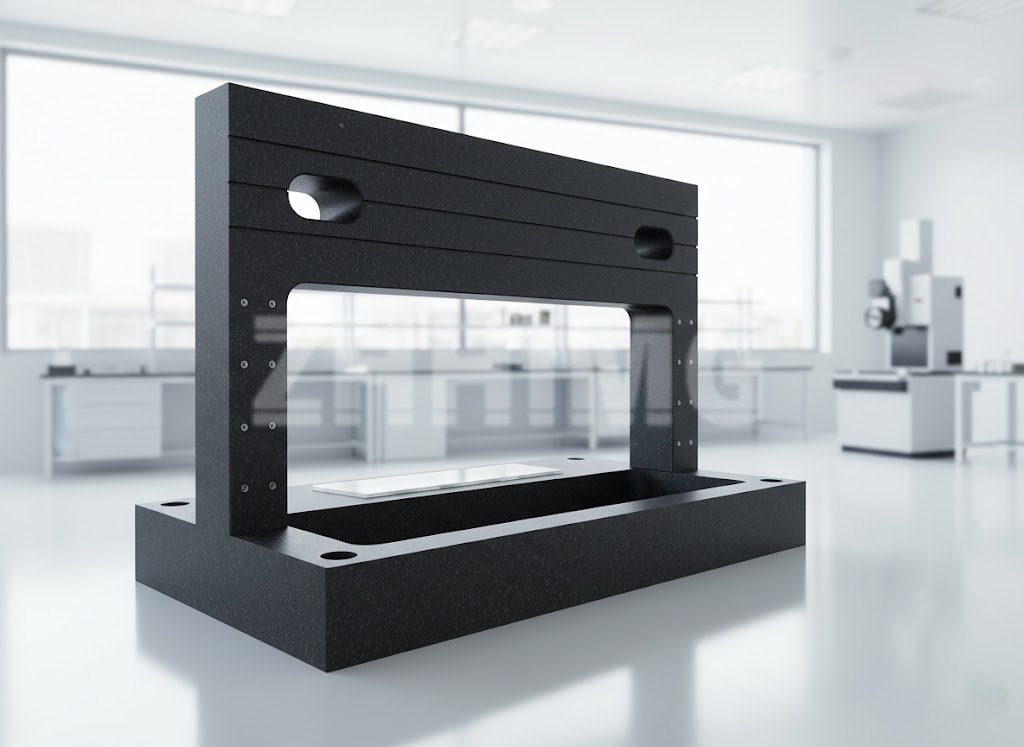
- Weight Reduction: The fixture weight dropped from 1.2 tons to just 380 kg. This nearly 70% reduction eliminated the need for heavy overhead cranes during setup, allowing for easier manual handling.
- Precision Maintained: Despite the weight loss, the fixture maintained a flatness tolerance of 0.05mm, meeting the strict requirements for aerospace inspection.
- Stiffness: The high modulus of the carbon fiber ensured that the thin-walled part did not deform during the clamping process.
Why Switch to Carbon Fiber Fixtures?
For procurement managers and technical directors, the move to carbon fiber is a strategic investment. Here is how it impacts your bottom line:
1. Enhanced Automation Integration
Modern automation requires speed. Heavy steel fixtures limit the speed of robotic arms and gantry systems due to inertia. Lightweight metrology fixtures allow robots to move faster and with greater precision, increasing overall throughput.
Modern automation requires speed. Heavy steel fixtures limit the speed of robotic arms and gantry systems due to inertia. Lightweight metrology fixtures allow robots to move faster and with greater precision, increasing overall throughput.
2. Reduced CMM Wear and Tear
Every CMM has a maximum load capacity. By reducing the weight of the fixture, you maximize the payload available for the actual part. This reduces wear on the machine’s bearings and motors, extending the lifespan of your expensive inspection equipment.
Every CMM has a maximum load capacity. By reducing the weight of the fixture, you maximize the payload available for the actual part. This reduces wear on the machine’s bearings and motors, extending the lifespan of your expensive inspection equipment.
3. Ergonomics and Safety
In manual assembly or inspection cells, reducing a fixture’s weight from tons to hundreds of kilograms significantly lowers the risk of worker injury and reduces setup time.
In manual assembly or inspection cells, reducing a fixture’s weight from tons to hundreds of kilograms significantly lowers the risk of worker injury and reduces setup time.
Conclusion
The era of “heavy means stable” is over. With advancements in material science and CNC processing, Carbon Fiber Precision Fixtures offer a superior alternative to traditional metals. Whether you are producing high-performance automotive parts or delicate aerospace structures, switching to composites delivers the stiffness you need at a fraction of the weight.
Ready to optimize your production line?
Post time: Mar-30-2026