
In the high-stakes world of precision metrology and quality control, the foundation of every accurate measurement is the reference tool itself. For decades, high-quality granite has been the undisputed king of metrology labs and production floors. Its natural stability, hardness, and resistance to corrosion made it the default choice for surface plates, angle plates, and precision parallels. However, in recent years, advanced technical ceramics have emerged as a formidable challenger, promising superior performance in specific demanding environments.
For lab managers, quality engineers, and procurement specialists, the choice between these two materials is no longer just about cost—it is about matching the material’s physical properties to your specific operational environment. Should you stick with the time-tested reliability of granite, or invest in the cutting-edge resilience of ceramic? Let’s dive deep into the comparison to help you decide which material is best for your lab.
The Enduring Legacy of Granite
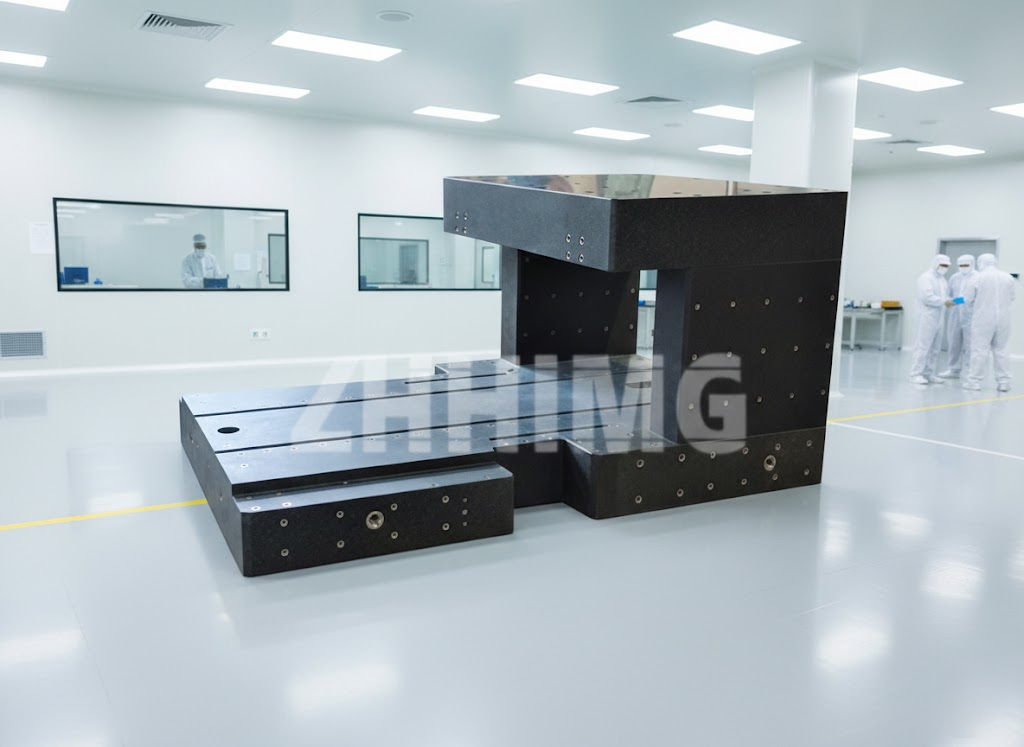
Granite metrology tools are crafted from natural igneous rock, typically fine-grained black granite or gabbro. After being quarried, the stone undergoes a natural aging process that can take years to relieve internal stresses, followed by precision grinding and hand-lapping to achieve the required flatness.
The primary advantage of granite lies in its exceptional thermal stability. Granite has an extremely low coefficient of thermal expansion (typically around 4.6 × 10⁻⁶/°C). This means that normal fluctuations in room temperature will cause minimal dimensional change, ensuring that your measurements remain consistent throughout the day. Furthermore, because it is a natural stone, it is non-magnetic, non-conductive, and completely immune to rust. If a granite surface is scratched or dented by a dropped tool, the material tends to form a small depression rather than raising a burr, which means the overall flatness of the reference plane is rarely compromised by minor accidents.
Granite is also incredibly rigid and offers excellent vibration damping. This makes it an ideal base for heavy Coordinate Measuring Machines (CMMs) and sensitive optical equipment where external vibrations could skew results. For general-purpose laboratory use and stable workshop environments, high-grade granite (such as DIN 876 Grade 0 or 00) remains the gold standard for cost-effective precision.
The Rise of Technical Ceramics
Technical ceramics, often made from materials like zirconia (ZrO₂) or alumina (Al₂O₃), are engineered in a lab rather than quarried from the earth. This manufacturing process allows scientists to tailor the material’s properties for extreme performance.
The standout feature of ceramic metrology tools is their sheer toughness and wear resistance. Ceramics are significantly harder than granite and even hardened steel. In high-throughput environments where gauge blocks or surface plates are handled thousands of times a day, ceramic tools can last up to ten times longer than their steel counterparts and show superior resistance to abrasion compared to standard granite.
Another massive advantage of ceramic is its chemical inertness. While granite is resistant to most acids, ceramics are virtually impervious to all coolants, oils, alkalis, and corrosive chemicals found in modern manufacturing. Additionally, ceramics are non-porous. Unlike granite, which can absorb trace amounts of moisture or oil if not kept clean, a ceramic surface can be wiped down instantly without fear of staining or absorption.
Perhaps the most surprising property of modern technical ceramics is their fracture toughness. While older generations of ceramics were brittle, modern zirconia-based ceramics are incredibly resistant to chipping and cracking. If a ceramic gauge block is dropped, it is far less likely to shatter than one might expect, making it surprisingly robust for shop-floor use.
Key Performance Showdown
When deciding between the two, it helps to look at how they perform in specific scenarios.
Thermal Performance: Granite wins on pure thermal inertia. Its low thermal conductivity means it takes a long time to heat up or cool down, acting as a thermal buffer. However, certain advanced ceramics are engineered to have a thermal expansion coefficient very close to steel. This makes ceramic gauge blocks excellent for measuring steel parts in environments where the temperature might drift slightly away from the standard 20°C, as the ceramic and the steel part will expand and contract at similar rates.
Weight and Handling: Ceramics generally have a lower density than granite. For large surface plates or massive CMM moving bridges, a ceramic structure can be significantly lighter while maintaining the same level of rigidity. This reduced mass allows for faster acceleration and deceleration in automated scanning applications, increasing inspection throughput without sacrificing accuracy.
Maintenance and Longevity: Granite requires almost zero maintenance other than keeping it clean and covering it when not in use. Ceramics take this a step further by being easier to clean due to their non-porous surface. However, the initial investment for ceramic tools is typically higher due to the complex sintering and grinding processes required to manufacture them.
Making the Right Choice for Your Lab
So, which material should you choose? The answer depends entirely on your specific application and environment.
Stick with Granite if you are setting up a standard inspection laboratory, a calibration room, or a stable workshop environment. If your primary need is a large, stable reference surface for general precision measurement, granite offers the best balance of performance and price. Its natural vibration damping and proven track record make it the safe, reliable choice for 90% of metrology applications.
Switch to Ceramics if your lab operates in a harsh environment. If your tools will be exposed to aggressive coolants, oils, or frequent temperature fluctuations, ceramic is the superior choice. It is also the ideal material for high-wear applications, such as gauge blocks used in high-volume production lines, or for moving components on high-speed CMMs where low mass and high stiffness are critical for dynamic accuracy.
Ultimately, both materials represent the pinnacle of precision engineering. Granite remains the steadfast foundation of the metrology world, while ceramics offer a high-tech solution for the most demanding challenges. By understanding the strengths of each, you can ensure your lab is equipped with the right tools to deliver accurate, reliable, and repeatable results.
Post time: May-14-2026