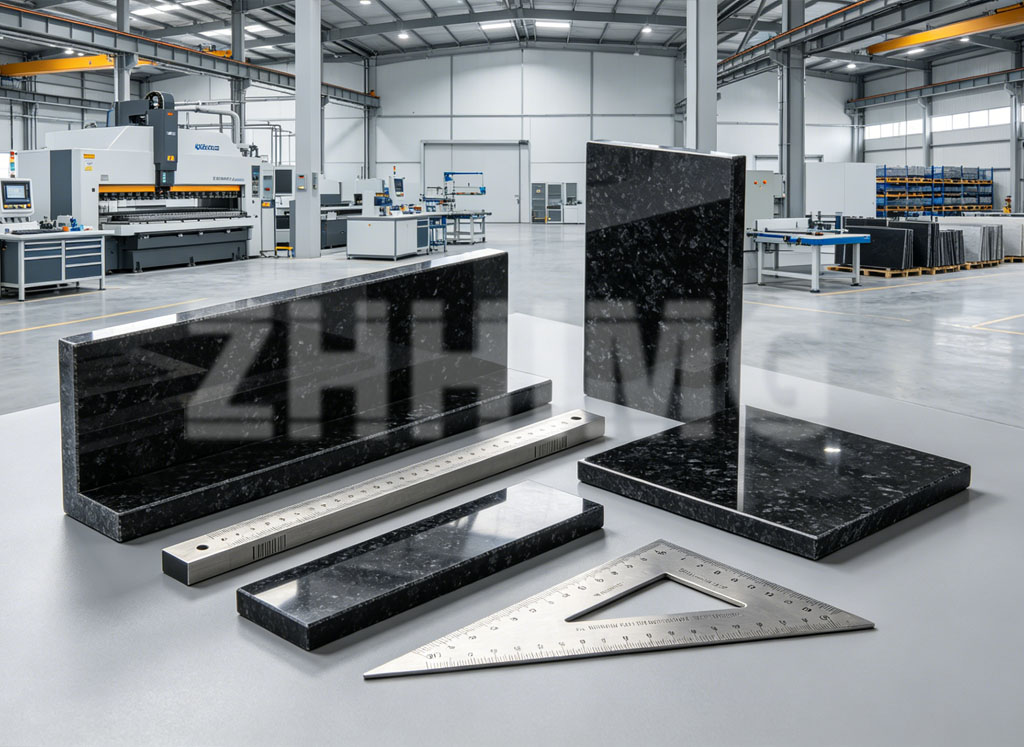
In the demanding landscape of precision manufacturing and quality control, the choice of a surface plate is a foundational decision that profoundly impacts the accuracy, reliability, and efficiency of metrology operations. These meticulously flat surfaces serve as the primary datum for inspection, layout, and calibration tasks, making their material composition a critical factor. For decades, the debate between granite and cast iron surface plates has been central to metrology professionals, each material presenting distinct advantages and considerations. Understanding the nuanced characteristics of both is essential for selecting the optimal platform that aligns with specific operational requirements and long-term return on investment.
The Enduring Legacy of Cast Iron Surface Plates
Cast iron surface plates have a long and distinguished history in metrology, predating the widespread adoption of granite. Their robust nature and unique properties have made them a staple in many industrial environments, particularly where heavy-duty applications and reparability are paramount.
Mechanical Strength and Impact Resistance
One of the primary strengths of cast iron lies in its superior mechanical strength and impact resistance. Unlike granite, which can chip or crack under severe impact, cast iron is highly durable and can withstand significant mechanical stress. This makes cast iron plates particularly well-suited for environments where heavy components are frequently handled, or where there is a higher risk of accidental drops or impacts. Its inherent toughness ensures that the plate can endure the rigors of a dynamic production floor without compromising its structural integrity .
Machinability and Adaptability
Cast iron is significantly easier to machine than granite, allowing for the straightforward integration of various features directly into the plate. This includes T-slots, threaded holes, and clamping mechanisms, which are crucial for securing workpieces and fixtures during inspection or assembly. This adaptability makes cast iron surface plates highly versatile for applications requiring frequent reconfigurations or the use of specialized tooling. Furthermore, the ability to machine cast iron allows for precise customization to meet unique operational demands, offering a level of flexibility that granite cannot easily match .
Reparability and Longevity
A distinct advantage of cast iron surface plates is their reparability. Over time, even the most robust surfaces can experience wear or damage. When a cast iron plate becomes worn or its flatness degrades, it can often be re-scraped or re-lapped by skilled technicians to restore its original accuracy. This ability to be refurbished significantly extends the lifespan of a cast iron plate, making it a sustainable and cost-effective option in the long run, especially for larger, more expensive units. This reparability contrasts with granite, which, once significantly damaged or worn beyond a certain point, typically requires replacement .
Thermal Conductivity
Cast iron possesses a higher thermal conductivity compared to granite. While this can be a disadvantage in terms of thermal stability (as discussed later), it can also be beneficial in certain scenarios where rapid temperature equalization across the plate is desired, or where the plate needs to dissipate heat generated by the workpiece or environment more quickly.
The Modern Dominance of Granite Surface Plates
Granite surface plates gained prominence during World War II, initially as a substitute for metal, but quickly proved their superior metrological qualities. Today, they are the industry standard for high-precision applications, favored for their intrinsic properties that minimize measurement uncertainties.
Exceptional Dimensional Stability and Low Thermal Expansion
The most celebrated attribute of granite in metrology is its outstanding dimensional stability, primarily due to its extremely low coefficient of thermal expansion (CTE). Granite’s CTE is approximately one-third that of cast iron (e.g., 4.6 x 10⁻⁶/°C for granite versus 11 x 10⁻⁶/°C for cast iron) . This means that granite plates are far less susceptible to thermal expansion and contraction caused by ambient temperature fluctuations. In temperature-controlled metrology labs, this property ensures that the reference surface remains consistently flat and accurate, minimizing thermal errors that can significantly impact measurement precision. This inherent thermal stability is a cornerstone of high-accuracy metrology, providing a reliable datum even with minor environmental shifts .
Superior Vibration Damping Characteristics
Precision measurements are highly vulnerable to vibrations, which can introduce noise and instability into the measurement process. Granite possesses excellent natural vibration damping properties due to its dense, crystalline structure. It effectively absorbs and dissipates mechanical vibrations, creating a
quieter environment for sensitive instruments . In contrast, cast iron tends to ‘ring’ or vibrate more, often requiring additional specialized damping mounts for high-end metrology applications. This superior damping capability of granite is crucial for achieving repeatable and accurate measurements, especially when dealing with delicate instruments or performing measurements at sub-micron levels.
Inherent Hardness, Wear Resistance, and Chemical Inertness
Granite is significantly harder than cast iron, typically exhibiting a Mohs hardness of 6 to 7. This superior hardness translates into exceptional wear resistance, making granite plates highly resistant to scratching and abrasion from parts being slid across their surface. With proper care, a granite surface plate can maintain its accuracy for decades, offering a very long lifespan . Furthermore, granite is non-porous, non-magnetic, and chemically inert. This means it is completely immune to rust and corrosion from oils, coolants, or humidity, eliminating the need for constant maintenance like oiling that cast iron requires. Its non-magnetic property is also advantageous for inspecting components in the electronics or aerospace sectors, where magnetic interference can be problematic .
Ease of Maintenance
The maintenance requirements for granite surface plates are remarkably low. A simple wipe-down with a specialized cleaner is typically all that is needed to keep the surface pristine. The absence of rust and the material’s inherent stability mean that granite plates do not warp over time due to internal stress relief, unlike cast iron which can require periodic re-scraping or re-lapping to correct distortions . This low maintenance aspect contributes significantly to the long-term cost-effectiveness of granite plates.
Comparative Analysis: Key Parameters
To make an informed decision, it is crucial to compare granite and cast iron surface plates across several key metrological and operational parameters.
|
Parameter
|
Granite Surface Plates
|
Cast Iron Surface Plates
|
|
Thermal Expansion Coefficient
|
Very Low (e.g., 4.6 x 10⁻⁶/°C)
|
Moderate (e.g., 11 x 10⁻⁶/°C)
|
|
Dimensional Stability
|
Excellent; minimal deformation with temperature changes
|
Good; more sensitive to temperature changes and long-term stress relief
|
|
Vibration Damping
|
Superior; effectively absorbs and dissipates vibrations
|
Average; tends to vibrate more, may require additional damping
|
|
Hardness & Wear Resistance
|
Very High (Mohs 6-7); highly resistant to scratches and abrasion
|
Moderate; softer, more susceptible to wear, but impact resistant
|
|
Corrosion/Rust Resistance
|
Excellent; completely immune to rust and chemical corrosion
|
Poor; highly susceptible to oxidation, requires diligent maintenance
|
|
Magnetic Properties
|
Non-magnetic
|
Ferrous; can become magnetized, potential for interference
|
|
Maintenance
|
Low; simple cleaning, no rust prevention needed
|
High; requires regular oiling and periodic re-scraping
|
|
Impact Resistance
|
Poor; can chip or crack under heavy impact
|
Excellent; highly durable and resistant to impact
|
|
Reparability
|
Limited; difficult to repair significant damage
|
Good; can be re-scraped or re-lapped to restore accuracy
|
|
Initial Cost
|
Higher
|
Lower
|
|
Long-Term ROI
|
High for precision applications due to low maintenance and stability
|
High for heavy-duty applications due to reparability and robustness
|
Choosing the Right Platform: Application-Specific Considerations
The decision between granite and cast iron surface plates ultimately hinges on the specific requirements of the application, the operating environment, and the long-term strategic goals of the manufacturing or metrology facility.
When to Choose Granite Surface Plates
Granite surface plates are the undisputed choice for applications demanding the highest levels of precision and stability. This includes:
•High-Precision Metrology Labs: Environments with strict temperature control where sub-micron accuracy is paramount, such as calibration laboratories, CMM bases, and optical inspection setups.
•Electronics and Aerospace Industries: Where non-magnetic properties are critical to prevent interference with sensitive components or instruments.
•Long-Term Stability Requirements: For applications where the surface plate must maintain its accuracy over decades with minimal intervention.
•Cleanroom Environments: Where rust and particulate generation from metallic surfaces are unacceptable.
The higher initial investment in granite is often justified by its near-zero maintenance costs, unparalleled accuracy stability, and extended lifespan, leading to a superior ROI for high-precision, long-lifecycle applications .
When to Choose Cast Iron Surface Plates
Despite the rise of granite, cast iron surface plates retain their value in specific industrial contexts, particularly where robustness and adaptability are prioritized over extreme precision.
•Heavy-Duty Industrial Environments: For applications involving heavy workpieces, frequent clamping, or a higher risk of impact, such as in heavy machinery manufacturing or large-scale assembly operations.
•Dynamic Production Floors: Where the ability to integrate T-slots and threaded holes for workholding and frequent reconfigurations is essential.
•Budget-Conscious Applications: Where the initial cost is a significant factor, and the required precision can be met by a well-maintained cast iron plate.
•Reparability Needs: For facilities that prefer the option of re-scraping and refurbishing their surface plates to extend their service life, rather than replacing them.
Cast iron’s lower initial cost, impact resistance, and versatility for fixturing make it a practical workhorse. Its reparability also contributes to a strong long-term ROI in demanding environments where occasional wear and tear are expected .
Conclusion
Both granite and cast iron surface plates are indispensable tools in the world of metrology, each offering a unique set of advantages. Granite, with its superior dimensional stability, low thermal expansion, excellent vibration damping, and chemical inertness, stands as the premier choice for the most demanding high-precision applications. It provides a stable, maintenance-free foundation that ensures the integrity of critical measurements over extended periods. Conversely, cast iron, with its robust mechanical strength, machinability, and reparability, remains a valuable asset for heavy-duty industrial environments where versatility and impact resistance are key.
The ultimate decision between these two materials is not about one being inherently
superior to the other, but rather about aligning the material’s properties with the specific needs and operational context of the metrology task. By carefully evaluating factors such as required precision, environmental conditions, maintenance capabilities, and budget, manufacturers can confidently choose the right platform to optimize their quality control processes and achieve their metrological objectives.
Post time:
May-13-2026