The landscape of dimensional metrology has undergone a profound transformation over the past two decades, driven by the relentless pressure to reduce inspection cycle times, improve manufacturing flexibility, and bring quality control capabilities directly to the production floor. Where once all precision measurement required transporting components to temperature-controlled laboratories housing massive bridge-type coordinate measuring machines, today’s manufacturing environments increasingly demand measurement solutions that can travel to the workpiece rather than requiring the workpiece to travel to the measurement system. At the forefront of this revolution stands the handheld coordinate measuring machine, a portable precision instrument that has fundamentally altered how manufacturers approach dimensional inspection. Yet even as these devices bring unprecedented flexibility to measurement operations, they also introduce new challenges that highlight the enduring importance of fundamental metrology principles, including the critical need for a calibrate surface plate as a reference standard.
The journey toward portable measurement began with the recognition that traditional coordinate measuring machines, despite their extraordinary accuracy and capability, imposed significant constraints on manufacturing operations. Components requiring inspection had to be removed from production equipment, transported to dedicated metrology laboratories, acclimated to controlled environmental conditions, fixtured appropriately, measured by trained technicians, and then returned to production. For high-volume manufacturing with relatively few part configurations, this process could be optimized and absorbed into production schedules. But for job shops handling diverse part geometries, manufacturers producing large assemblies that could not be easily moved, or operations requiring rapid feedback between machining and measurement, the traditional model created bottlenecks that constrained throughput and extended lead times.
The handheld coordinate measuring machine emerged as an answer to these constraints, offering measurement capability in a portable format that could be deployed wherever measurement was needed. Modern handheld CMMs employ various technologies to achieve their portability and flexibility. Optical tracking systems use cameras and reflectors to triangulate the position of wireless probes in three-dimensional space, enabling measurements without the mechanical constraints of traditional bridge or gantry architectures. Articulated arm systems with multiple rotary joints allow operators to position probe tips at virtually any orientation, reaching features that would be inaccessible to fixed-geometry machines. Vision-based systems track handheld probes through sophisticated camera arrays, maintaining measurement accuracy while allowing complete freedom of movement around the workpiece.
What distinguishes truly effective handheld coordinate measuring machines from earlier portable measurement attempts is their ability to maintain metrology-grade accuracy despite the challenges inherent in shop-floor environments. Temperature fluctuations, vibration from nearby equipment, varying lighting conditions, and operator technique all introduce potential sources of measurement error that would be eliminated or minimized in a controlled laboratory. Advanced handheld CMMs address these challenges through dynamic referencing, where optical reflectors placed on or near the workpiece continuously track any relative motion between the measurement system and the part being measured. This allows the system to compensate for environmental disturbances in real time, maintaining accuracy even when conditions are far from ideal.
The practical impact of this capability on manufacturing operations has been substantial. Quality technicians can now measure large assemblies in place, eliminating the need for disassembly and reassembly that would otherwise be required to bring components to a fixed CMM. Production personnel can verify dimensional conformance immediately after machining operations, reducing the risk of producing large quantities of out-of-tolerance parts before the problem is detected. Design engineers can capture dimensional data from prototypes and legacy components for reverse engineering without the delays and logistics of laboratory measurement. The handheld coordinate measuring machine has transformed measurement from a bottleneck activity into an integrated element of the manufacturing process.
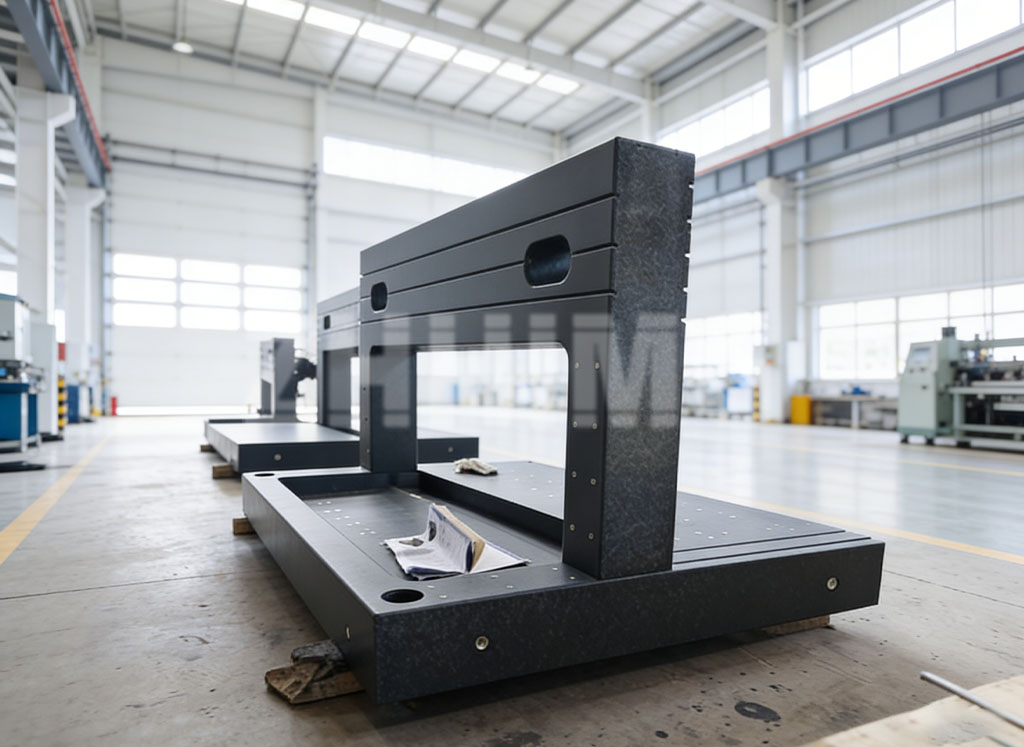
Yet the very flexibility that makes handheld CMMs so valuable also creates challenges that users must understand and address. A traditional bridge-type coordinate measuring machine derives its accuracy from a rigid structure mounted on a massive base, typically a granite surface plate that provides dimensional stability and vibration damping. The machine’s calibration and error compensation are based on the assumption that this reference structure remains stable over time. When measurements are taken, they are made relative to the machine coordinate system, which is itself defined by the physical structure of the machine and validated through periodic calibration against traceable standards.
A handheld coordinate measuring machine, by contrast, brings no such inherent reference structure to the measurement. The measurement coordinate system must be established anew for each measurement session, typically by aligning to reference features on the workpiece itself or to external reference artifacts positioned for the purpose. This fundamental difference has profound implications for measurement accuracy, traceability, and the overall measurement process. Without a stable reference plane that has been validated through proper calibration, the measurements taken with a handheld device may be internally consistent but not traceable to recognized standards.
This is where the calibrate surface plate becomes essential to effective handheld CMM operation. Despite the advanced technology packed into modern portable measurement systems, they still require reference standards against which their measurements can be validated and calibrated. The surface plate, precision-ground to extraordinary flatness and calibrated according to recognized standards such as ISO 8512 or ASME B89.3.7, provides exactly this reference. A properly calibrated surface plate serves as the fundamental reference plane against which the handheld coordinate measuring machine can verify its own accuracy and establish traceability to national measurement standards.
The relationship between handheld CMMs and calibrate surface plates manifests in several practical ways. Before beginning critical measurement operations, technicians will often perform verification checks by measuring artifacts of known dimensions on a calibrated surface plate. These checks confirm that the handheld system is performing within specification and that its calibration remains valid. If discrepancies are detected, the system can be recalibrated or returned to service for evaluation before measurements resume. This verification process is particularly important when handheld CMMs are used for applications requiring high accuracy or when measurement results will be used for quality acceptance decisions.
Periodic calibration of handheld coordinate measuring machines themselves typically requires a calibrate surface plate as part of the calibration procedure. The ISO 10360 series of standards specifies acceptance and reverification tests for various types of coordinate measuring machines, including portable systems. These tests involve measuring calibrated artifacts with known geometries and dimensions, and the measurements must be traceable to national standards through an unbroken chain of calibration. Surface plates used in these calibration procedures must themselves be calibrated at regular intervals, with documented uncertainty budgets that contribute to the overall uncertainty of the CMM calibration.
The importance of using a calibrate surface plate with handheld CMMs extends beyond formal calibration activities into routine measurement practice. When measuring flatness, parallelism, or other geometric characteristics that require a reference plane, a calibrated surface plate provides the reference against which workpiece features can be evaluated. The handheld CMM measures points on the surface plate to establish the reference plane, then measures points on the workpiece relative to this reference. The accuracy of the resulting measurements depends directly on the flatness and calibration status of the surface plate used as the reference.
Manufacturers who implement handheld coordinate measuring machines without adequate attention to reference standards and calibration requirements risk compromising the value of their measurement investment. The flexibility and speed advantages of portable measurement can be undermined if the resulting data lacks the accuracy and traceability required for quality decisions. A measurement that is fast but wrong provides no benefit, and may create harm if it leads to acceptance of out-of-tolerance parts or rejection of conforming parts. The calibrate surface plate, despite its simplicity compared to advanced electronic measurement systems, remains a foundational element of measurement integrity.
The practical requirements for surface plate calibration in handheld CMM applications follow established metrology practices. Surface plates should be calibrated at regular intervals specified by relevant standards or organizational quality procedures, typically annually for plates in regular service. Calibration should be performed by accredited calibration laboratories with capabilities traceable to national measurement institutes. The calibration certificate should document the flatness deviation across the plate surface, the measurement uncertainty, and the reference standards used. Any surface plate that fails to meet specified flatness tolerances should be resurfaced or replaced before being returned to service.
Environmental control of the area where calibration occurs remains important even for handheld CMM operations that may take place in less controlled conditions. The calibrate surface plate used for verification and calibration of portable measurement systems should be housed in an environment with stable temperature, typically controlled to twenty degrees Celsius with tight tolerances on temperature variation. Temperature fluctuations affect both the surface plate and the handheld CMM, potentially introducing errors into calibration measurements that would compromise the validity of the calibration. While handheld CMMs are designed to tolerate the environmental variations encountered on the production floor, calibration activities require the more controlled conditions traditionally associated with precision measurement.
The ongoing evolution of handheld coordinate measuring machine technology continues to expand their capabilities and applications, but it has not eliminated the fundamental metrology principles that govern all precision measurement. Traceability to recognized standards, verification of measurement system performance, and careful attention to reference standards remain essential elements of measurement quality. The calibrate surface plate, far from being rendered obsolete by advanced portable measurement technology, has become more important as a reference standard that enables handheld CMMs to deliver on their promise of accurate, traceable measurements wherever they are needed.
Manufacturing organizations implementing handheld CMM technology should develop comprehensive measurement system management programs that address both the capabilities of the portable equipment and the requirements for supporting infrastructure, including calibrated reference standards. Training for personnel operating handheld CMMs should include not only the technical operation of the equipment but also understanding of measurement uncertainty, traceability, and the role of calibration in maintaining measurement integrity. Quality management procedures should specify when verification measurements against calibrated references are required and how calibration status is maintained and documented.
As manufacturing continues its trend toward greater flexibility, faster cycle times, and more integrated quality control processes, the role of handheld coordinate measuring machines will continue to expand. These powerful tools have demonstrated their ability to transform measurement from a specialized laboratory activity into a routine element of production operations. Yet their effectiveness depends on proper implementation that recognizes both their capabilities and their requirements. The calibrate surface plate, standing as a stable reference plane validated through rigorous calibration procedures, provides the foundation upon which the flexibility and power of handheld CMM technology can be reliably built. In the evolution of on-site measurement, this partnership between advanced portable technology and fundamental reference standards exemplifies how innovation in metrology builds upon, rather than replaces, the principles that ensure measurement accuracy and traceability.
Post time:
Apr-21-2026
