
In the intricate world of dimensional metrology, where measurements are expressed in micrometers and the pursuit of accuracy borders on obsession, the foundation of all quality assurance rests upon two fundamental elements: precision gage blocks and calibration surface plates. For metrology equipment suppliers serving industries ranging from aerospace and automotive to medical device manufacturing and semiconductor fabrication, the ability to guide customers toward optimal selections of these critical standards represents not just a commercial opportunity but a professional responsibility with profound implications for manufacturing quality worldwide.
The stakes involved in gage block and surface plate selection extend far beyond the immediate transaction between supplier and customer. Every micrometer calibrated with a gage block set, every coordinate measuring machine verified against a reference standard, every precision component inspected on a granite surface plate ultimately traces its measurement integrity back to these foundational tools. When metrology equipment suppliers understand the nuances of material selection, tolerance grades, calibration requirements, and application-specific considerations, they become partners in their customers’ quality assurance systems rather than mere vendors of hardware.
Understanding Precision Gage Blocks: The Building Blocks of Measurement
Precision gage blocks, often called Jo blocks in honor of their inventor Swedish engineer Carl Johansson, represent one of the most significant innovations in the history of precision manufacturing. These seemingly simple rectangular, square, or angular blocks of metal or ceramic are manufactured to extraordinary levels of flatness, parallelism, and dimensional accuracy, enabling them to serve as the practical realization of the meter unit throughout industry. Their ability to be wrung together to create precise composite lengths makes them indispensable for calibrating measuring instruments, setting up inspection equipment, and verifying dimensional specifications.
For metrology equipment suppliers, understanding gage block selection begins with recognizing that not all gage blocks are created equal. The tolerance grade system, codified in standards such as ISO 3650 and ASME B89.1.9, defines the accuracy levels available and their appropriate applications. At the highest end, Grade K and Grade 0 blocks offer tolerances measured in hundredths of micrometers, suitable for calibration laboratories and national standards institutes where measurement uncertainty must approach zero. These blocks serve as master standards against which other gage blocks and precision instruments are calibrated, forming the top of the measurement traceability hierarchy.
Grade 1 blocks represent the workhorses of precision measurement, offering tolerances in the range of two to five tenths of a micrometer while remaining cost-effective for regular use. These blocks find homes in toolrooms, inspection departments, and quality control laboratories where consistent accuracy is essential but laboratory-grade precision is not mandatory. Grade 2 and workshop-grade blocks, with tolerances extending to one micrometer or more, serve production environments where routine checks, machine setups, and general verification tasks require reliable but not ultra-precise measurement capability.
Material selection represents another critical decision point where supplier expertise adds value. Steel gage blocks offer the lowest initial cost and thermal expansion characteristics that match most production measuring instruments, making them suitable for environments where temperature control is imperfect and replacement costs are a concern. However, steel requires careful maintenance to prevent corrosion, and its wear resistance is inferior to alternative materials, potentially affecting long-term accuracy in demanding applications.
Ceramic gage blocks and chromium carbide blocks offer superior wear resistance, excellent corrosion resistance, and outstanding dimensional stability over time. Ceramic blocks in particular are virtually immune to the corrosion that can ruin steel blocks through even brief lapses in maintenance care. Their superior surface finish enables easier and more accurate wringing when building composite stacks, and their resistance to scratching makes them particularly suitable for environments where abrasive particles may be present. For metrology equipment suppliers, recommending these premium materials often requires helping customers understand the total cost of ownership rather than focusing solely on initial purchase price.
The Critical Role of Calibration Surface Plates
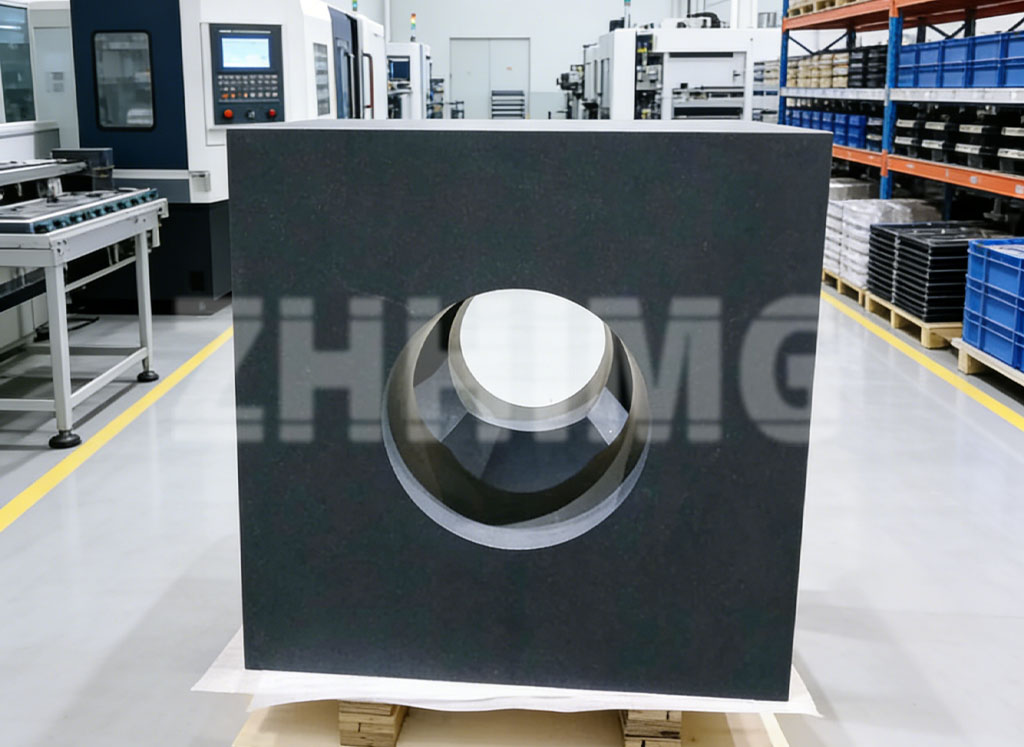
If gage blocks represent the fundamental unit of length in dimensional metrology, calibration surface plates represent the fundamental reference plane. These massive blocks of granite, precision-ground and lapped to extraordinary flatness, serve as the baseline for virtually all horizontal dimensional measurements. From height gauge measurements and dial indicator setups to coordinate measuring machine verification and precision layout work, every measurement assumes the surface plate beneath it is stable, flat, and understood.
The importance of surface plate quality becomes apparent when considering the consequences of deviation from flatness. A surface plate with local flatness errors of just a few micrometers can introduce measurement errors that cascade through the entire quality system. Height gauge measurements made at different positions on an imperfect plate will show variations unrelated to the actual dimensions of the workpiece. Layout work performed on a warped reference surface propagates errors into subsequent manufacturing operations. Coordinate measuring machine verification conducted on an inadequate surface plate produces unreliable performance data.
For metrology equipment suppliers, guiding customers toward appropriate surface plate selection requires understanding both the accuracy requirements of their applications and the environmental conditions in which the plates will operate. The ASME B89.3.7 standard defines three grades of surface plates, each suited to different operational contexts. Grade AA plates, with overall flatness tolerances measured in millionths of an inch, serve calibration laboratories and high-precision inspection areas where the most demanding measurements occur. Grade A plates offer somewhat relaxed tolerances suitable for general inspection tasks in quality control environments. Grade B plates, while still far flatter than typical shop surfaces, serve production areas where the highest precision is not required.
Material considerations for surface plates center primarily on granite selection. Black granite, specifically black diabase or anorthosite, offers the densest structure and most uniform properties, making it the preferred material for high-precision applications. Quartz-bearing granite, often appearing in pink, white, or grey colors, offers superior wear resistance due to the hardness of the quartz crystals, though its somewhat lower stiffness requires greater thickness to achieve equivalent load-bearing capacity. The choice between these materials depends on the specific wear patterns expected in the application environment and the dimensional stability requirements of the measurement tasks performed.
Environmental and Operational Considerations
Selecting precision gage blocks and calibration surface plates in isolation from their operating environments leads to suboptimal outcomes and premature degradation of accuracy. Metrology equipment suppliers who provide comprehensive guidance consider factors ranging from temperature control and humidity levels to contamination risks and usage intensity.
Temperature stability represents perhaps the most critical environmental factor affecting both gage blocks and surface plates. The ISO and ASME standards specify that all precision measurements occur at a reference temperature of 20 degrees Celsius, with actual measurements corrected for deviations from this standard. However, the thermal expansion coefficients of different materials vary significantly, introducing errors when measurements must be made in environments without precise temperature control. Steel gage blocks expand and contract at approximately 11.5 parts per million per degree Celsius, while ceramic blocks expand at about 9.2 parts per million per degree Celsius. Granite surface plates expand at approximately 6.3 parts per million per degree Celsius, significantly less than steel and offering improved dimensional stability under varying thermal conditions.
For customers operating in environments where temperature control is imperfect or nonexistent, metrology equipment suppliers should recommend materials with thermal expansion characteristics that match the instruments and workpieces being measured. Steel gage blocks, despite their maintenance requirements, may be preferable in such environments because their thermal behavior aligns with the steel measuring instruments and steel workpieces common in manufacturing. Conversely, for customers with sophisticated temperature-controlled calibration laboratories, the superior stability and wear resistance of ceramic blocks becomes more attractive.
Humidity and contamination pose different challenges. Steel gage blocks and cast iron surface plates require vigilant protection from moisture and corrosive substances to prevent rust that would destroy their accuracy. Ceramic and carbide materials offer complete immunity to such concerns, eliminating maintenance requirements and reducing the risk of accuracy loss through corrosion. In humid environments or facilities where oils and coolants are present, recommending these corrosion-resistant materials can significantly extend the service life of precision equipment.
Calibration and Traceability: The Supplier’s Responsibility
The relationship between metrology equipment suppliers and their customers extends well beyond the initial purchase transaction. Calibration and traceability represent ongoing commitments that suppliers must understand and support throughout the equipment’s service life.
All precision gage blocks require periodic recalibration to verify that wear, damage, or dimensional drift has not compromised their accuracy. The recommended recalibration interval varies by grade and usage intensity, with Grade K and Grade 0 blocks typically requiring annual calibration while lower grades may warrant more frequent verification in high-use environments. Calibration must be performed by accredited laboratories with measurement capabilities traceable to national standards institutes such as NIST in the United States, PTB in Germany, or NPL in the United Kingdom.
For metrology equipment suppliers, facilitating calibration represents a significant value-added service. This may involve maintaining relationships with accredited calibration laboratories, providing calibration reminder services for customers, or in some cases offering in-house calibration capabilities for specific equipment categories. Suppliers who understand calibration requirements can help customers maintain their quality system certifications by ensuring that traceability documentation remains current and complete.
Surface plate calibration presents unique challenges because the equipment cannot be easily transported to calibration laboratories. On-site calibration services, typically using laser interferometers, autocollimators, or electronic levels to measure flatness across the entire working surface, require specialized equipment and expertise. Metrology equipment suppliers often maintain partnerships with calibration service providers or employ their own calibration technicians to support customers in maintaining surface plate accuracy over time.
Building Trust Through Technical Expertise
The most successful metrology equipment suppliers recognize that their role extends beyond inventory management and order fulfillment. They serve as technical consultants, helping customers navigate the complex landscape of standards, specifications, and application requirements that determine optimal equipment selection.
This consultative approach requires investment in technical knowledge that goes well beyond catalog specifications. Suppliers must understand how different gage block materials perform under specific environmental conditions, how surface plate selection affects measurement system accuracy, and how calibration requirements vary across industries and applications. They must stay current with evolving standards and emerging technologies that affect dimensional metrology practices.
When a customer approaches a metrology equipment supplier with a request for gage blocks or surface plates, the response should begin with questions rather than quotations. What measurements will the equipment support? What tolerances must be verified? What environmental conditions exist in the measurement area? What calibration capabilities does the customer maintain? What quality system certifications must be supported? The answers to these questions determine not just the equipment specifications but the entire value proposition the supplier can offer.
For customers in aerospace manufacturing, where measurement errors can have catastrophic consequences, the supplier might recommend ceramic gage blocks in Grade 0 for calibration tasks, with detailed guidance on handling procedures and calibration intervals. For automotive suppliers working to statistical process control requirements, Grade 1 steel blocks might be more appropriate, supported by recommendations for wear block placement to extend service life. For educational institutions establishing metrology training programs, cost-effective Grade 2 blocks paired with mid-grade surface plates could provide adequate precision for teaching purposes without excessive investment.
Looking Forward: Evolving Requirements and Opportunities
The field of dimensional metrology continues to evolve as manufacturing tolerances tighten and quality requirements intensify. Metrology equipment suppliers who position themselves at the forefront of these developments will capture the greatest opportunities in this specialized market.
Additive manufacturing, with its unique dimensional verification requirements, creates demand for new measurement approaches and reference standards. Electric vehicle production introduces precision components with specifications that challenge traditional measurement capabilities. Medical device manufacturing requires traceability documentation that exceeds anything demanded in conventional manufacturing. Each of these emerging applications creates opportunities for metrology equipment suppliers who understand the specific requirements and can recommend appropriate equipment and calibration strategies.
The future belongs to metrology equipment suppliers who embrace their role as partners in quality rather than vendors of hardware. By developing deep technical expertise, understanding application-specific requirements, supporting calibration and traceability needs, and maintaining long-term relationships with customers, suppliers establish themselves as indispensable resources in the precision manufacturing ecosystem. In a world where micrometers matter and accuracy is everything, the guidance provided by knowledgeable metrology equipment suppliers makes the difference between measurement confidence and measurement uncertainty.
Post time: Apr-21-2026