
Introduction: Material Selection Determines Precision Performance
In precision engineering, every component plays an important role in achieving stable and accurate performance. While advanced motors, sensors, controllers, and software systems receive significant attention, the mechanical structure supporting these technologies is equally important.
The selection of structural materials directly influences:
- Positioning accuracy
- Measurement repeatability
- Thermal stability
- Vibration control
- Long-term equipment performance
In industries such as semiconductor manufacturing, precision measurement, optical inspection, and advanced automation, engineers often choose granite as the foundation material for critical components.
However, there is still confusion in the market between precision granitend marble. Both materials may appear similar visually, especially when polished into dark surfaces, but their physical characteristics and engineering applications are fundamentally different.
For ultra-precision manufacturing, not all stone materials can meet industrial requirements.
Precision granite is specifically selected, processed, and measured for engineering applications where stability and accuracy are essential.
ZHHIMG® specializes in manufacturing precision granite components, granite measuring tools, and customized granite structures for global industries requiring reliable precision performance.
Understanding the Difference Between Granite and Marble
Granite and marble are both natural stones, but they are formed through different geological processes and have different internal structures.
Granite
Granite is an igneous rock formed through the cooling and solidification of magma.
Its structure generally contains:
- Quartz
- Feldspar
- Other stable mineral components
These characteristics provide granite with:
- High hardness
- Strong wear resistance
- Excellent dimensional stability
- Good vibration damping
Because of these properties, granite is widely used in precision engineering applications.
Marble
Marble is a metamorphic rock formed from limestone under heat and pressure.
Although marble can have attractive appearance and good polishing characteristics, its physical properties are different from engineering-grade granite.
Marble is commonly used for:
- Architecture
- Decoration
- Interior applications
However, many types of marble are not suitable for ultra-precision applications requiring long-term dimensional stability.
Why Precision Granite Is Preferred for Industrial Applications
1. Higher Density and Structural Stability
The density of engineering-grade precision granite is an important factor affecting stability.
ZHHIMG® precision black granite has a density of approximately:
3100 kg/m³
High density contributes to:
- Better resistance to deformation
- Improved vibration absorption
- Greater structural stability
For precision machine bases and measurement platforms, this stability is critical.
A machine foundation must maintain its geometry even under continuous operation.
2. Superior Vibration Damping Capability
Modern precision equipment often operates with high-speed motion systems.
Examples include:
- Linear motors
- Precision stages
- CNC machining systems
- Semiconductor inspection equipment
During operation, these systems generate mechanical vibration.
If the structural material transfers excessive vibration, it may reduce:
- Positioning accuracy
- Surface quality
- Measurement reliability
Precision granite naturally provides excellent vibration damping characteristics.
This is one of the main reasons granite components are widely used in:
- CMM machines
- Optical measurement systems
- Precision assembly equipment
- Semiconductor equipment bases
3. Better Long-Term Dimensional Stability
Precision engineering requires consistency over time.
A machine component may be required to maintain accuracy for years after installation.
Materials that experience significant dimensional changes due to:
- Temperature variation
- Internal stress release
- Environmental influence
can negatively affect equipment performance.
High-quality precision granite provides excellent long-term stability.
This makes granite particularly valuable for applications where recalibration is difficult or costly.
Why Some Companies Incorrectly Use Marble Instead of Precision Granite
In the precision manufacturing industry, material selection directly affects product quality and reliability.
However, some manufacturers choose lower-cost materials to reduce production costs.
Because marble and granite can look similar after polishing, inexperienced buyers may not immediately recognize the difference.
This can create problems including:
- Reduced accuracy retention
- Lower environmental stability
- Increased maintenance requirements
- Shorter service life
For precision applications, choosing the correct material is not only a technical decision but also a quality commitment.
A lower-cost material may appear attractive initially, but the long-term impact on equipment performance can be significant.
Precision Granite Applications in Modern Manufacturing
Precision granite components are widely used in industries where accuracy and stability are critical.
Semiconductor Equipment
Semiconductor manufacturing requires extremely stable mechanical structures.
Precision granite is used for:
- Equipment bases
- Inspection platforms
- Motion system supports
- Precision structural components
The excellent stability of granite helps semiconductor equipment maintain accurate operation.
Coordinate Measuring Machines (CMM)
CMM systems require stable reference structures because measurement accuracy depends on mechanical consistency.
Granite components provide:
- Reliable reference surfaces
- Low thermal influence
- Good vibration isolation
This makes granite an ideal material for CMM structures.
Precision CNC Equipment
Modern CNC machines require rigid and stable foundations.
Granite machine bases can help improve:
- Motion stability
- Processing consistency
- Surface quality
Especially in ultra-precision machining applications, granite provides advantages compared with traditional structures.
Optical and Laser Equipment
Optical systems are highly sensitive to vibration and deformation.
Applications such as:
- Laser inspection
- Optical measurement
- Imaging systems
require extremely stable platforms.
Precision granite provides the mechanical foundation necessary for these systems.
Manufacturing Precision Granite Components Requires Expertise
Producing precision granite components is not simply a cutting and polishing process.
It requires:
Professional Material Selection
Only suitable granite blocks can be used for precision engineering.
The internal structure of the material must provide long-term stability.
Advanced Processing Equipment
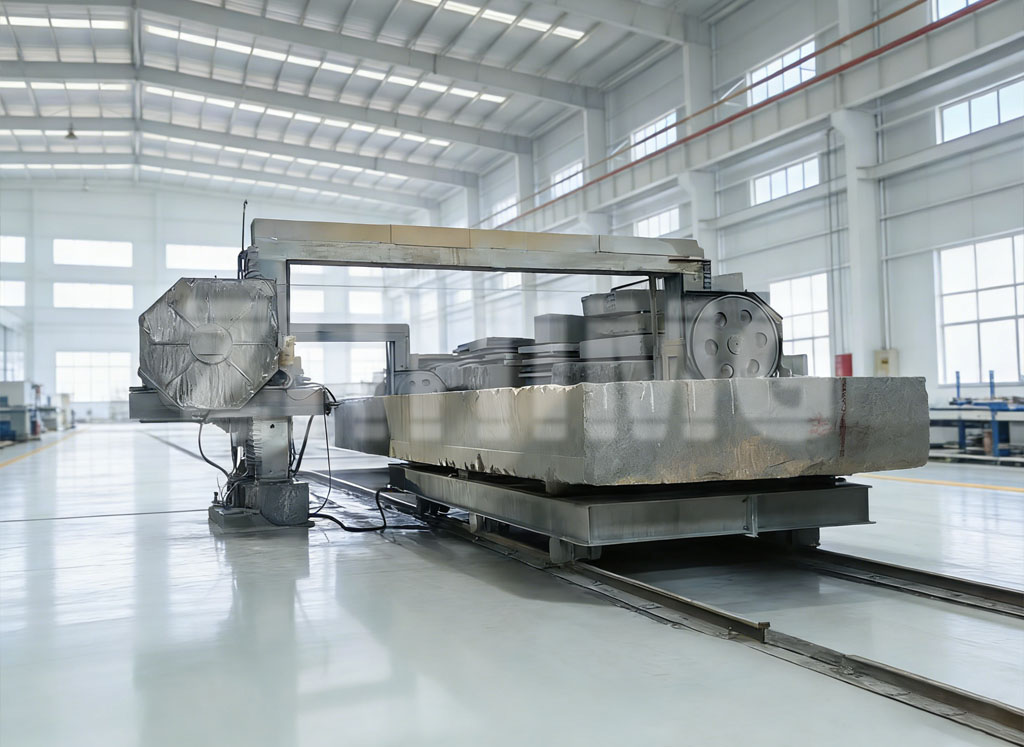
Large granite components require specialized machining capabilities.
Challenges include:
- Large dimensions
- Heavy weight
- High accuracy requirements
Manufacturers need advanced grinding and machining equipment to achieve consistent results.
Controlled Inspection Environment
Precision measurement requires environmental control.
Temperature, vibration, and humidity can influence accuracy.
Professional manufacturers use controlled inspection environments to verify:
- Flatness
- Straightness
- Parallelism
- Surface quality
ZHHIMG® Precision Granite Manufacturing Capability
ZHHIMG® focuses on the development and manufacturing of high-precision granite products.
The company’s product range includes:
- Granite machine bases
- Granite components
- Granite surface plates
- Granite rulers
- Granite squares
- Granite air bearings
- Customized precision granite structures
ZHHIMG® uses high-density black precision granite selected for industrial applications.
The company operates large-scale manufacturing facilities equipped with advanced processing and grinding equipment, supporting large-size granite structures used in demanding industries.
Through professional engineering experience, advanced measurement systems, and strict quality management, ZHHIMG® provides precision granite solutions for customers worldwide.
Precision Engineering Requires the Right Foundation
In ultra-precision manufacturing, every micrometer matters.
The foundation material supporting a machine or measurement system directly affects its performance.
Choosing between granite and marble is not simply a matter of appearance or cost. It is a decision based on engineering requirements, accuracy expectations, and long-term reliability.
Precision granite provides the stability, vibration damping, and durability required by modern industries.
As manufacturing technology continues to advance, the demand for reliable precision materials will continue to grow.
ZHHIMG® remains committed to supporting global industries by providing professional precision granite components and engineering solutions designed for the future of ultra-precision manufacturing.
Post time: Jul-07-2026