
Introduction: Precision Granite Manufacturing Is More Than Stone Processing
When people hear the term “granite manufacturing,” they often imagine traditional stone cutting or architectural applications.
However, precision granite manufacturing is completely different.
A precision granite component is not simply a piece of stone that has been cut into shape.
It is an engineered structural element designed for applications where extremely high accuracy, stability, and reliability are required.
Industries such as:
- Semiconductor equipment
- Coordinate measuring machines (CMM)
- Optical inspection systems
- Precision automation
- Laser processing equipment
- Research instruments
depend on granite components as critical foundations.
Producing these components requires a combination of:
- Material science
- Precision machining
- Advanced measurement technology
- Skilled craftsmanship
- Strict environmental control
The journey from a raw granite block to a precision component involves many carefully controlled steps.
Step 1: Selecting the Right Raw Granite Material
The first and most important step in precision granite manufacturing is material selection.
Not every granite block is suitable for ultra-precision applications.
The raw material must be evaluated based on:
- Mineral composition
- Density
- Internal structure
- Stability
- Homogeneity
- Natural defects
A granite component used for precision equipment must maintain its geometry for many years.
Therefore, manufacturers must carefully select materials that provide:
- Low deformation
- Excellent vibration damping
- High rigidity
- Long-term stability
Why Material Quality Determines Final Accuracy
Precision manufacturing begins before machining starts.
Poor-quality raw materials may create problems such as:
- Internal stress release
- Structural instability
- Accuracy changes over time
- Reduced service life
This is why professional precision granite manufacturers invest significant effort in raw material selection.
At ZHHIMG®, specially selected:
ZHHIMG® Black Granite
is used for ultra-precision applications.
The material provides:
- High density
- Excellent stability
- Superior mechanical performance
with a density of approximately:
3100 kg/m³
This high-density structure helps provide stable support for advanced precision equipment.
Step 2: Granite Block Preparation and Rough Machining
After selecting suitable raw material, the granite block enters the preparation stage.
The purpose of rough machining is to:
- Remove unnecessary material
- Create the basic structure
- Prepare the component for precision processing
At this stage, manufacturers must carefully control:
- Cutting forces
- Material stress
- Processing sequence
Because granite is a natural material, improper machining methods may influence future stability.
Professional manufacturing requires a balance between productivity and precision.
Step 3: Stress Control and Natural Stability Treatment
One of the important differences between ordinary stone processing and precision granite manufacturing is the attention given to long-term stability.
After rough processing, granite components require controlled treatment to ensure stable performance.
The goal is to minimize:
- Internal stress
- Structural movement
- Long-term deformation
For ultra-precision applications, manufacturing accuracy is not only about achieving tolerance during production.
It is about maintaining accuracy throughout the entire service life of the product.
Step 4: Precision Grinding and Surface Finishing
Precision grinding is one of the most critical processes in granite component manufacturing.
During this stage, manufacturers achieve:
- High flatness
- Accurate geometry
- Superior surface finish
Precision grinding requires:
- Advanced grinding equipment
- Experienced operators
- Controlled environmental conditions
Large granite components are especially challenging because maintaining accuracy across large surfaces requires advanced process control.
Large-Scale Precision Granite Manufacturing Capability
Modern industries increasingly require larger precision structures.
Examples include:
- Large CMM bases
- Semiconductor equipment platforms
- Precision machine foundations
- Optical inspection structures
ZHHIMG® has developed large-scale manufacturing capability, including:
- Maximum single component weight:
100 tons - Maximum processing length:
20 meters - Maximum width:
4000 mm - Maximum thickness:
1000 mm
These capabilities allow ZHHIMG® to manufacture large precision granite structures for demanding industrial applications.
Step 5: Precision Measurement and Accuracy Verification
A precision component cannot be judged by appearance.
It must be measured.
This principle is fundamental:
“If you cannot measure it, you cannot manufacture it.”
During production, precision granite components require inspection of:
- Flatness
- Straightness
- Parallelism
- Perpendicularity
- Surface roughness
- Dimensional accuracy
Advanced measurement equipment is essential for confirming quality.
Advanced Metrology in Precision Granite Manufacturing
ZHHIMG® uses professional measurement equipment, including:
- Germany Mahr precision indicators
- Mitutoyo measuring instruments
- WYLER electronic levels
- Renishaw laser interferometers
- Precision surface measurement systems
All inspection equipment follows professional calibration procedures to ensure measurement reliability and traceability.
Step 6: Final Calibration and Quality Control
Before delivery, every precision granite component undergoes final verification.
The final inspection confirms:
- Customer specifications
- Engineering drawings
- Accuracy requirements
- Application conditions
Quality control is not simply checking whether a product passes inspection.
It is ensuring that the product can perform reliably in a real industrial environment.
Why Skilled Engineers Are Still Important
Precision granite manufacturing combines advanced technology with human experience.
Although modern equipment provides powerful processing capability, experienced engineers remain essential.
They understand:
- Material behavior
- Grinding characteristics
- Surface conditions
- Precision correction techniques
At ZHHIMG®, many precision grinding engineers have more than:
30 years of manual precision grinding experience.
Their ability to recognize microscopic surface conditions represents valuable expertise developed through decades of practice.
The Importance of a Controlled Manufacturing Environment
When accuracy reaches micron levels, environmental control becomes critical.
Factors such as:
- Temperature fluctuation
- Humidity changes
- Floor vibration
- Air movement
can influence measurement results.
For precision granite assembly and inspection, ZHHIMG® operates controlled production environments designed to maintain stable conditions.
The company has:
- Temperature and humidity-controlled workshops
- Dedicated precision assembly areas
- Vibration-controlled manufacturing environments
These facilities help ensure consistent accuracy during production.
Common Applications of Precision Granite Components
Precision granite components are widely used in:
Semiconductor Equipment
Applications:
- Wafer inspection systems
- Precision positioning platforms
- Semiconductor manufacturing equipment
Coordinate Measuring Machines
Applications:
- CMM bases
- Granite guide structures
- Measurement references
Optical and Laser Equipment
Applications:
- Laser processing systems
- Optical inspection machines
- High-resolution measurement platforms
Precision Automation
Applications:
- Linear motion systems
- Automated assembly equipment
- Industrial inspection systems
What Makes a Professional Precision Granite Manufacturer?
When selecting a precision granite supplier, customers should evaluate:
Material Capability
Can the manufacturer provide stable, high-quality granite materials?
Manufacturing Capability
Can they process large and complex components?
Measurement Capability
Can they verify accuracy with reliable metrology systems?
Engineering Experience
Do they understand precision applications?
Quality Management
Do they operate according to recognized quality standards?
A true precision granite manufacturer is not simply processing stone.
It is providing a complete precision engineering solution.
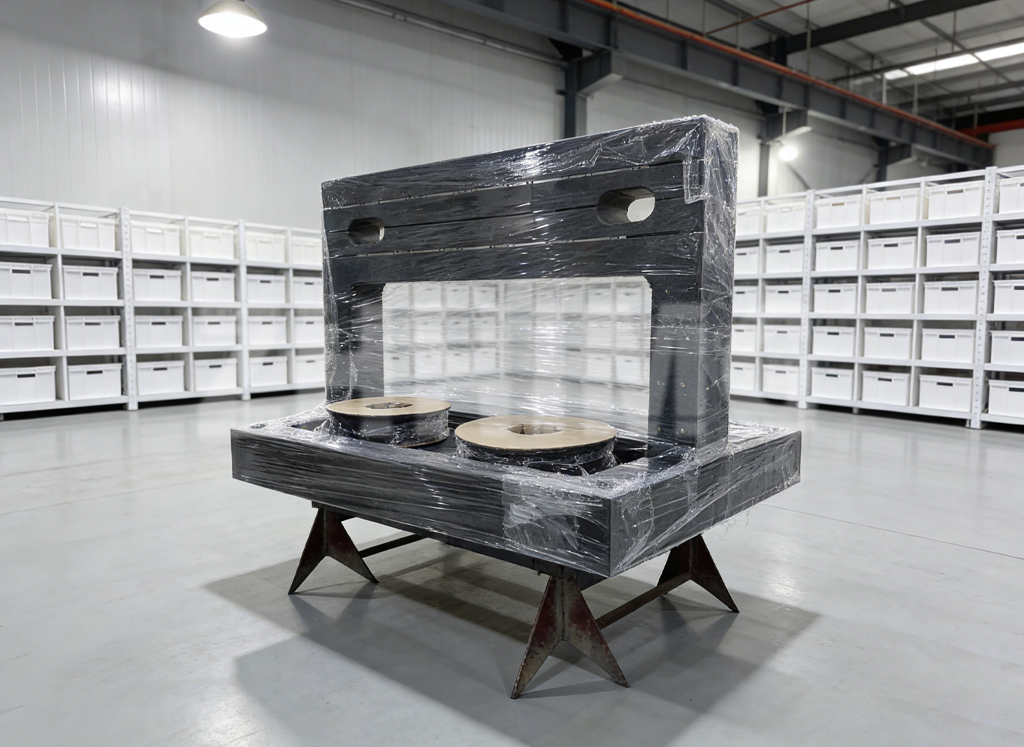
ZHHIMG®: From Material to Measurement, Complete Precision Control
ZHHIMG® (Zhonghui Group) specializes in advanced precision manufacturing solutions.
Our capabilities include:
- Precision granite components
- Granite measuring instruments
- Granite air bearing structures
- Precision ceramic components
- Precision metal machining
- Precision glass
- Mineral casting
- UHPC precision structures
- Carbon fiber precision beams
With advanced equipment, experienced engineers, professional measurement systems, and strict quality philosophy, ZHHIMG® supports global customers in developing high-performance precision equipment.
Our quality commitment:
The precision business can’t be too demanding.
Conclusion: Precision Is Built Step by Step
A high-performance precision granite component is the result of many carefully controlled processes.
From:
Raw material selection
to:
Precision machining
to:
Advanced measurement verification
every step determines the final performance.
The difference between ordinary stone processing and ultra-precision granite manufacturing lies in attention to every detail.
For advanced industries, precision is not created by one machine or one process.
It is created by a complete system of technology, experience, and measurement.
At ZHHIMG®, we believe:
Precision is not manufactured by chance.
Precision is engineered through discipline.
Post time: Jul-15-2026