A granite surface plate represents a significant investment in precision measurement infrastructure. Unlike ordinary work surfaces, these precision instruments serve as the foundational reference plane from which all dimensional measurements derive their accuracy. When properly maintained, a quality granite surface plate can deliver decades of reliable service, but neglect or improper handling can quickly compromise its accuracy and render it unsuitable for precision work. Understanding how to calibrate and maintain your granite surface plate is not merely an operational best practice—it is an essential discipline for any organization that depends on dimensional accuracy in its manufacturing, inspection, or quality assurance processes.
The importance of proper granite plate care cannot be overstated. Every height gauge reading, every indicator setup, every coordinate measuring machine verification, and every layout operation assumes that the reference surface beneath is perfectly flat and stable. When a surface plate drifts out of tolerance, the consequences extend far beyond a failed audit or a rejected calibration certificate. The real costs manifest as rework, scrap, missed delivery deadlines, customer complaints, and the insidious erosion of confidence in your measurement data. This guide provides comprehensive guidance on surface plate maintenance, calibration procedures, and best practices that will help you protect your investment and ensure years of accurate, reliable performance from your precision granite equipment.
Granite has long been the material of choice for precision surface plates in metrology applications, and for good reason. Unlike cast iron, which can rust and develop raised burrs when damaged, granite is inherently stable, non-magnetic, and possesses excellent vibration damping characteristics. The igneous rock structure provides exceptional rigidity while resisting corrosion and dimensional change over time. When properly lapped to achieve a perfectly flat reference surface, granite maintains its shape remarkably well, though it remains susceptible to wear from abrasive particles and physical damage from impacts or improper handling. These characteristics make granite ideal for metrology applications, but they also underscore the importance of proper maintenance to preserve the plate’s precision throughout its operational life.
The foundation of any effective surface plate maintenance program begins with consistent, proper cleaning procedures. Cleanliness directly affects measurement accuracy because even microscopic debris can introduce errors into your measurement processes. Before each use, the surface plate should be wiped clean using a lint-free cloth to remove dust and loose particles. For more thorough cleaning, a 50/50 mixture of distilled water and isopropyl alcohol provides effective cleaning without leaving residues. Apply the cleaning solution to the cloth rather than directly to the plate to avoid excess liquid pooling on the precision surface. Wipe in a consistent pattern, working from one side to the other to ensure complete coverage. After cleaning, allow the surface to air dry completely before placing any measuring instruments or workpieces on the plate.
Several common cleaning mistakes can actually damage your granite surface plate rather than protect it. Never use water-based cleaners or submerge the plate in liquid, as granite can absorb water and this may affect measurement accuracy. Avoid cleaning solutions containing ammonia, such as common glass cleaners, as these can potentially corrode the precision-lapped surface. Never use acidic substances on the plate—accidental spills from soft drinks, coffee, or other beverages can etch the surface and create small pits that compromise flatness. Abrasive cleaning materials must be avoided at all costs, as they will scratch the precision-ground surface and create conditions that accelerate wear. After any cleaning, ensure the surface is thoroughly dried to prevent water spots, which can introduce measurement errors and create areas where microscopic debris can accumulate.
Environmental control plays a surprisingly significant role in maintaining granite surface plate accuracy over time. Temperature fluctuations cause thermal expansion and contraction, which can temporarily affect flatness readings even though granite itself is remarkably thermally stable. For optimal accuracy, maintain the inspection environment at a consistent temperature, ideally near 20 degrees Celsius. Avoid placing surface plates in direct sunlight, near heating or cooling vents, or in areas with significant temperature variations throughout the day. Temperature gradients—differences between the top and bottom surfaces of the plate—can cause subtle bending that affects measurement accuracy. Recording the vertical temperature gradient during calibration measurements provides valuable data for understanding measurement variations between seasons.
Humidity control is equally important for preserving granite surface plate accuracy. Extremely dry conditions can generate static electricity, which attracts dust particles to the surface. Conversely, excessively humid conditions can lead to moisture accumulation and water spots on the precision surface. Maintaining stable relative humidity levels between 40 and 60 percent provides optimal conditions for precision measurement. Many quality laboratories use environmental monitoring systems to track temperature and humidity continuously, enabling operators to identify conditions that might affect measurement accuracy before they impact production quality.
Airborne dust represents perhaps the greatest ongoing threat to granite surface plate accuracy. Dust particles act as microscopic abrasives, embedding themselves in workpiece surfaces and the contact points of measuring instruments. Over time, this continuous abrasion creates localized wear spots that gradually degrade the plate’s flatness. Implementing proper air filtration in the inspection environment significantly reduces airborne particulate. Covering the surface plate when not in use provides additional protection, and using dedicated dust covers designed for surface plates ensures complete protection without introducing new contamination sources.
Proper support is critical for maintaining granite surface plate accuracy throughout its operational life. A granite surface plate should be supported at exactly three points, a principle based on the mathematical reality that only three points can rest solidly on any surface. The ideal support point locations are positioned 20 percent of the plate length in from each end, with two points located 20 percent of the width in from the long sides and the third point centered. Attempting to support the plate at more than three points causes the plate to flex and bow as it seeks different three-point combinations, introducing stresses that distort the precision surface over time. Using manufacturer-specified support stands ensures proper alignment with the support point markings on the plate bottom.
Many surface plate accuracy problems trace directly to improper support. A plate that is not properly supported can bend under its own weight, creating measurement errors that seem inexplicable given that the plate appears visually flat. Investing in quality support stands designed for your specific plate size and weight provides the foundation for accurate measurements. These stands often incorporate vibration-damping features and sturdy construction that maintains alignment over years of use.
Correct operating procedures extend surface plate life significantly. Before placing any workpiece on the plate, ensure that all burrs and sharp edges have been removed from the item being measured or positioned. Using scrapers or stones to smooth workpiece edges before contact with the plate prevents scratches and embedded particles that cause accelerated wear. Always distribute applied weight evenly across a wide area rather than concentrating loads in small zones. Concentrated loading creates localized wear spots that eventually compromise overall flatness. Place measuring tools on a clean cloth spread across the plate surface rather than setting them directly on the precision surface, and use the full available working area of the plate rather than concentrating work in a single location. Periodically rotating the plate’s orientation on its support stand spreads wear patterns more evenly across the surface.
Visual inspection should become a routine part of surface plate maintenance, ideally performed monthly. Examine the entire working surface carefully under good lighting conditions, looking for scratches, chips, nicks, or embedded debris. Pay particular attention to the edges and corners, which are vulnerable to impact damage from dropped tools or accidental collisions. Check for raised burrs around any chips or nicks, as these burrs create additional surface irregularities that can affect measurement accuracy. Burrs can often be removed carefully using a silicon carbide stone, but this should be done gently to avoid creating additional damage. Inspect the underside of the plate for any damage to the support point areas, as this can affect how the plate sits on its stand.
Simple self-checks can supplement professional calibration by providing early warning of developing problems. Using granite surface plate accessories such as granite blocks or masters squares, you can perform basic comparisons that reveal surface irregularities. These checks cannot replace professional flatness verification, but they provide valuable information about surface condition between formal calibration appointments. Some organizations use repeat reading gauges monthly to track local flatness variation over time. This practice helps identify developing wear spots before they become serious problems and provides data for optimizing calibration intervals based on actual usage patterns.
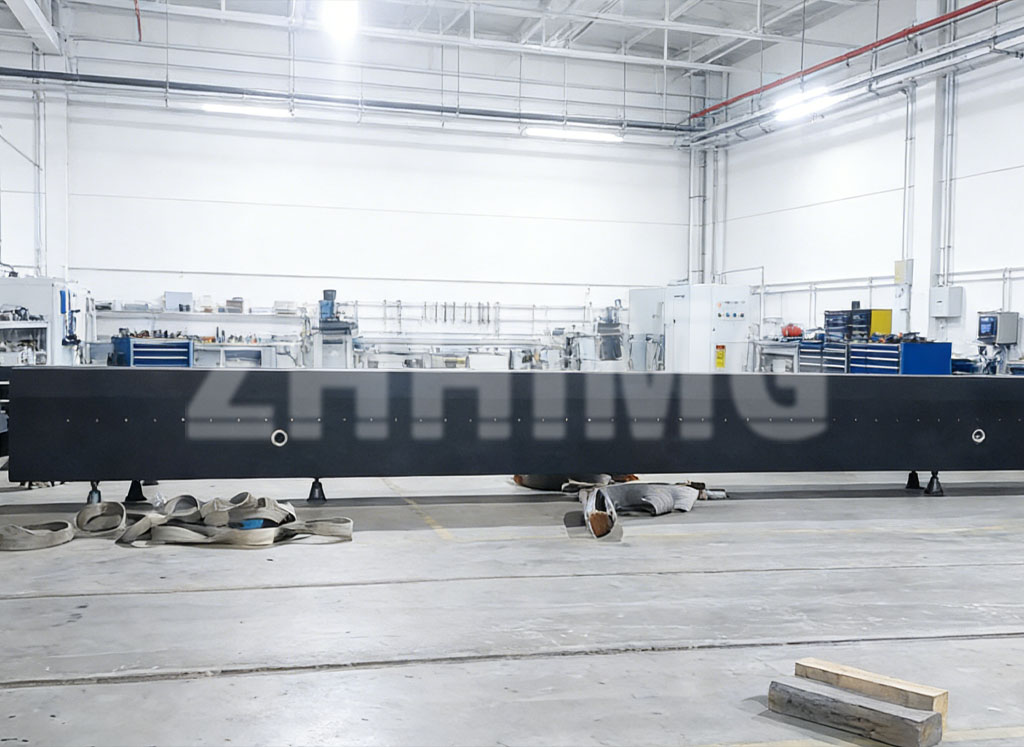
Granite surface plates are manufactured to standardized accuracy grades defined by industry specifications. Grade AA, known as Laboratory Grade, represents the highest precision and is typically found in calibration laboratories where the most demanding measurements are performed. Grade A, or Inspection Grade, serves quality control laboratories and inspection rooms where high-precision work is routine. Grade B, called Toolroom Grade, suits many shop floor applications where tolerances are less demanding. Grade C, or Workshop Grade, provides basic reference surfaces for general workshop applications. Understanding your plate’s grade helps you establish appropriate maintenance schedules and calibration intervals appropriate to the precision requirements of your applications.
Calibration interval determination depends on multiple factors including usage intensity, environmental conditions, and the precision requirements of your quality system. A common baseline recommendation is annual calibration for plates in regular use, with heavy-use environments or shop floor installations often benefiting from semi-annual calibration. New plates should receive initial calibration within the first year after purchase to establish baseline performance data. After the first professional calibration, you can adjust intervals up or down based on the observed rate of change, the requirements of your quality management system, and the consequences of measurement errors in your specific applications.
The question of why calibration is necessary deserves careful consideration. Even the highest-quality granite plate can wear or distort over time through normal use. High-use contact patterns create wear in frequently traversed areas. Shop debris and airborne grit act as continuous abrasives. Improper support introduces stresses that gradually deform the surface. Temperature gradients cause subtle bending. Impact damage creates chips and raised areas. Without regular calibration, these changes go undetected until they cause measurement errors that propagate through your quality control processes. Regular surface plate calibration ensures that any deviation from specification is identified promptly, enabling corrective action before measurement quality suffers.
Professional calibration employs sophisticated metrology techniques that provide comprehensive surface characterization. Overall flatness measurement determines how closely the entire working surface conforms to a perfect plane, typically using precision electronic levels, autocollimators, or laser interferometers. Local variation in flatness, often called repeat reading, assesses surface uniformity in small areas to ensure consistent measurements regardless of where workpieces contact the plate. Professional services often generate Moody plots—topographic maps that show wear patterns and height variations across the entire surface. This comprehensive analysis reveals not just whether the plate passes or fails its tolerance specification, but where wear is concentrated and how the plate’s condition has changed since previous calibrations.
Interpreting calibration reports requires understanding both the overall flatness results and the local variation measurements. A plate might technically meet overall flatness tolerance while having significant local variations that affect measurement accuracy in specific areas. The repeat reading specification provides critical information about how measurement results vary depending on where measurements are taken on the plate surface. Understanding both parameters helps you make informed decisions about whether a plate requires resurfacing, whether usage patterns should be adjusted, or whether the current calibration interval remains appropriate.
When calibration reveals that a granite surface plate has exceeded acceptable tolerance limits, resurfacing often provides an effective solution. The resurfacing process uses specialized lapping techniques with progressively finer abrasives to remove material from high spots, restoring the surface to its original flatness specification. Professional resurfacing can restore a worn plate to like-new condition, often at a fraction of the cost of replacement. However, resurfacing must be performed by experienced technicians using proper equipment, as improper lapping can permanently damage the precision surface. Plates that are severely worn, deeply pitted, or have been resurfaced multiple times may have reduced thickness that compromises structural rigidity, potentially requiring replacement.
Damage to granite surface plates manifests in several forms, each requiring appropriate response. Scratches are common and generally do not affect overall flatness unless they are very deep or contain embedded abrasive particles. Deep scratches should be examined carefully, as embedded particles can accelerate wear on measuring instruments and workpieces. Chips and nicks from impact damage typically do not affect measurement accuracy, as granite does not develop raised burrs like cast iron does. The damaged area simply creates a localized void that does not influence measurements taken on undamaged portions of the surface. However, significant chips near the working area may present safety hazards or collect debris, warranting attention. Localized wear spots, often caused by repeated measurement activities in concentrated areas, gradually degrade local flatness and eventually require resurfacing to restore optimal performance.
Determining when repair is necessary versus when replacement is appropriate requires careful evaluation of several factors. Minor scratches and small chips that do not affect flatness measurements can typically be left untreated without impacting performance. Plates that have been resurfaced multiple times may have reduced thickness that affects structural rigidity, potentially requiring replacement. When resurfacing costs approach or exceed replacement costs, acquiring a new plate often represents better long-term value. Professional calibration services can advise on repair versus replacement decisions based on the specific condition of your plate and your accuracy requirements.
Beyond regular professional calibration, implementing good daily maintenance habits significantly extends granite surface plate service life. Always support the plate on properly positioned three-point stands that match the manufacturer’s specifications. Keep the working surface scrupulously clean, removing debris before and after each use. Cover the plate whenever it is not in use to protect against dust, accidental impacts, and spills. Rotate the plate orientation periodically to distribute wear patterns more evenly. Control environmental conditions to maintain stable temperature and humidity levels. Distribute workload across the full working surface rather than concentrating work in preferred areas. These practices require minimal time investment but provide substantial returns in extended plate life and maintained accuracy.
While basic inspection tasks can be performed internally, professional calibration services provide the most reliable verification of surface plate accuracy. Professional technicians have access to properly maintained, traceable measurement equipment that meets national standards. They follow standardized procedures that ensure consistent, repeatable results. They provide complete documentation that satisfies ISO 9001 and ISO 17025 audit requirements. They can identify issues that might be missed by internal inspections and provide expert recommendations for corrective action.
Professional surface plate calibration services typically include several essential elements. The process begins with thorough cleaning to remove all contamination that might affect measurement accuracy. Technicians perform detailed visual inspection to document surface condition and identify any damage. Repeatability testing using specialized gauges assesses local flatness variation across the surface. Full flatness mapping using differential level systems or autocollimators provides comprehensive characterization of the entire working surface. The resulting Moody plot shows wear patterns and height deviations that inform maintenance recommendations. Based on calibration findings, technicians can recommend resurfacing when needed or provide certification that confirms the plate meets specified tolerance requirements. Complete documentation includes measurement data, uncertainty analysis, traceability information, and recommendations for future calibration intervals.
Investing in regular professional calibration yields substantial returns through avoided costs and maintained quality. Identifying flatness deviations early prevents measurement errors from propagating through production processes, avoiding costly rework and scrap. Maintaining documented calibration records demonstrates quality system compliance during customer audits and regulatory inspections. Professional calibration preserves confidence in measurement results, supporting customer relationships and market reputation. The cost of regular calibration represents a small fraction of the value of a precision granite plate and the quality of the work it enables.
Granite surface plates remain among the most reliable and durable reference tools in precision manufacturing and metrology. With proper maintenance, cleaning, and periodic calibration, these instruments provide accurate performance for many years—often decades. Regular attention to surface plate maintenance protects your precision measurement infrastructure investment while ensuring the reliability of every dimensional measurement performed in your facility. Understanding how to calibrate and maintain your granite surface plate transforms these precision instruments from mere work surfaces into dependable foundations for quality assurance and manufacturing excellence.
The investment in proper granite plate care pays dividends far beyond the life of any single instrument. Every measurement that begins with a properly maintained surface plate carries the confidence of traceable accuracy. Every quality decision based on those measurements reflects the integrity of your calibration program. Every customer audit that reviews your calibration records demonstrates your commitment to precision and quality. In the demanding world of precision manufacturing, where tolerances are measured in microns and quality expectations leave no margin for error, protecting your granite surface plate investment is protecting the foundation of your measurement integrity.
Post time:
Apr-24-2026
