
A granite surface plate does not wear out suddenly
A granite surface plate rarely fails in a dramatic way. What usually happens is slower: the reference surface drifts a few microns over months of daily use, wear concentrates around the most used areas, and one day inspection results stop matching what the CMM or the customer expects. Because granite does not rust and does not react to most coolants, plates are often treated as maintenance-free. They are not. They are low-maintenance, and the difference shows up in your measurement data.
This article walks through the routine that keeps a plate reliable: daily cleaning, deciding a calibration interval, recognizing local wear, and knowing when resurfacing still makes sense and when replacement is the better decision.
Daily cleaning: the correct way and the common mistakes
Dust, fingerprint oil and fine abrasive particles are the main contaminants on a working plate. Particles between the workpiece and the surface are also the fastest way to wear the stone locally, so cleaning is not only about hygiene, it protects the flatness you paid for.
The routine we recommend, and the one our own inspection staff follow:
- Wipe the surface with a lint-free cloth or a soft paper wipe before and after each shift. Dry wiping is acceptable only when the plate is visibly clean; otherwise use a dedicated granite plate cleaner.
- For stubborn deposits, if you are wondering how to clean a granite surface plate properly, this is the short answer: use a cleaner formulated for granite, applied to the cloth rather than poured onto the plate. Work in overlapping strokes and finish with a dry wipe. A good granite cleaning fluid evaporates without leaving a film and does not attack the stone or any steel inserts.
- Never use acetone, thinners, strong alkaline degreasers or aggressive household cleaners. Some of them leave residues that build up as an invisible film, which later reads as a flatness error; others can discolor the stone around insert holes.
- Do not slide heavy parts across the surface. Lift them, or use soft spacers. Sliding is what creates the localized dull, polished-looking patches described below.
Common mistakes we see during service visits: cleaning only the center of the plate and never the edges, where dust accumulates and then gets dragged across the working area; storing tools, gauges or coffee cups directly on the plate; and covering a damp plate with a sealed cover, which traps moisture against the surface for a weekend.
How to set a calibration interval
There is no single correct granite surface plate calibration interval. A sensible starting point used by many quality departments:
- Plate in daily production use: verify every 6 to 12 months.
- Plate used occasionally or in a controlled metrology room: 12 to 24 months.
- Plate after a move, a crash, or a resurfacing job: re-check shortly after the event, then return to the normal cycle.
Adjust the interval based on results. If repeated calibrations show almost no change, you can stretch the interval. If a plate loses half of its tolerance in six months, shorten the interval and, more importantly, look for the cause: sliding workpieces, missing support feet adjustment, or temperature problems on the shop floor.
One practical warning: a calibration report only tells you the condition on the day it was measured. Between calibrations, the plate is on its own, which is why the wear checks below matter.
How to spot localized wear before it costs you
Localized wear is the typical failure mode of a working plate, and it can be detected early without instruments:
- Visual check under raking light: worn areas often appear glossier or duller than the surrounding lapped surface, because the original fine texture has been polished away.
- The chalk or marker test: draw a fine line across the suspect area with a soft pencil or felt marker; uneven wear patterns become visible as the line breaks or skips.
- Repeat-measurement check: measure the same flat part at several positions on the plate. If readings differ between the center and an edge, or between two quadrants, the surface, not the part, is the suspect.
Wear always starts where the work is done: near the loading edge, around frequently used insert holes, or in the middle where parts are set down. That is exactly why a plate can fail a flatness check long before it looks damaged.
When resurfacing is the right decision
Resurfacing means the plate is re-lapped by hand down to a correct flatness grade, restoring the original surface texture and accuracy. For most plates with worn or out-of-tolerance surfaces but an intact body, this is far more economical than buying new.
Resurfacing is usually the right call when: flatness exceeds the grade tolerance but the plate is structurally sound; wear is cosmetic to moderate (polished patches, small scratches); the plate is a non-standard size or has many steel inserts that would be expensive to reproduce; and the support system (feet, stand) is still in good condition.
Our granite surface plate resurfacing service is done by lapping craftsmen with many years on the bench. Two points from their practical experience that are rarely written down: first, a plate must be resurfaced while resting on its normal three-point (or full) support, in roughly stable temperature, because lapping a plate in the wrong attitude bakes the error in. Second, resurfacing slightly lowers the plate height — usually a fraction of a millimeter — which almost never matters, but should be noted if the plate sits in a fixture with a defined reference height.
After resurfacing, the plate should come back with a flatness measurement report so you can file it with your calibration records.
When repair instead of resurfacing, and when to replace
Chips, impact damage and broken corners are a different category of problem than wear. Small edge chips away from the working area can often be repaired; damage inside the measuring zone needs assessment case by case. Our granite repair service handles broken and impact-damaged granite components, and an honest assessment is part of the job: some damage is repairable to full function, some only cosmetically.
Replacement is the better decision when any of the following is true:
- The plate is cracked through the working zone — a crack can propagate and the flatness cannot be guaranteed afterwards.
- The remaining thickness after repeated resurfacing no longer supports the plate over the span between supports without deflection.
- The required size or grade has changed with your production, and a new custom plate costs less than rescuing an unsuitable one.
- Multiple resurfacing cycles have already been done and the plate goes out of tolerance again quickly, which usually indicates a deeper problem such as a failed stand or a settled foundation.
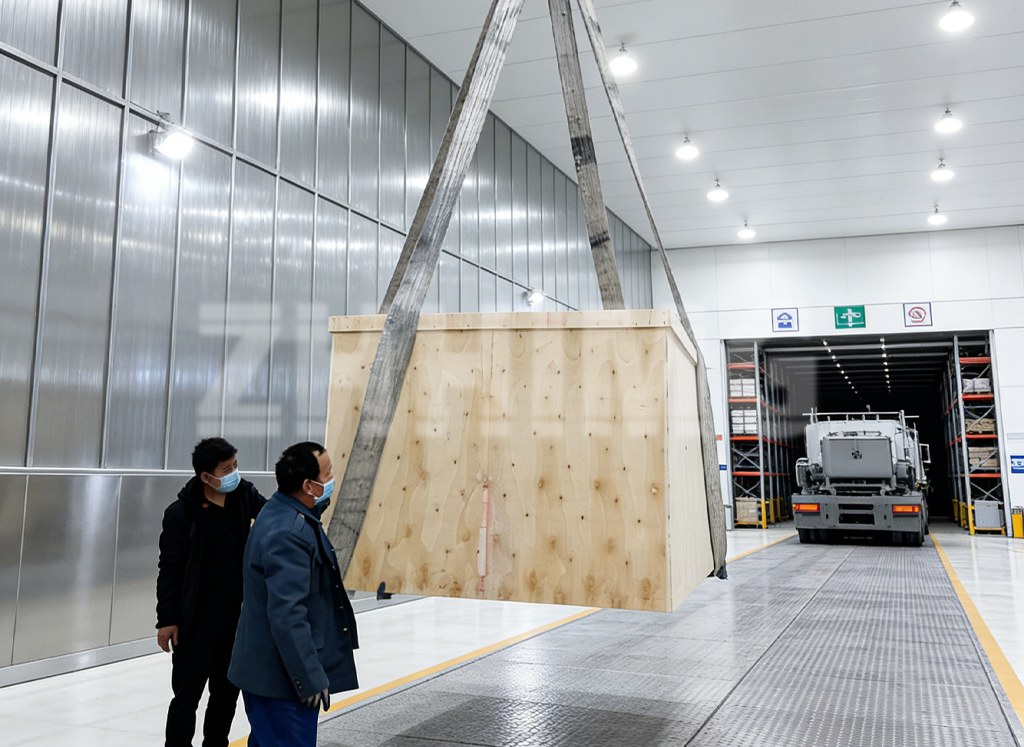
The photo above shows a packed granite plate leaving our works after refurbishment — for many plates this return trip is worth taking more than once.
A short maintenance checklist
- Daily: dry or damp wipe with granite cleaner; keep tools off the surface; cover when idle.
- Monthly: raking-light visual check for polished patches and edge chips.
- Every 6–24 months: flatness calibration, interval based on usage and trend.
- On out-of-tolerance results: request a resurfacing quotation before considering replacement.
Talk to us about your plate
If your granite surface plate is out of tolerance, showing local wear, or damaged, send us the size, grade and a few photos. Our engineers will tell you whether cleaning, resurfacing, repair or replacement makes the most sense for your situation — and what it would cost. Contact ZHHIMG for a resurfacing or repair quotation.
Post time: Oct-10-2026