
In the relentless pursuit of perfection that defines modern industrial manufacturing, accuracy is not merely a desirable trait but an absolute necessity. From the intricate components of aerospace engines to the microscopic circuits of semiconductor devices, the ability to produce parts with ultra-high precision directly dictates product performance, reliability, and ultimately, market competitiveness. At the heart of achieving and maintaining this industrial accuracy lies a fundamental reliance on robust metrology—the science of measurement. Among the most critical foundational elements in this scientific discipline are granite surface plates and the array of precision tools that operate upon them. This article will delve into the indispensable role of granite surface plates and associated precision instruments in elevating industrial accuracy, exploring their unique properties, diverse applications, and the synergistic relationship that enables manufacturers to meet the ever-tightening tolerances of the 21st century.
The Foundation of Precision: Granite Surface Plates
Granite surface plates serve as the ultimate reference plane in metrology, providing a stable, flat, and reliable base for all dimensional measurements. Their widespread adoption in precision manufacturing is a testament to their superior physical properties, which are ideally suited for the rigorous demands of industrial accuracy.
Inherent Material Properties Contributing to Accuracy
1.Exceptional Flatness and Stability: Granite surface plates are meticulously crafted from high-quality natural granite, often black granite, and finished by hand to achieve extraordinary levels of flatness. This inherent rigidity and uniform grain structure ensure that the plate remains dimensionally stable, resisting deformation, bending, or warping even under heavy loads . This stability is paramount, as accurate measurements fundamentally require a perfectly flat and unyielding reference surface.
2.Low Coefficient of Thermal Expansion (CTE): One of granite’s most significant advantages is its remarkably low CTE, which is roughly half that of steel or cast iron. This property means that granite’s dimensions change minimally with temperature fluctuations, making it far less susceptible to thermal expansion-induced errors . In environments where temperature control might not be absolute, granite’s thermal stability ensures consistent and reliable measurements, crucial for maintaining tight tolerances.
3.Excellent Vibration Damping: The unique crystalline structure of granite provides superior natural vibration damping capabilities. It effectively absorbs and dissipates vibrational energy, isolating sensitive measuring instruments and workpieces from external disturbances . This characteristic is vital in dynamic manufacturing environments, where vibrations from machinery can compromise measurement accuracy, enabling sub-micron or nanometer-level precision.
4.Non-Magnetic and Chemically Inert: Granite is naturally non-magnetic, which is a critical advantage in applications involving sensitive electronic components or where electromagnetic interference must be strictly controlled, such as in semiconductor manufacturing . Furthermore, granite is chemically inert, meaning it does not rust or react with coolants, oils, or acids commonly found in machine shops. This non-corrosive nature simplifies maintenance and prevents contamination of delicate workpieces .
5.Wear Resistance and Impact Behavior: While not as hard as advanced ceramics, granite possesses significant wear resistance. Unlike cast iron, which can raise a burr when struck, granite tends to chip or crater upon impact . A depression (crater) is far less detrimental to measurement accuracy than a protrusion (burr), as it does not lift the measuring probe or the part being inspected, thus preserving the integrity of the reference plane .
Precision Tools: Leveraging the Granite Foundation
The true power of granite surface plates is realized when they are combined with a suite of precision measuring tools. These tools, ranging from simple height gauges to sophisticated Coordinate Measuring Machines (CMMs), rely on the granite’s unwavering stability to deliver their own high levels of accuracy.
Key Precision Tools and Their Synergy with Granite
1.Height Gauges and Dial Indicators: These fundamental tools are used for measuring vertical dimensions and checking parallelism. When placed on a granite surface plate, their accuracy is directly enhanced by the plate’s flatness, ensuring that measurements are taken from a true and stable datum. The smooth, non-abrasive surface of granite allows for precise movement of these tools without wear or sticking.
2.Coordinate Measuring Machines (CMMs): CMMs are perhaps the most prominent example of precision tools that heavily rely on granite. The base plates and often the moving bridges of CMMs are constructed from granite due to its dimensional stability, vibration damping, and non-magnetic properties . This granite foundation ensures that the CMM’s highly accurate probes can perform repeatable measurements across large volumes with minimal environmental interference, crucial for industries like aerospace and automotive.
3.Optical Comparators and Vision Systems: These tools use optical magnification to inspect and measure parts. When mounted on a granite base, the inherent vibration damping of granite minimizes image distortion caused by external vibrations, leading to clearer images and more accurate measurements of intricate features.
4.Electronic Levels and Autocollimators: Used for verifying the flatness and angular deviation of surfaces, these instruments require an exceptionally stable base. Granite surface plates provide this stability, allowing for ultra-high-precision calibration and verification tasks, often to within fractions of an arc-second .
5.Gauge Blocks and Master Standards: These are primary reference standards used for calibrating other measuring instruments. When used on a granite surface plate, the plate’s flatness ensures proper wringing and contact, maximizing the accuracy transfer from the master standard to the instrument being calibrated.
Applications Across High-Tech Industries
The combination of granite surface plates and precision tools is critical across a multitude of high-tech industries, each leveraging these foundational elements to achieve their specific accuracy requirements.
Semiconductor Manufacturing
In semiconductor fabrication, where features are measured in nanometers, granite surface plates are indispensable. They form the bases for wafer inspection systems, lithography equipment, and dicing machines, providing the ultra-stable, vibration-free platforms necessary for precise alignment and processing. The non-magnetic property of granite is also crucial in environments sensitive to electromagnetic interference.
Aerospace and Defense
Manufacturing components for aerospace and defense requires uncompromising accuracy and reliability. Granite surface plates are used for inspecting large, complex parts like turbine blades, airframe components, and missile guidance systems. CMMs built on granite bases ensure that these critical components meet stringent dimensional specifications, directly impacting safety and performance.
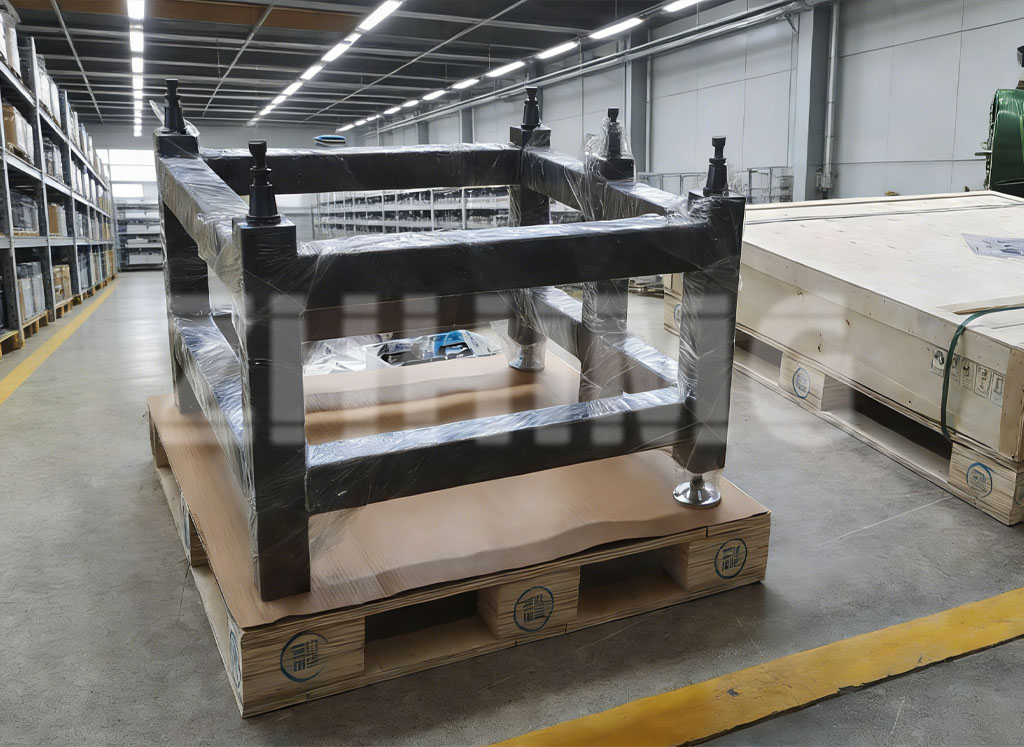
Automotive Industry
From engine blocks to transmission components, the automotive industry relies on precision for performance, fuel efficiency, and safety. Granite surface plates are utilized in quality control labs for inspecting powertrain components, chassis parts, and body panels, ensuring consistent manufacturing quality across high-volume production lines.
Medical Devices
The production of medical implants, surgical instruments, and diagnostic equipment demands extreme precision and sterility. Granite surface plates provide a stable, non-contaminating base for inspecting these delicate components, ensuring they meet the exacting standards required for patient safety and efficacy.
Tool and Die Making
In the creation of molds, dies, and fixtures, the accuracy of the tooling directly translates to the quality of the final product. Granite surface plates are essential for layout, inspection, and assembly of these precision tools, ensuring that they are manufactured to the tightest possible tolerances.
Maintaining Accuracy: Care and Calibration
While granite surface plates and precision tools offer inherent stability, their long-term accuracy is contingent upon proper care and regular calibration. Neglecting these aspects can lead to calibration drift and compromised measurement integrity.
Essential Maintenance Practices
1.Regular Cleaning: Surfaces should be wiped clean before and after each use with a soft, non-abrasive cloth and an appropriate cleaner (e.g., alcohol-based for granite) to remove dust, debris, and oils . This prevents the buildup of abrasive particles that can accelerate wear.
2.Environmental Control: Maintaining a stable temperature and humidity in the metrology lab is crucial. Granite, while thermally stable, performs best in controlled conditions. Protecting plates from direct sunlight and heat sources prevents uneven thermal expansion .
3.Proper Handling and Storage: Precision tools should always be handled with care to avoid impacts. Granite surface plates should be covered when not in use to protect against dust and accidental damage . Tools should be stored in protective cases or designated areas to prevent physical harm and contamination.
The Importance of Calibration
Even with diligent care, precision measuring tools and surface plates will experience some degree of wear and drift over time. Regular calibration is therefore indispensable:
•Verification of Accuracy: Calibration compares the tool against a known standard to identify and quantify any deviations, ensuring that measurements remain within specified tolerances .
•Compliance: Many quality management systems (e.g., ISO 9001, ISO/IEC 17025) mandate regular, documented calibration for all precision measuring equipment.
•Extended Lifespan: Timely calibration and any necessary adjustments can prevent minor issues from escalating, thereby extending the useful life of the equipment .
Calibration frequency depends on usage, required precision, and environmental factors, but it is a non-negotiable practice for any facility committed to industrial accuracy. Professional calibration services by accredited laboratories are often recommended to ensure the highest level of accuracy and traceability.
Conclusion
Granite surface plates and precision tools form the bedrock of industrial accuracy in modern manufacturing. Their unique combination of material properties—including exceptional flatness, thermal stability, vibration damping, and chemical inertness—provides an unparalleled foundation for precise measurement. From the microscopic world of semiconductors to the large-scale components of aerospace, these tools enable industries to achieve and maintain the stringent tolerances demanded by today’s advanced technologies. By understanding their capabilities, implementing rigorous maintenance protocols, and adhering to regular calibration schedules, manufacturers can harness the full potential of granite surface plates and precision tools, ensuring sustained accuracy, enhancing product quality, and driving innovation in an increasingly precise industrial landscape.
Post time: May-15-2026