
Your granite precision tools represent significant investments in measurement accuracy and quality control. Yet without proper maintenance, even the finest Grade 00 granite surface plates can lose their superior flatness, compromising your entire measurement system. This comprehensive guide provides factory managers and workshop supervisors with practical, actionable maintenance protocols that extend equipment life, maintain calibration accuracy, and prevent costly accuracy degradation.
The Hidden Cost of Neglected Granite Tool Maintenance
Most manufacturing facilities focus heavily on initial granite tool selection but neglect ongoing maintenance—creating a hidden cost that compounds over time. Understanding these costs helps build maintenance culture:
- Calibration drift: Poor maintenance can cause accuracy degradation of 5-15% annually, requiring more frequent recalibration.
- Measurement errors: Accuracy loss propagates through quality control, leading to undetected defective products reaching customers.
- Premature replacement: Neglected granite tools may require replacement 3-5 years earlier than properly maintained equipment.
- Production downtime: Unexpected accuracy failures cause emergency maintenance and production interruptions.
- Quality system failures: Inaccurate measurements can trigger ISO 9001 and IATF 16949 compliance issues during audits.
Daily Granite Tool Maintenance Checklist
Implementing this daily maintenance protocol prevents 80% of common accuracy issues and extends granite tool life significantly:
Pre-Use Inspection (5 minutes)
- Visual inspection: Check for surface damage, scratches, chips, or debris accumulation.
- Surface cleanliness: Verify surface is free from oil, coolant, metal chips, and other contaminants.
- Environmental conditions: Record temperature and check for unusual humidity levels.
- Level verification: Quick check with precision level for critical applications.
Cleaning Protocol (10 minutes)
- Remove loose debris: Use soft brush or compressed air (low pressure) to remove surface particles.
- Cleaning agent selection: Use manufacturer-approved cleaning solvents or isopropyl alcohol for precision tool cleaning.
- Cleaning technique: Apply cleaning solution to lint-free cloth, never directly to granite surface. Wipe in consistent direction.
- Dry thoroughly: Ensure complete drying before use to prevent water spots and chemical residue.
- Inspection post-cleaning: Verify surface cleanliness under good lighting before returning to service.
Post-Use Protection (2 minutes)
- Surface protection: Cover granite surface with protective cover when not in use.
- Storage conditions: Ensure environment remains temperature-stable and humidity-controlled.
- Impact prevention: Verify area clear of potential falling objects or accidental contact.
Weekly Granite Tool Maintenance Procedures
These weekly procedures address issues that daily cleaning may miss:
Deep Cleaning Protocol
- Comprehensive cleaning: Remove protective covers and perform thorough surface cleaning.
- Edge inspection: Check granite edges and corners for chips or damage.
- Support system check: Inspect leveling screws, stands, and supports for wear or settling.
- Environment audit: Review temperature and humidity data for the week.
Accuracy Verification
- Quick flatness check: Use precision straightedge and feeler gauges for spot checks.
- Level verification: Verify plate level with electronic precision level.
- Documentation: Record results in maintenance logbook.
Monthly Granite Tool Maintenance Tasks
Monthly maintenance provides comprehensive equipment assessment:
Detailed Inspection
- Surface mapping: Perform systematic surface inspection using autocollimator or laser interferometer if available.
- Wear pattern analysis: Identify areas of concentrated wear from usage patterns.
- Calibration status review: Check calibration due dates and plan upcoming service.
- Equipment assessment: Evaluate overall condition and maintenance history trends.
Maintenance Cost Analysis
- Track accuracy degradation: Document any accuracy changes compared to previous months.
- Evaluate cleaning effectiveness: Assess current cleaning protocol performance.
- Plan upcoming expenses: Anticipate calibration, resurfacing, or replacement needs.
Precision Tool Cleaning: Best Practices and Techniques
Effective precision tool cleaning requires understanding both chemistry and technique:
Cleaning Agent Selection
- Manufacturer recommendations: Always follow manufacturer’s recommended cleaning solutions.
- Isopropyl alcohol (IPA): 70-90% concentration effective for most cleaning needs.
- Avoid harsh chemicals: Never use acids, strong alkalis, or abrasive cleaners.
- Lubricant removal: Use specialized degreasers for oil and coolant removal.
Cleaning Techniques
- Two-cloth method: Use separate cloths for cleaning and drying to prevent recontamination.
- Lint-free materials: Use only lint-free microfiber or cotton cloths.
- Gentle pressure: Avoid excessive pressure that could scratch granite surface.
- Consistent direction: Wipe in same direction to avoid cross-contamination.
- Edge care: Pay special attention to edges and corners where debris accumulates.
Cleaning Frequency Optimization
Adjust cleaning frequency based on usage patterns:
- High-use applications: Multiple cleaning sessions per day required.
- Critical measurements: Clean before each critical measurement sequence.
- Contaminated environments: Increase frequency for dirty or dusty environments.
- After machining operations: Always clean after metalworking or cutting operations.
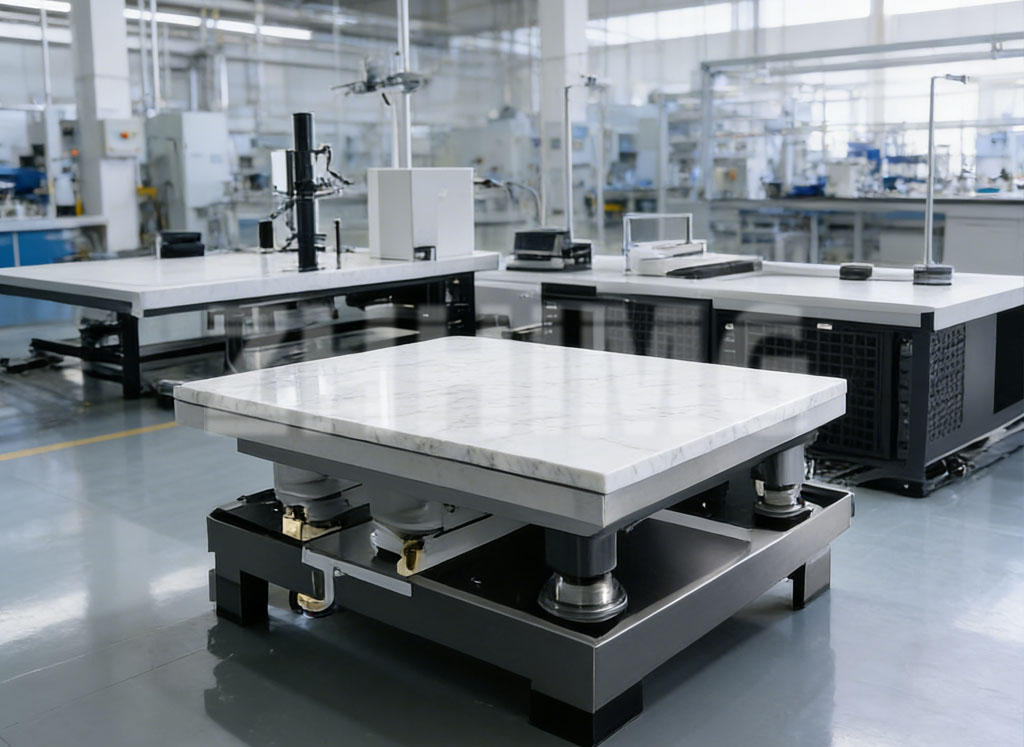
Flatness Resurfacing: When and How to Restore Accuracy
Even with excellent maintenance, granite tools eventually require flatness resurfacing to restore Grade 00 accuracy:
Signs That Resurfacing Is Required
- Measurement errors: Consistent accuracy deviations detected during calibration.
- Visible wear patterns: Observable wear marks or grooves on granite surface.
- Surface damage: Chips, cracks, or significant scratches affecting measurement accuracy.
- Calibration failures: Failure to meet Grade 00 specifications during formal calibration.
- Age considerations: Granite tools typically require resurfacing every 5-10 years depending on usage.
Flatness Resurfacing Process
Professional flatness resurfacing requires specialized equipment and expertise:
- Pre-assessment: Comprehensive flatness mapping to determine resurfacing requirements.
- Equipment selection: Use precision lapping or grinding machines designed for granite.
- Gradual material removal: Remove minimal material necessary to restore flatness.
- Quality verification: Post-resurfacing calibration to verify Grade 00 accuracy.
- Surface finishing: Final surface preparation to ensure proper measurement characteristics.
Resurfacing Cost-Benefit Analysis
- Resurfacing cost: Typically 20-40% of new granite tool cost.
- Lifespan extension: Resurfacing can extend useful life by 5-10 additional years.
- Accuracy restoration: Resurfaced tools perform to original Grade 00 specifications.
- Capital budget optimization: Resurfacing delays significant capital expenditures.
Environmental Management for Granite Tool Longevity
Environmental conditions significantly impact granite tool accuracy and longevity:
Temperature Control
- Ideal temperature range: 68°F ± 2°F (20°C ± 1°C) for optimal performance.
- Temperature stability: Avoid rapid temperature changes that cause thermal expansion/contraction.
- Climate control: Implement HVAC systems for temperature-critical environments.
- Thermal mass utilization: Allow sufficient warm-up time before critical measurements.
Humidity Management
- Ideal humidity range: 40-60% relative humidity.
- Condensation prevention: Avoid conditions causing water condensation on granite surface.
- Rust prevention: Control humidity to prevent rust on metal components and accessories.
Vibration Isolation
- Vibration sources: Locate granite tools away from compressors, heavy machinery, and traffic areas.
- Vibration damping: Use vibration-damping pads or isolation systems when necessary.
- Regular monitoring: Monitor vibration levels in precision measurement areas.
Common Granite Tool Maintenance Mistakes to Avoid
Understanding common maintenance errors helps prevent costly mistakes:
- Using abrasive cleaners: Abrasive materials can permanently damage granite surface.
- Skipping daily cleaning: Daily neglect accelerates accuracy degradation.
- Using improper tools: Metal tools dropped on granite can cause significant damage.
- Neglecting calibration schedules: Delayed calibration allows undetected accuracy drift.
- Improper storage: Leaving granite tools unprotected leads to surface contamination.
- Ignoring environmental factors: Poor temperature and humidity control accelerates wear.
- DIY repairs: Attempting professional repairs without proper expertise causes further damage.
Building a Granite Tool Maintenance Culture
Effective granite tool maintenance requires organizational commitment:
Training Programs
- Operator training: Train all personnel using granite tools on proper handling and cleaning.
- Maintenance protocols: Establish clear written procedures for all maintenance tasks.
- Responsibility assignment: Designate specific personnel for maintenance oversight.
Documentation Systems
- Maintenance logs: Maintain detailed records of all maintenance activities.
- Calibration tracking: Implement calibration reminder systems and documentation.
- Performance monitoring: Track accuracy trends and maintenance effectiveness.
Quality System Integration
- ISO compliance: Integrate maintenance procedures into ISO 9001 quality systems.
- Audit preparation: Use maintenance documentation to support quality audits.
- Continuous improvement: Regularly review and improve maintenance processes.
ROI Analysis: Maintenance Investment Returns
Investing in proper granite tool maintenance delivers substantial returns:
- Extended equipment life: Proper maintenance extends granite tool life by 40-60%.
- Reduced calibration costs: Maintained tools require less frequent recalibration.
- Measurement accuracy: Consistent accuracy reduces measurement errors and scrap.
- Production efficiency: Reliable measurement equipment prevents downtime and delays.
- Quality reputation: Consistent accuracy builds customer trust and market reputation.
Conclusion: Maintenance as Strategic Investment
Granite tool maintenance is not merely a routine task—it’s a strategic investment in measurement accuracy, production quality, and operational excellence. By implementing the daily, weekly, and monthly maintenance protocols outlined in this guide, manufacturing facilities can maximize their granite tool investment, maintain Grade 00 accuracy, and ensure consistent measurement performance.
The cost of neglect is high, but the returns from proper maintenance are substantial. Organizations that prioritize granite tool maintenance achieve superior measurement accuracy, reduce total ownership costs, and build quality systems that customers trust.
For professional granite tool maintenance services, flatness resurfacing, or precision tool cleaning consultation, contact our metrology specialists today. We’re committed to helping you maximize your granite tool investment and maintain the measurement accuracy that your quality demands.
Post time: Mar-24-2026