
In modern dimensional metrology, accuracy is not a single variable—it is the cumulative outcome of material behavior, mechanical design, environmental control, and measurement strategy. Among these factors, material selection for structural components plays a foundational role. For coordinate measuring machines (CMMs), where repeatability and traceability are paramount, precision granite components have become the material of choice for base structures, guideways, and reference surfaces. This shift reflects not only empirical performance advantages but also a deeper understanding of how material properties directly influence measurement accuracy.
CMMs operate within a framework of microns and increasingly sub-micron tolerances. Whether deployed in automotive production, aerospace component validation, semiconductor inspection, or precision tooling verification, these systems must deliver consistent, repeatable measurements under varying environmental conditions. The structural material supporting the measurement process—typically the base and bridge—must therefore provide exceptional dimensional stability, vibration isolation, and resistance to environmental disturbances. Granite, particularly high-density black granite engineered for metrology applications, meets these requirements more effectively than traditional materials such as cast iron or steel.
One of the most critical attributes of granite in CMM applications is its inherent vibration damping capability. Measurement accuracy depends heavily on the ability to maintain probe stability during scanning or point acquisition. External vibrations—from nearby machinery, foot traffic, or even building infrastructure—can introduce noise into the measurement system. Granite’s internal crystalline structure dissipates vibrational energy rather than transmitting it, significantly reducing dynamic disturbances. This property is especially valuable in high-speed scanning CMMs, where rapid probe movement can amplify even minor structural vibrations.
Thermal behavior is another decisive factor. All materials expand and contract with temperature changes, but the rate and uniformity of this expansion vary significantly. Granite exhibits a relatively low coefficient of thermal expansion and, more importantly, a slow response to temperature fluctuations. This thermal inertia allows granite-based CMM structures to maintain dimensional stability over longer periods, even in environments where temperature control is not perfectly uniform. In contrast, metals such as steel respond more quickly to ambient changes, potentially introducing measurement drift. For metrology laboratories striving to maintain ISO-compliant conditions, this difference can directly affect uncertainty budgets.
Surface integrity and wear resistance further contribute to the superiority of granite in precision measurement contexts. Granite surfaces used in CMMs are typically lapped to achieve extreme flatness—often within a few microns over large areas. Once achieved, this flatness is remarkably stable over time due to granite’s hardness and resistance to wear. Unlike metal surfaces, which may deform, scratch, or require periodic reconditioning, granite maintains its geometric integrity with minimal maintenance. This stability ensures that reference planes remain consistent, supporting long-term measurement reliability.
Another advantage lies in granite’s immunity to corrosion and chemical degradation. Metrology environments often involve exposure to oils, coolants, cleaning agents, and varying humidity levels. Steel and cast iron components may require protective coatings or controlled environments to prevent oxidation. Granite, being a natural stone, is inherently resistant to such effects. This makes it particularly suitable for cleanrooms and laboratories where contamination control and material stability are critical.
From a structural engineering perspective, granite offers excellent rigidity when properly designed. While it is more brittle than metals, modern manufacturing techniques allow for the integration of threaded inserts, bonded assemblies, and hybrid structures that combine granite with metallic components where necessary. Finite element analysis (FEA) is commonly used to optimize the geometry of granite CMM bases, ensuring that stiffness and load distribution meet performance requirements without compromising material integrity. The result is a structure that balances rigidity with damping—two properties that are often inversely related in metallic systems.
The role of precision granite components extends beyond the base. Guideways, air bearing surfaces, and metrology frames increasingly incorporate granite elements to enhance system performance. Air bearing systems, in particular, benefit from granite’s surface quality and stability. The interaction between the air film and the granite surface must be consistent and free from micro-deformations to ensure smooth, frictionless motion. Any deviation can introduce positioning errors, directly affecting measurement accuracy. Granite’s ability to maintain surface flatness under load makes it ideal for such applications.
Measurement accuracy in CMMs is typically defined in terms of maximum permissible error (MPE), repeatability, and uncertainty. Each of these metrics is influenced by the stability of the machine structure. For example, repeatability depends on the machine’s ability to return to the same position under identical conditions. Structural deformation, whether due to thermal expansion or mechanical stress, can compromise this ability. Granite’s dimensional stability minimizes such variations, supporting tighter repeatability specifications. Similarly, uncertainty budgets—which account for all sources of measurement error—benefit from the predictable behavior of granite components.
It is also important to consider long-term performance. Metrology equipment is often expected to operate reliably for decades, with minimal degradation in accuracy. Materials that exhibit creep, stress relaxation, or gradual deformation can undermine this expectation. Granite, having formed under geological pressure over millions of years, is naturally stress-relieved. Once machined and stabilized, it does not exhibit the same type of internal stress found in cast or welded metal structures. This makes it particularly suitable for applications where long-term dimensional fidelity is essential.
Advancements in manufacturing technology have further enhanced the viability of granite components. Precision grinding, CNC machining, and diamond lapping techniques enable the production of complex geometries with high accuracy. Additionally, modern bonding technologies allow for the assembly of large granite structures without introducing significant stress concentrations. These capabilities have expanded the design possibilities for CMM manufacturers, enabling more compact, efficient, and high-performance systems.
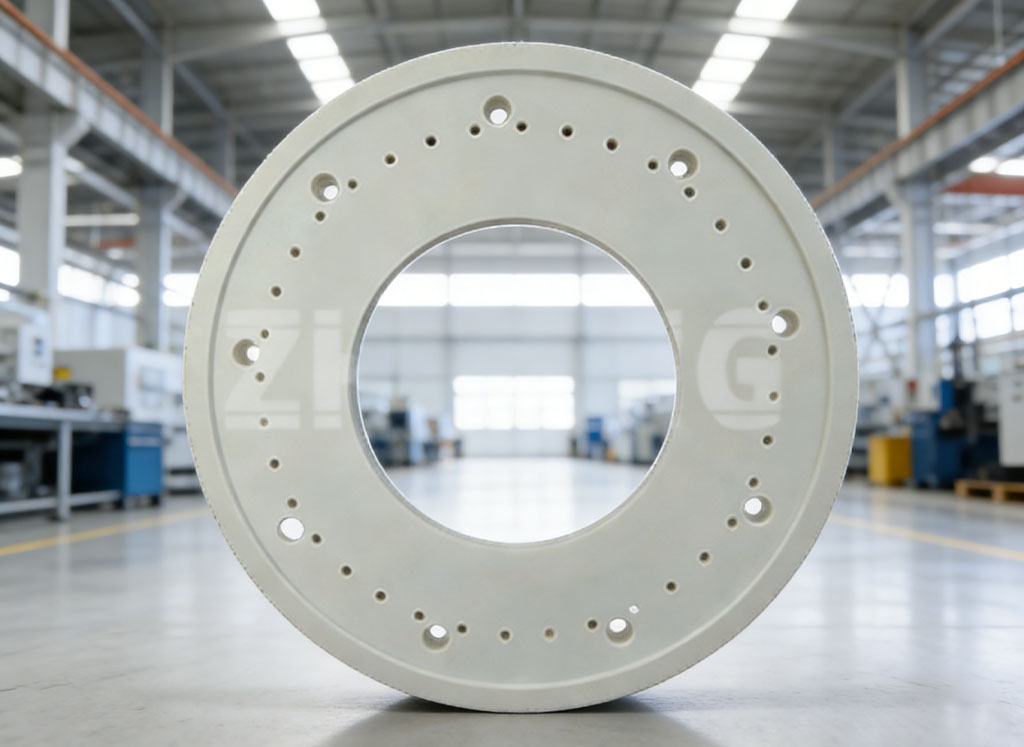
The comparison between granite and alternative materials is not merely academic—it has direct implications for operational efficiency and product quality. In industries such as semiconductor manufacturing, where feature sizes are measured in nanometers, even the smallest measurement error can lead to significant yield losses. In aerospace, where safety-critical components must meet stringent tolerances, measurement accuracy is directly linked to reliability and compliance. In such contexts, the choice of material for CMM components becomes a strategic decision rather than a purely technical one.
Environmental considerations are also gaining prominence. Granite, as a natural material, requires less energy-intensive processing compared to metals. While quarrying and machining do have environmental impacts, the overall lifecycle footprint of granite components can be lower, particularly when their longevity is taken into account. Reduced need for replacement and maintenance further contributes to sustainability goals, aligning with broader industry trends toward greener manufacturing practices.
Despite its advantages, granite is not without challenges. Its brittleness necessitates careful handling during transportation and installation. Design considerations must account for load distribution and potential impact forces. Additionally, machining granite requires specialized equipment and expertise, which can influence lead times and cost. However, these challenges are well understood within the industry and are typically outweighed by the performance benefits.
Looking forward, the integration of smart metrology systems, automation, and digital twin technologies will place even greater demands on structural stability. As CMMs become more integrated into automated production lines and real-time quality control systems, the tolerance for measurement variability will continue to decrease. Materials that can ensure consistent performance under dynamic conditions will be essential. Granite, with its unique combination of damping, stability, and durability, is well positioned to support this evolution.
In conclusion, the use of precision granite components in CMMs is not simply a matter of tradition or preference—it is a response to the fundamental requirements of high-accuracy measurement. Material choice directly impacts vibration behavior, thermal stability, surface integrity, and long-term reliability, all of which contribute to measurement accuracy. As industries push the boundaries of precision, the role of granite in metrology systems will only become more central. For manufacturers and laboratories seeking to optimize their measurement capabilities, understanding and leveraging the properties of granite is not optional—it is essential.
Post time: Apr-23-2026