
Buying precision measuring tools from overseas isn’t like ordering office supplies.
If you’ve done this before, you already know the headaches. The supplier who says “yes, we can do that” but can’t actually meet your tolerance requirements. The shipment that arrives with a cracked surface plate because nobody padded it properly. The calibration certificate that your quality department won’t accept because it doesn’t meet ISO standards. The language barrier that turns a simple specification question into a week of back-and-forth emails.
These problems are real. And they’re common enough that they’ve shaped how we do business with overseas clients.
Let me tell you how we handle things differently, and why it matters for your procurement.
What Actually Goes Wrong With Overseas Tool Orders
From conversations with hundreds of international buyers, a few patterns emerge constantly.
The spec problem. A buyer needs Grade 0 gauge blocks with ±0.001mm tolerance. The supplier sends Grade 1 and says it’s “close enough.” It isn’t. The buyer either scrapes the parts or sends the gauges back—expensive either way.
The certification problem. Your quality system requires ISO 3650 calibration certificates. The supplier provides a factory inspection report instead. Different thing entirely. Your QA rejects the shipment, but it’s already on a ship. Now you’re stuck.
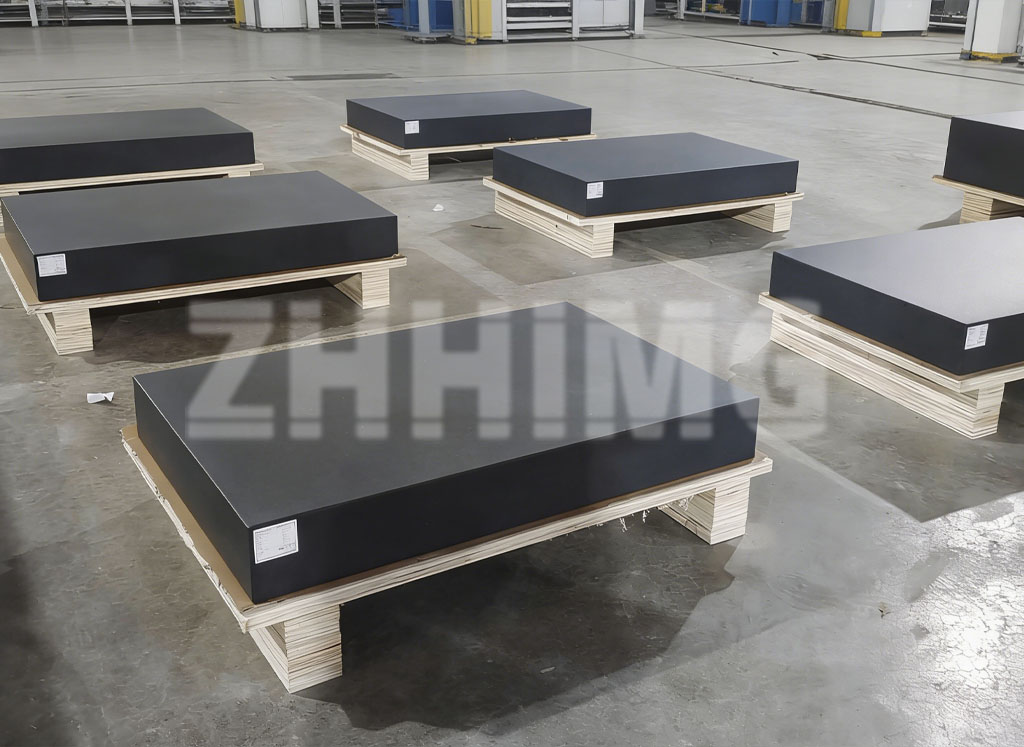
The packaging problem. Precision surface plates are heavy, brittle, and expensive. They need proper crating with vibration dampening, moisture barriers, and clear handling instructions. A lot of suppliers cheap out here. The plate arrives cracked, and your insurance claim takes three months to process—if it gets processed at all.
The communication problem. “Please clarify the accuracy class requirement.” The supplier responds with three paragraphs that don’t actually answer the question. Two weeks later, you’re still clarifying.
The lead time problem. Buyer says they need delivery in six weeks. Supplier says fine. Four weeks in, the supplier reveals they’re still waiting for raw materials. Customs delays on top of that. You get the shipment in twelve weeks, and your production schedule is ruined.
Sound familiar?
What Makes a Real Professional Supply Partner
Here’s what separates a legitimate precision tool supplier from someone who’s good at making promises they can’t keep.
They know the standards, not just the products.
CE marking for European markets isn’t a checkbox—it’s a technical requirement. EMC directives, safety standards, metrological certification requirements—these vary by region and product type. A professional supplier knows what certifications your market requires and can guide you on what’s actually needed versus what’s optional.
For instance: selling into the EU? CE marking is mandatory for most measuring instruments. Into the US? UL or CSA certification matters for safety compliance, and FCC certification for anything electronic. Japan requires PSE marking plus MLIT metrological certification for certain instruments. Each market has its own rules, and a supplier who doesn’t understand them will waste your time and potentially cause customs problems.
We maintain relationships with accredited testing laboratories in China, Europe, and North America. When you tell us your target market, we can tell you upfront what certifications you’ll need and whether our standard products meet those requirements—or what modifications would be needed.
They show you the real quality evidence, not just marketing photos.
Factory photos are nice. But what you actually need is evidence of systematic quality control.
Look for suppliers who can provide:
- · Third-party calibration certificates (ISO 17025 accredited labs)
- · Material certifications and test reports
- · Dimensional inspection reports with actual measured values, not just “meets spec”
- · Traceability documentation linking products to raw material batches
One practical thing we do: for significant orders, we can arrange third-party inspection before shipment. Organizations like SGS, Bureau Veritas, or TÜV can verify product quality and specifications against your requirements. Yes, this costs money—but it’s usually less expensive than a rejected shipment or a quality escape.
They understand logistics realities.
Shipping precision instruments isn’t like shipping widgets. Fragile components need proper crating. Heavy items need appropriate load distribution. Some materials have shipping restrictions (lithium batteries, magnetic components).
We work with freight forwarders who specialize in precision equipment. We know which ports have the best infrastructure for sensitive cargo. We understand customs documentation requirements for measuring instruments across major markets.
On documentation: we provide complete paperwork packages—commercial invoices with proper HS codes, packing lists, certificates of origin, and any required certifications. We’ve had too many shipments delayed because a supplier’s paperwork was incomplete or incorrect. We don’t do that.
They communicate clearly and responsively.
This sounds basic, but it’s surprisingly rare.
We respond to inquiry emails within 24 hours during business days. For urgent questions, we have emergency contact channels. When something isn’t clear, we ask specific clarifying questions rather than making assumptions or sending vague responses.
We use English professionally—not perfectly, but clearly enough that technical specifications are unambiguous. Because in precision tooling, “approximately 0.01mm” can mean the difference between a part that fits and a part that doesn’t.
The Practical Side: How Orders Actually Work
Let me walk you through what a real engagement looks like.
Initial inquiry. You tell us what you need—product types, accuracy grades, quantities, target market, timeline. The more specific, the better. “Precision measuring tools” is vague. “50 pieces of zirconia ceramic gauge blocks, Grade 0, ISO 3650 compliant, sizes ranging from 2.5mm to 100mm in a standard 87-piece set arrangement, for delivery to Rotterdam within 8 weeks” is something we can actually quote on.
Technical confirmation. We review your requirements against our production capabilities. If there’s a gap—maybe you need Grade 000 but we can only reliably supply Grade 0— we’ll tell you upfront and discuss alternatives. Better to have this conversation before you place an order than after.
Quotation. You get a detailed quote including product specifications, unit pricing, tooling or setup costs if applicable, shipping estimates, and certification options. We clarify Incoterms (we typically work on FOB or CIF depending on your preference) and payment terms.
Sample order. For new product types or new customers, we strongly recommend starting with a sample order. One or a small number of pieces, fully documented, so you can verify quality and specifications before committing to larger volumes.
Production order. Once samples are approved, we proceed with the full order. We provide production updates at agreed milestones—material procurement, machining completion, surface finishing, inspection, packaging. You know where your order is in the process.
Pre-shipment inspection. Before dispatch, we conduct final dimensional verification and visual inspection. You receive documentation—actual measurement records, not just certificates claiming conformance.
Shipment and delivery. We handle export documentation, coordinate with freight forwarders, and provide tracking information. For critical orders, we can arrange insurance.
After-delivery support. Questions after delivery? We respond. Issues with product quality or specifications? We work through them. Calibration support? We can provide guidance or recommend accredited labs in your region.
A Word on Pricing
Let’s be straight about costs.
Yes, working with a professional supplier costs more than buying from the cheapest option on a B2B marketplace. There are reasons for that premium:
- · Better raw materials cost more
- · More precise machining takes longer
- · Third-party quality verification isn’t free
- · Proper packaging materials aren’t cheap
- · Documentation and compliance work takes time
But consider what you’re actually buying. Precision measuring tools are mission-critical components in your quality system. If your gauge blocks are out of tolerance, you’re shipping bad parts—or shutting down production while you figure out what’s wrong.
The cost of a measurement error or a quality escape almost always exceeds the cost of better tools. A $500 premium on your gauge block order looks small when you compare it to the cost of a $50,000 batch of scrap parts.
That said, we’re not interested in overcharging you. Our pricing is transparent, and we explain what you’re paying for at each line item. We want long-term relationships with our clients, not one-time extraction of maximum margin.
Common Questions We Get From Overseas Buyers
“Can you match this competitor’s price?”
Possibly, depending on specifications, quantities, and service requirements. But “match the price” without understanding what’s included is a recipe for disappointment. Let’s talk about what’s actually important to you—sometimes a higher price for better quality documentation or faster delivery makes economic sense. Sometimes a lower price with longer lead time is the right choice.
“What’s your minimum order quantity?”
It depends on the product. Standard items often have lower MOQs than custom products. Let’s discuss your actual needs—we can usually find a workable path even for small quantities, though unit pricing will be higher.
“Can you ship to [country]?”
We’ve shipped to 50+ countries across Europe, North America, Southeast Asia, the Middle East, and beyond. If there’s a specific country you need, just ask.
“How do you handle warranty claims?”
We stand behind our products. If there’s a legitimate quality issue—material defect, dimensional out-of-tolerance, damage in transit—we work toward resolution. This typically means replacement, refund, or credit, depending on the situation. We document everything so claims are handled fairly and efficiently.
Getting Started
If you’re currently evaluating suppliers—or if you’ve been burned before and want to try someone different—here’s a practical approach:
Start with a small order. Not because we require it, but because it’s smart procurement practice. Put us through our paces: communication responsiveness, technical competence, documentation quality, shipping and packaging, delivery timeline accuracy.
If we meet your expectations on the small order, the relationship can grow from there.
To get started, send us your requirements—product types, specifications, quantities, target markets, timeline. The more detail you provide, the faster we can give you a meaningful response.
We’re not the right fit for everyone. If you’re purely price-driven and don’t care about quality documentation, traceability, or responsive support, you’ll find cheaper options. But if precision matters—and if you’re buying precision measuring tools, it should—let’s talk.
Post time: May-22-2026